Nestled within the undulating, canopy-shaded topography of Tallahassee, Florida, the Okeeheepkee Prairie Preserve stands as an exemplary model of ecological engineering, urban stormwater management, and low-impact public recreation. Built intentionally around a delicate natural wetland feature, the 0.5-mile loop trail and its adjacent amenities within Parwez Alam Park offer visitors an immersive window into North Florida’s complex hydrological network. Far more than a simple neighborhood green space, the preserve functions as a vital filtration marsh. It intercepts, cleans, and slowly releases stormwater runoff originating from neighboring residential developments before these waters ultimately empty into Meginnis Arm at the southern terminus of Lake Jackson.
Managed by Leon County, this protected natural area brilliantly balances the rigorous demands of environmental preservation with community engagement. From its unique nature playground—featuring structural mounds that subtly pay homage to the region’s pre-Columbian archaeological heritage—to its carefully engineered boardwalks, spillways, and levee paths, Okeeheepkee Prairie represents a modern blueprint for how municipalities can protect fragile watersheds while inviting the public to witness conservation in action.
Detailed Chronology of the Preserve’s Development and Hydrological Function
The journey of Okeeheepkee Prairie from an unmanaged natural basin to a meticulously engineered public preserve reflects Tallahassee’s evolving approach to urban sprawl and water resource protection. For decades, the natural depression functioned quietly as a low-lying catchment area for surrounding runoff. However, as residential subdivisions expanded outward from the city center, the volume and velocity of stormwater entering the basin increased dramatically, threatening the ecological health of downstream Lake Jackson.
Recognizing the urgent need to mitigate nutrient loading and curb erosion, Leon County designated the site as a preserved filtration marsh. The engineering strategy relied on utilizing the natural topography rather than building costly, industrial retention facilities. Inflows from surrounding neighborhoods are channeled into marsh zones that act as natural settling ponds. Within these slow-moving waters, suspended sediments drop out, and aquatic vegetation absorbs excess nutrients.
To facilitate public interaction with this working ecosystem, the county developed Parwez Alam Park at the preserve’s entrance, anchoring the trailhead with a pioneering nature playground. The design of the playground features a low, rounded earth mound that serves a dual purpose: it provides an engaging tactile play element for children while subtly evoking the hidden, off-display cultural features of the nearby Lake Jackson Mounds.
The public trail system officially opened to provide non-motorized access along the perimeter levee, allowing hikers to witness the dynamic transition of water management infrastructure seamlessly blending into wild Florida landscapes. Over the years, the site has matured into a stable biological filtration unit, offering researchers, hikers, and local residents a living laboratory to observe seasonal fluctuations in water levels, native flora adaptation, and resident wildlife populations.
Supporting Context & Metrics
Understanding the Okeeheepkee Prairie Preserve requires a closer look at its physical specifications, logistical details, and ecological footprint. The site is compact yet rich in varied terrain, making it an accessible destination for casual walkers, families, and ecological enthusiasts alike.
Key Preserve Metrics
Location: Tallahassee, Leon County, Florida
Trail Length: 0.5-mile main loop; easily expandable by 0.2 miles with a side walk to the boat ramp.
Trailhead Coordinates: 30.49404, -84.30840
Physical Address: 1294 Fuller Rd, Tallahassee, FL
Admission Fees: Free to the public
Operating Hours: Open daily from sunrise to sunset
Restroom Facilities: None on-site
Land Management Agency: Leon County (Division of Parks and Recreation)
Contact Number: 850-606-1470
Navigational and Route Breakdown
For visitors planning a trek to the preserve, accessing the trailhead requires navigating a brief series of turns from major thoroughfares. Traveling from Interstate 10, motorists take Exit 199, heading northbound on US 27. An immediate right turn onto Okeeheepkee Road, followed by a quick right onto Livingston Road, leads drivers down a sloping curve into a residential subdivision. Turning right onto Fuller Road brings visitors directly to the park on the left, with the road culminating in a boat ramp just beyond the perimeter.
Once on-site, hikers initiate their journey on the east side of the trailhead, passing Parwez Alam Park’s colorful natural playground and roofed picnic shelter. Stepping onto the levee system surrounding the Okeeheepkee Prairie basin and moving in a clockwise direction reveals the site’s distinct geographical features:
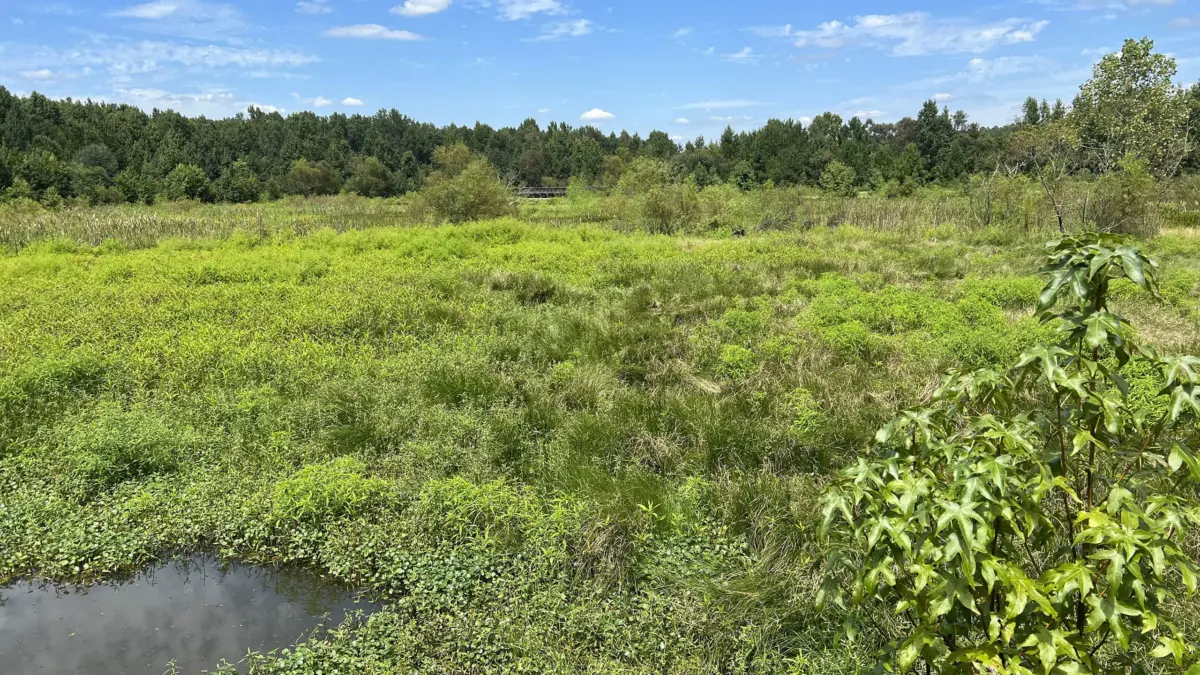
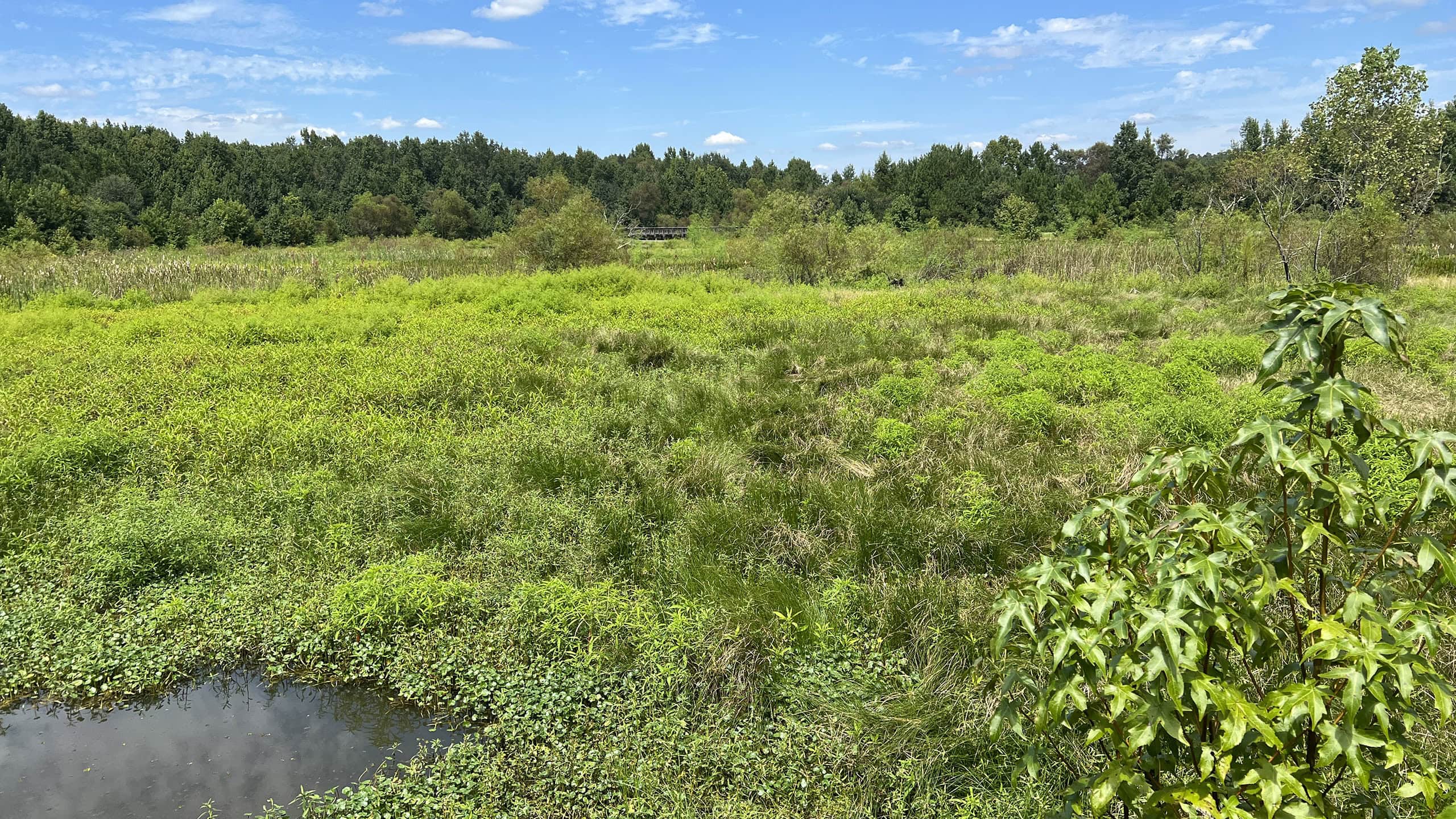
0.0 to 0.1 Miles: The trail tracks a gradient of vibrant green marsh vegetation, framed by willows and distant trees. At roughly one-tenth of a mile, hikers encounter the first wooden boardwalk, beneath which a concrete spillway manages overflow, channeling water from an adjacent willow marsh directly into the prairie basin.
0.1 to 0.3 Miles: The path swings past a quiet bench offering sweeping vistas across the open prairie before entering a pine-lined grassy corridor. This section provides fleeting glimpses of open water before transitioning to the second boardwalk.
0.3 to 0.5 Miles: Reaching the second boardwalk at the 0.3-mile mark exposes a more prominent concrete spillway system. Here, a scrim of marginal vegetation screens a deep pool of open water that frequently acts as a foraging haven for wading birds, coots, gallinules, and various duck species. The final stretch winds past clumps of tall marsh grasses and emerging red maples, completing the loop back to the picnic shelter.
Optional Extension (+0.2 Miles): Walkers can extend their outing by following the interior sidewalk around the playground to a secure kiosk leading to Fuller Landing within the Lake Jackson Aquatic Preserve. Depending on recent regional rainfall and seasonal drought cycles, the boat ramp may terminate in open aquatic waters or stretch across exposed, grassy marsh beds.
Official Statements and Perspectives
Local land managers and conservation advocates have consistently emphasized the dual purpose of sites like Okeeheepkee Prairie within Leon County’s green infrastructure network. Representatives from the Leon County Division of Resource Stewardship have noted that urbanizing watersheds present unprecedented challenges for maintaining water quality in regional sinkhole-fed lakes like Lake Jackson.
"Preserving natural flowways and establishing engineered wetland filters is no longer merely an aesthetic choice for modern municipalities—it is an absolute ecological necessity," notes county park planning documentation. "Okeeheepkee Prairie demonstrates that we can successfully mitigate the impacts of urban stormwater runoff while simultaneously providing our citizens with meaningful, low-impact access to nature right in their own neighborhoods."
Wildlife conservationists also stress the importance of visitor awareness, particularly regarding the interface between suburban development and native Florida species. Because the preserve incorporates active water retention zones and permanent ponds, it naturally attracts the American alligator (Alligator mississippiensis). County signage throughout the loop clearly mandates caution, advising visitors to maintain a safe distance and keep leashed pets away from the water’s edge.
"When we restore or protect urban wetlands, we are inviting wildlife back into the suburban matrix," explains regional ecology field researchers. "Parks like Okeeheepkee give the public a chance to appreciate wading birds, amphibians, and apex predators in a functioning ecosystem, provided that recreational users respect wildlife boundaries."
Future Outlook
Looking ahead, the Okeeheepkee Prairie Preserve is positioned to play an increasingly critical role in Tallahassee’s long-term environmental resilience and urban planning framework. As climate patterns bring more intense storm events and localized heavy rainfall, municipal engineers are placing a higher premium on natural retention basins that can absorb shock loads of stormwater without failing.
Future initiatives for the preserve and its surrounding corridors are anticipated to focus on enhanced water-quality monitoring, invasive species management to protect the delicate balance of willow marshes and red maples, and expanded educational programming for local schools. By utilizing the adjacent Parwez Alam Park and its innovative nature playground, county officials hope to foster early environmental literacy among children, teaching the next generation how urban design and ecological stewardship must work hand in hand.
Furthermore, as regional trail networks expand, Okeeheepkee Prairie serves as a valuable stepping stone for eco-tourists exploring Tallahassee’s broader natural assets—including the nearby Lake Jackson Mounds Archaeological State Park, Elinor Klapp-Phipps Park, and the Maclay Gardens Ravine Trail. Ensuring the long-term health of Okeeheepkee Prairie guarantees that this vital hydrological buffer will continue protecting Lake Jackson while offering a tranquil, educational retreat for hikers for decades to come.







0 Comments