Nestled in the rolling northern landscape of Tallahassee, Florida, the Okeeheepkee Prairie Preserve stands as a masterclass in urban ecological engineering and watershed protection. Built intentionally around a delicate, natural hydrological feature, this 0.5-mile loop trail and surrounding preserve function primarily as a vital filtration marsh for stormwater runoff. By capturing inflows from adjacent suburban neighborhoods, the preserve uses its natural marshes as settling ponds, slowly and safely purifying the water before it releases into Meginnis Arm at the southern terminus of Lake Jackson.
Managed meticulously by Leon County, the site seamlessly blends civil environmental management with accessible public recreation. Visitors accessing the preserve through Parwez Alam Park are immediately greeted by innovative installations, including the county’s first dedicated nature playground. Complete with low earthen mounds that echo the region’s hidden historical earthworks—specifically the off-display Lake Jackson Mounds—the location serves as an educational gateway. It ties together ancient history, modern stormwater management, local wildlife observation, and family-friendly outdoor recreation.
This comprehensive report details the logistical framework, ecological mechanisms, trail chronology, and broader regional context of the Okeeheepkee Prairie Preserve, offering an authoritative guide for hikers, conservationists, and urban planners alike.
Detailed Chronology of the Trail and Site Experience
1. Trailhead and Parwez Alam Park Entry
The journey into the Okeeheepkee Prairie ecosystem begins on the eastern edge of the trailhead situated within Parwez Alam Park. The park itself is a vibrant community amenity featuring a roofed picnic shelter and the county’s pioneering nature playground. Constructed from organic elements like logs and rocks, the playground introduces children to tactile, nature-based play.
A subtle yet deliberate design choice within the playground is a low-lying earthen mound. This feature is visually and conceptually evocative of the region’s rich archaeological heritage—specifically serving as a nod to the hidden Lake Jackson Mounds that remain shielded from heavy public display nearby.
From the picnic shelter, visitors bypass the playground and join the well-maintained levee system that encircles the Okeeheepkee Prairie basin. Walking clockwise, hikers are immediately immersed in a sweeping panorama of the prairie.
2. The Western Levee and First Boardwalk
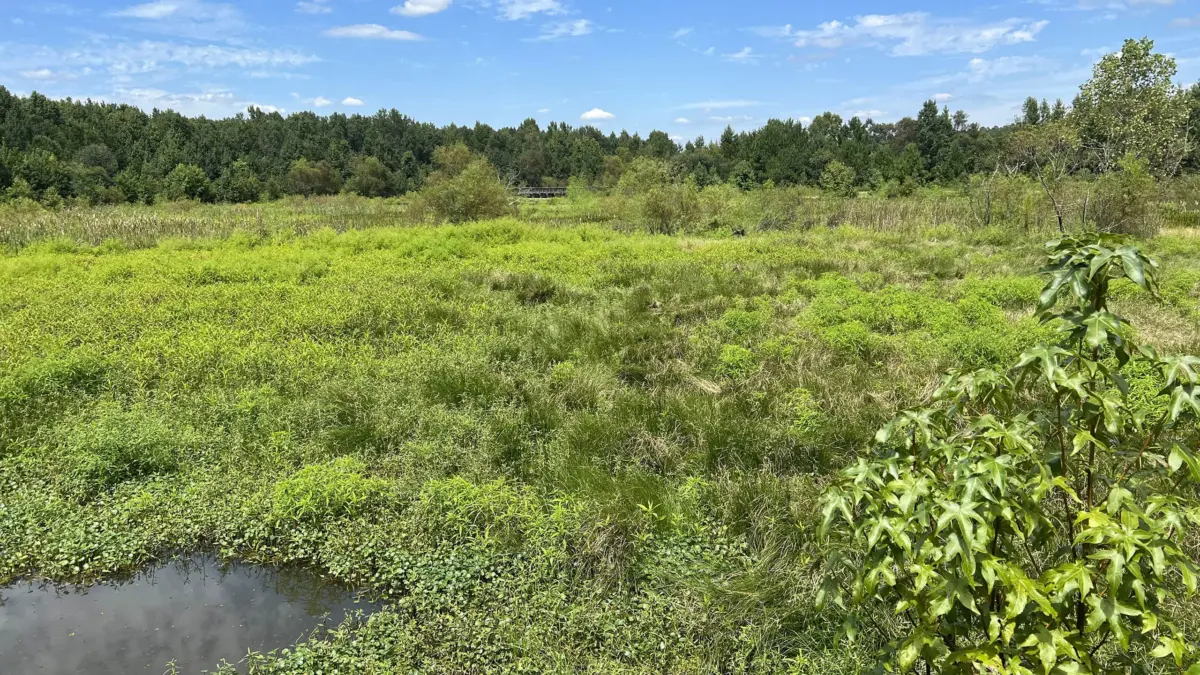
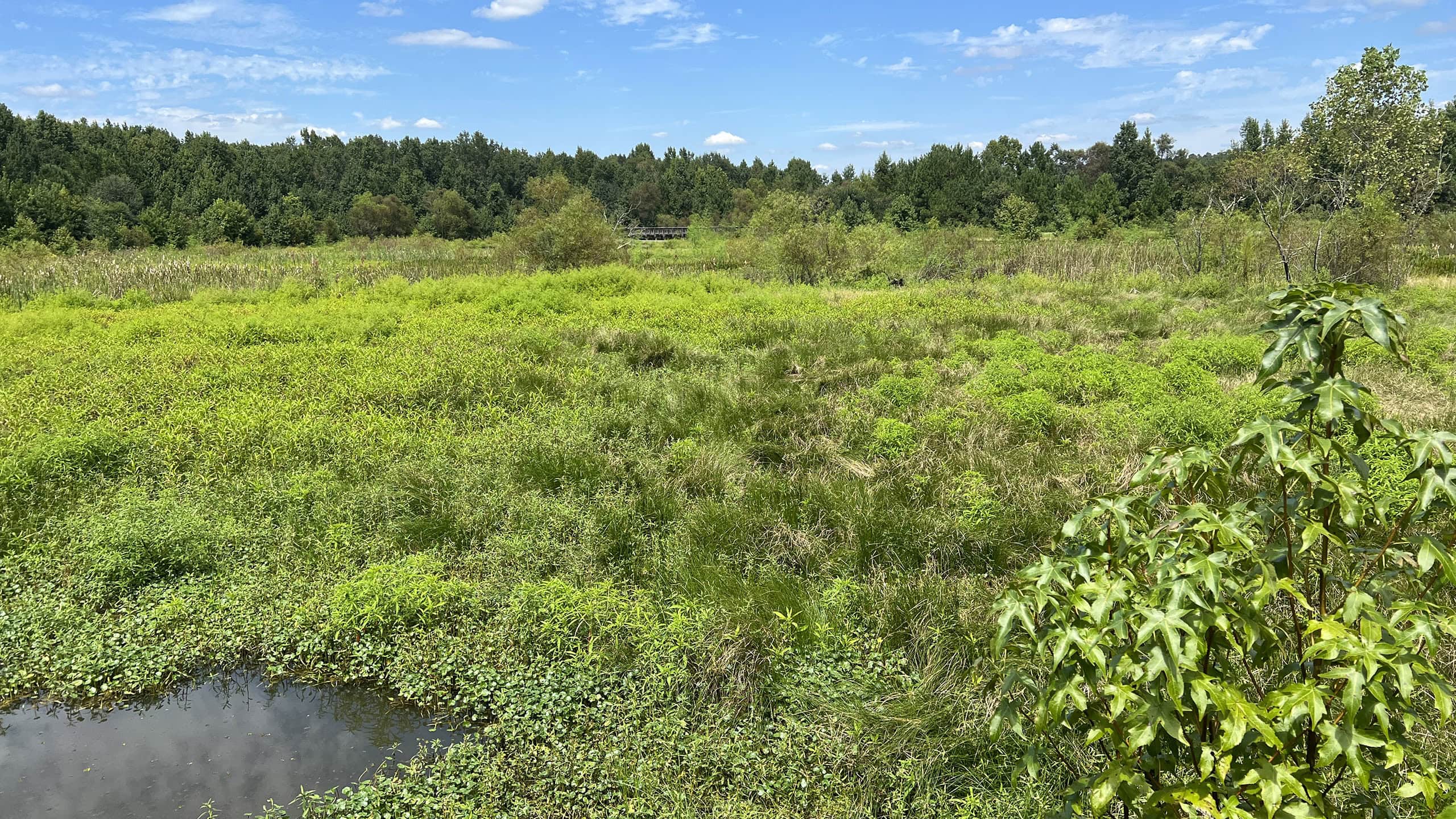
As the trail loops past the starting point, a diverse gradient of green vegetation fills the expansive prairie basin. This verdant landscape is further amplified by thick stands of native willows and assorted wetland shrubs lining the far shore, backed by a sturdy line of mature trees.
Approximately 0.1 miles into the circuit, hikers encounter the first of two engineered boardwalks. Here, a concrete spillway manages the critical job of carrying stormwater overflow directly from an adjacent willow marsh into the heart of the prairie basin.
Stepping off the boardwalk, the trail curves past a strategically placed wooden bench. This resting spot offers unobstructed, panoramic views across the open marshland. However, these water vistas quickly retreat behind a screen of vegetation as the trail transitions into a narrow, grassy corridor deeply lined with native pines. This tranquil corridor provides one final, picturesque peek toward the open water before guiding hikers seamlessly to the second wetland crossing.
3. The Second Boardwalk and Wildlife Hotspots
At the 0.3-mile mark, hikers reach the second boardwalk structure. Like its predecessor, this section features a prominent concrete spillway designed to regulate the outflow from a secondary willow marsh.
The structural engineering here serves a dual purpose: it controls the energetic flow of neighborhood runoff while cultivating a sheltered, nutrient-rich microhabitat. Below a delicate scrim of emergent vegetation on the prairie’s western rim, an expansive pool of open water frequently materializes. This aquatic micro-environment acts as a magnet for regional wildlife, regularly drawing wading birds, American coots, common gallinules, and various species of ducks.
4. The Northern Curve and Return to Base
Moving past the prairie pond, the trail straightens out into a grassy track that leads into the final northern curve. Along the rim, dense clumps of tall marsh grass frame the path, while a cluster of native red maples demonstrates active seasonal growth with fresh, vibrant foliage.
Rounding the eastern edge of the prairie loop, hikers complete the foundational 0.5-mile circuit, arriving right back at the Parwez Alam Park picnic shelter.
5. Extension: Fuller Landing and Meginnis Arm
For visitors looking to expand their excursion, an additional 0.2-mile side trip leads directly to the edge of Lake Jackson. By following the paved sidewalk within the fenced perimeter of Parwez Alam Park—circling back around the nature playground—visitors can exit toward an informational kiosk at the boat ramp of Fuller Landing, which sits within the Lake Jackson Aquatic Preserve.
What hikers witness at the terminus of this boat ramp depends heavily on seasonal rainfall and regional lake levels. During wet cycles, the ramp plunges straight into open, navigable water. During dry cycles, however, the landscape transforms dramatically, revealing a wide expanse of marsh grasses sprawling across Meginnis Arm.
Supporting Context & Metrics
Quick Facts & Site Logistics
Location: Tallahassee, Leon County, Florida
Trailhead Coordinates: 30.49404, -84.30840
Physical Address: 1294 Fuller Rd, Tallahassee, FL
Total Loop Length: 0.5 miles (plus an optional 0.2-mile spur to Fuller Landing)
Admission Fees: Free to the public
Restroom Facilities: None on-site
Land Manager: Leon County Government (Department of Resource Stewardship, Parks & Recreation Division)
Contact Phone: 850-606-1470
Operating Hours: Open daily from sunrise to sunset
Pet Policy: Dogs are welcome, but must remain on a leash at all times.
Wildlife Advisory: Signage warns visitors to remain highly cautious of alligators inhabiting the water loop. Approaching or feeding wildlife is strictly prohibited.
Driving Directions
From Interstate 10, take Exit 199 and head northbound on US Route 27. Make the very first right-hand turn onto Okeeheepkee Road, followed by an immediate right onto Livingston Road. Follow Livingston Road as it sweeps around a gentle curve and descends downhill for approximately 0.8 miles into a residential subdivision. Turn right onto Fuller Road; the park will appear on your left-hand side, with the road ultimately terminating at the boat ramp just past the preserve entrance.
Official Statements & Ecological Framework
The integration of suburban development and fragile wetland ecology requires rigorous, forward-thinking environmental management. Local officials and environmental planners emphasize that sites like the Okeeheepkee Prairie Preserve are no longer viewed merely as passive open spaces, but as active components of municipal infrastructure.
"The preservation of natural drainage features like Okeeheepkee Prairie is fundamental to Tallahassee’s long-term environmental health," notes resource management documentation from Leon County. "By allowing surrounding neighborhoods to drain naturally through structured settling marshes rather than artificial retention ponds, we achieve a dual objective: natural flood attenuation and significant filtration of urban runoff before it reaches the sensitive aquatic ecosystems of Lake Jackson."
Environmental scientists point out that urban stormwater carries heavy loads of sediment, nitrogen, phosphorus, and petrochemical residues. The dense vegetation matrices of willow marshes, sedges, and native grasses within the preserve act as a biological sponge, trapping pollutants and allowing suspended solids to settle out of the water column before the slowed outflow eventually reaches Meginnis Arm.
Future Outlook
As Tallahassee and the broader Leon County region continue to experience suburban growth, the role of engineered natural preserves will only expand in importance. The Okeeheepkee Prairie Preserve serves as a blueprint for future county developments, demonstrating that public infrastructure can successfully harmonize with wildlife conservation and community recreation.
Future outlooks for the site include enhanced educational programming centered around the adjacent Lake Jackson Aquatic Preserve, continuous monitoring of water quality metrics at the concrete spillways, and ongoing maintenance of the levee trail systems to ensure long-term climate resilience. By keeping the park free, accessible, and ecologically robust, Leon County ensures that generations of residents and visitors will continue to appreciate the critical, behind-the-scenes mechanics of Florida’s vital watershed preservation network.







0 Comments