Nestled along the western banks of the historic Intracoastal Waterway, Waterfront Park stands as a premier outdoor recreation hub in Palm Coast, Florida. Managed by the City of Palm Coast, this linear park seamlessly blends active recreation, ecological education, and reflective spaces across its footprint. Anchored by a paved, multi-use path network, the park serves as a vital connective tissue for the region’s expanding non-motorized transit infrastructure.
From its modern kayak launch and fishing pier to the tranquil, shaded paths of the Children’s Memorial Garden and its seamless integration with the St. Joe Walkway and Graham Swamp Trail systems, Waterfront Park offers a multifaceted experience for hikers, cyclists, paddlers, and nature enthusiasts. Designed for universal accessibility and outdoor engagement, the park operates daily from sunrise to sunset, providing a free-of-charge sanctuary that highlights the dynamic intersection of Florida’s native coastal hammocks and heavily engineered waterways.
Detailed Chronology of the Trail Experience
A journey through Waterfront Park unfolds as a carefully orchestrated transition from active, family-friendly social spaces into quiet, scenic coastal vistas and marshland interfaces.
Phase 1: The Trailhead and Recreational Core
The adventure begins at the primary parking area, accessible via a winding 0.7-mile entrance road off Colbert Lane. Visitors are immediately greeted by a large informational kiosk and mileage markers detailing the broader Palm Coast trail network. The immediate trailhead area is enveloped by a corridor of coastal hammock, offering dappled shade before opening into the park’s vibrant recreational core.
This hub features a fenced-in playground, picnic pavilions, a restroom facility, and a dedicated kayak and paddleboard launch point. A scenic return path winds past picnic tables toward a boat basin offset from the main channel, where interpretive signage details the history of the Intracoastal Waterway and provides a comprehensive paddler’s map.
Phase 2: Crossing the Tannic Outflow and Entering the Bluffs
Moving north from the recreational zone, the paved path leads past a mileage sign and across a wooden bridge spanning the shallow, tea-colored tannic outflow of a creek flowing from Graham Swamp into the Intracoastal. The water’s distinctive hue is driven by organic tannins leaching from the surrounding swampland.
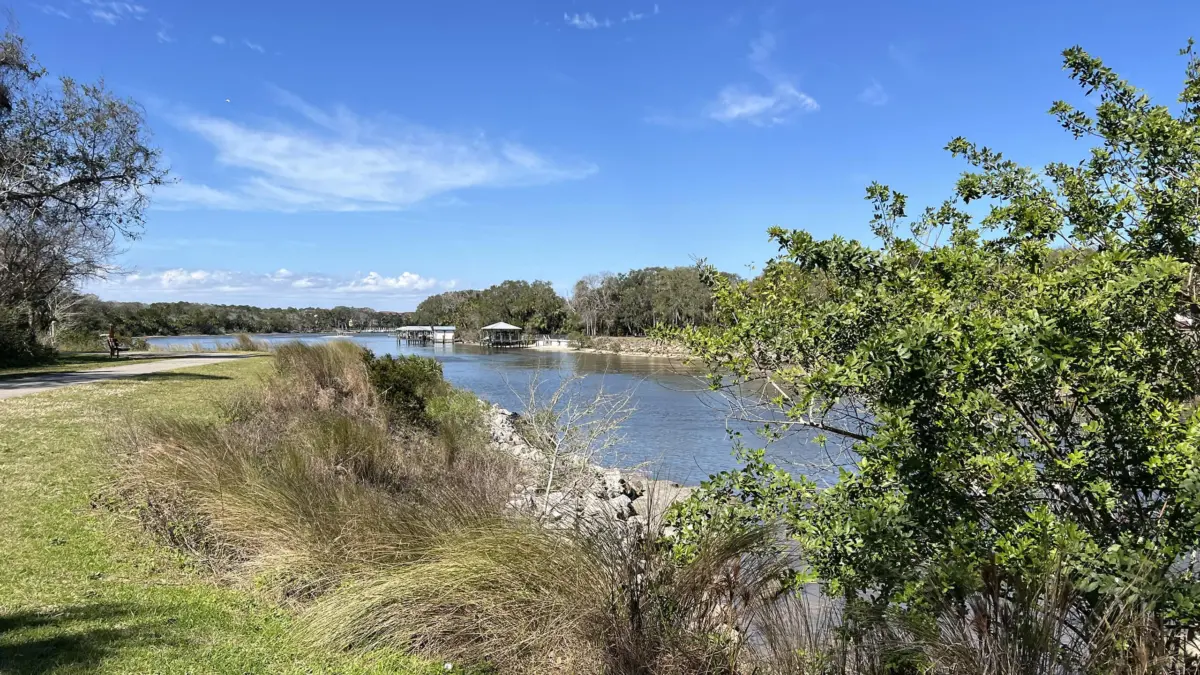
After navigating two sharp turns, the trail straightens out and climbs north along the elevated bluffs overlooking the Intracoastal Waterway. Benches nestled beneath the shade of sand live oaks offer panoramic views of the water. At approximately the 0.2-mile mark, a short diversion to the left leads into the Children’s Memorial Garden. Shrouded by a dense canopy of sand live oaks, this poignant space features commemorative plaques, sculptures, and quiet benches dedicated to remembering loved ones.
Phase 3: The Bluff Walk and the Engineered Channel
Returning to the main northbound path, users traverse an open green space bordered by the waterway. Clearings in the tree canopy reveal the steep, scraped bluffs on the eastern side of the channel—a stark visual reminder that this portion of the Intracoastal was historically dredged and cut through the native limestone by the Army Corps of Engineers.
For the next half-mile, the trail hugs the gentle curves of the bluff. Occasional service roads for park maintenance branch off into the forest, while the paved path continues under mostly direct sunlight. The steady parade of boat traffic on the waterway provides a dynamic backdrop to the hike.
Phase 4: Transition to the Hardwood Hammock and Junction Point
Near the 0.9-mile mark, the pathway turns sharply away from the Intracoastal Waterway, plunging into a lush hardwood hammock. Emerging onto a grassy strip, the trail crosses a long bridge spanning an estuarine channel and the historic St. Joe Waterway canal.
This bridge marks a critical decision point at the St. Joe Walkway junction:
Option A (The Park Turnaround): Visitors seeking a shorter, out-and-back experience within Waterfront Park can turn around here, crossing back over the bridge and returning along the bluff path.
Option B (The Extended Loop): Turning left leads toward Linear Park, where the Magnolia Trail connects to the Graham Swamp Trail. Heading east parallel to Colbert Lane completes a 3.7-mile paved loop back to the Waterfront Park trailhead, requiring navigation across four road crossings, including a high-caution crosswalk over Palm Coast Parkway.
Phase 5: The Return Journey and Pier Experience
For those returning via the park interior, the trail retraces its steps across the estuarine bridge, through the hardwood hammock, and past the bluff overlook. After crossing the tannic stream bridge south of the Children’s Memorial Garden, hikers can bear left to re-engage with the waterfront.
Strolling past the kayak launch area and shaded picnic pavilions, the path leads directly to the park’s premier fishing and observation pier. Jutting far out into the Intracoastal Waterway, the pier offers sweeping vistas of marine traffic and serves as a prime vantage point for wintertime manatee sightings. Completing the final loop past the playground brings visitors back to the parking lot, culminating in a satisfying 1.9-mile round-trip excursion.
Supporting Context & Metrics
Understanding the operational parameters and geographical context of Waterfront Park ensures an optimal visitor experience. Below is a comprehensive breakdown of key metrics, amenities, and logistical details:
Official Name: Waterfront Park
Location: Palm Coast, Flagler County, Florida
Land Manager: City of Palm Coast
Total Trail Length (Park Proper): 1.9 miles (round-trip out-and-back)
Extended Loop Distance: 3.7 miles (incorporating the St. Joe Walkway and Graham Swamp Trail)
Trailhead Coordinates: 29.558801, -81.175885
Physical Address: 150 Waterfront Park Rd, Palm Coast, FL 32137
Operational Hours: Open daily from sunrise to sunset
Admission Fees: Free
Accessibility & Amenities: Restrooms at the trailhead, picnic pavilions, children’s playground, fishing/observation pier, kayak/paddleboard launch, and fully paved multi-use paths suitable for walking, running, and cycling.
Pet Policy: Leashed dogs are welcome; visitors are strictly required to clean up after their pets.
Directions & Access
By Vehicle: From Interstate 95, take Exit 289 and drive east on Palm Coast Parkway for approximately 1.1 miles to Colbert Lane. Turn right onto Colbert Lane, proceed 1.1 miles to the park entrance on the left, and follow the 0.7-mile scenic drive to the main parking facility.
Official Statements & Environmental Management
The City of Palm Coast emphasizes multi-modal connectivity and environmental preservation in its management of Waterfront Park. City planners designed the linear layout not merely as a standalone recreational amenity, but as a crucial node within Palm Coast’s broader master plan for non-motorized transit corridors.
"Waterfront Park exemplifies our commitment to providing accessible, high-quality outdoor spaces that celebrate Palm Coast’s natural assets," notes the City of Palm Coast parks division. "By linking neighborhood pathways directly to regional arteries like the St. Joe Walkway and Graham Swamp Trail, we empower residents and visitors to explore our coastal ecosystems safely and sustainably."
Environmental stewards highlight the park’s unique ecological positioning. Situated between upland coastal hammocks and estuarine tidal systems, the park acts as a buffer zone that protects water quality while offering educational opportunities regarding the management of Florida’s waterways. The incorporation of interpretive signage along the trail educates the public on watershed dynamics, local wildlife habitats, and the historical alterations made to the Intracoastal Waterway.
Future Outlook & Regional Connectivity
As Palm Coast continues to experience rapid residential and commercial growth, the strategic importance of parks like Waterfront Park is magnified. Future municipal planning initiatives focus heavily on closing gaps in the regional trail network to establish a seamless, interconnected greenway system spanning Flagler County.
Key infrastructure developments on the horizon include enhanced safety measures at high-traffic intersections—specifically addressing pedestrian and cyclist crossings along Palm Coast Parkway—as well as continuous surface maintenance of the asphalt trail networks to withstand coastal weathering. Furthermore, ongoing habitat restoration projects within the surrounding oak hammocks and wetland interfaces aim to preserve native biodiversity while expanding passive recreation opportunities.
For outdoor enthusiasts, Waterfront Park remains a dynamic gateway. Whether utilized for a brisk morning fitness walk, a peaceful afternoon paddle launch, or as a stepping stone into the rugged wilderness of the Graham Swamp Preserve, the park stands as a testament to successful urban green-space integration in modern Florida coastal communities.






0 Comments