

Executive Overview
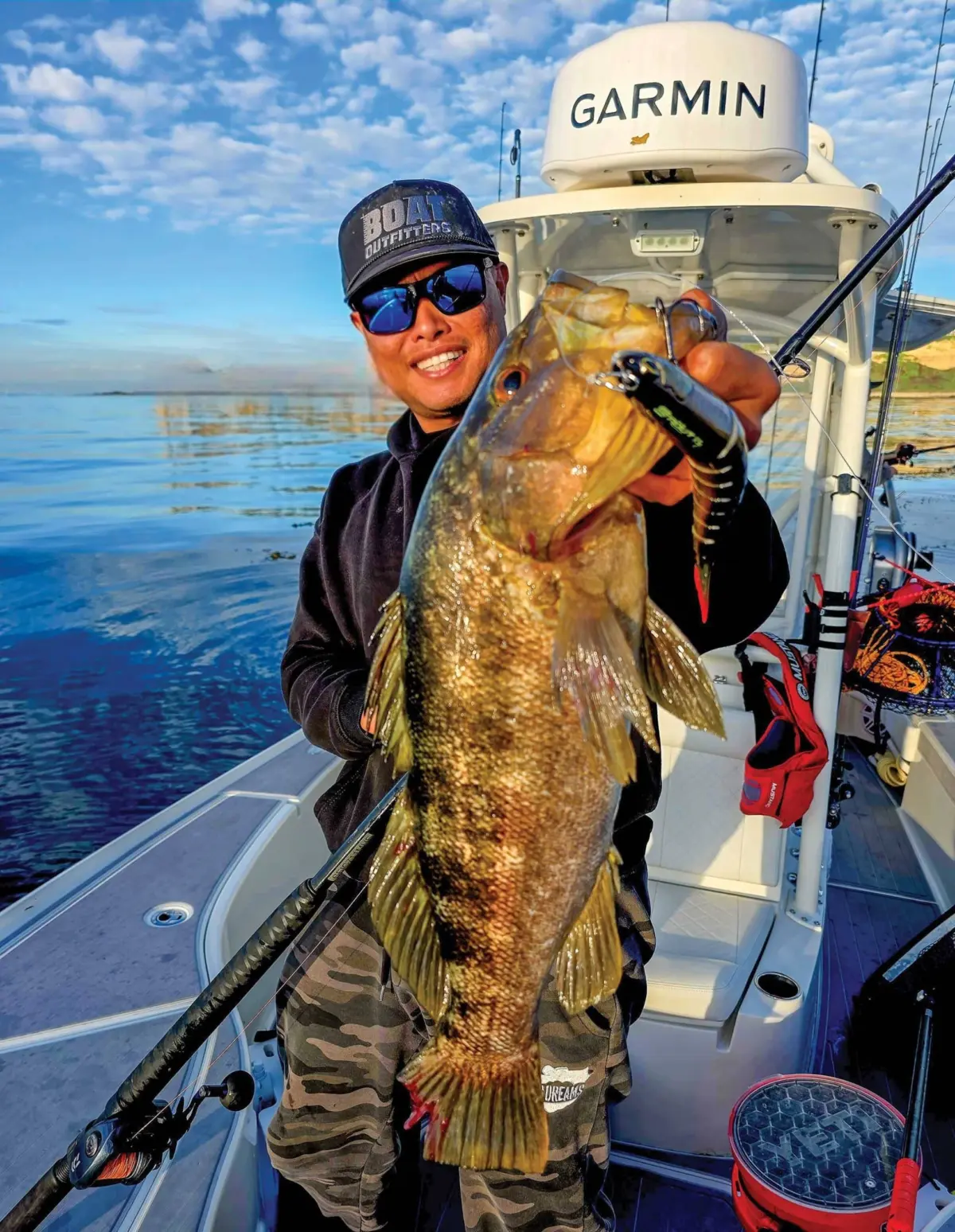
For generations, the conventional wisdom guiding Southern California’s inshore anglers has been rooted in a simple metric: the thermometer. Traditional consensus held that the feeding habits of the kelp bass, universally known as the calico bass (Paralabrax clathratus), were inextricably tied to seasonal water temperatures. Summer meant aggressive surface feeds and fast-moving topwater presentations; winter meant a retreat to the depths, requiring slow, agonizingly deliberate presentations to coax a sluggish metabolism.
However, modern on-the-water investigation and decades of empirical observation by seasoned guides and anglers suggest this long-standing theory is flawed—a textbook case of confirmation bias. Anglers who exclusively target deep, slow zones during the cooler months inevitably catch fish, thereby reinforcing the myth that calicos abandon the surface altogether when the mercury drops.
A fresh paradigm is rewriting the rulebook for Southern California’s most cherished inshore gamefish. The key to unlocking relentless topwater strikes isn’t the absolute average water temperature, but rather temperature stability. Furthermore, the ultimate catalyst for vertical positioning is the presence and behavior of shallow-water forage, primarily juvenile anchovies. By understanding these environmental dynamics, refining lure presentations relative to local currents, and adapting tactics for kelp beds versus shallow reefs, anglers can enjoy explosive topwater calico action 365 days a year.
Detailed Chronology: Evolution of Calico Fishing Theory
To understand how modern anglers have revolutionized the pursuit of calico bass, it is necessary to examine how tactical approaches have evolved along the Pacific coast over the last several decades.
The Era of Deep-Water Dogma
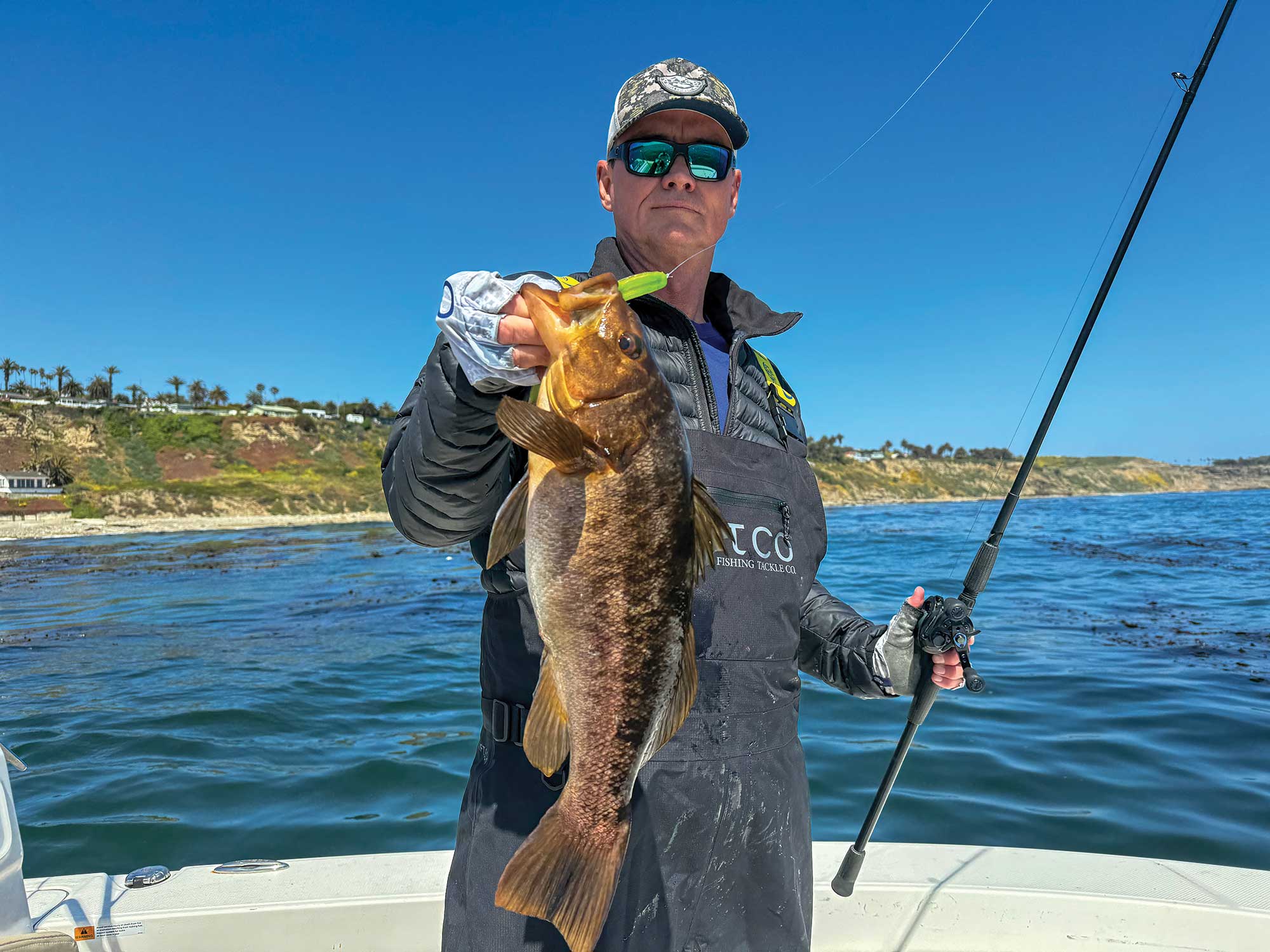
Historically, the sport fishery for calico bass—stretching from Point Conception down through the Channel Islands and into Baja California—was segmented strictly by seasons. During June, July, and August, recreational fleets targeted surface boilers, utilizing live bait, small surface irons, and plastic swimbaits burned across the top of the kelp canopy.
As autumn temperatures began to recede, the prevailing methodology shifted dramatically. Boats loaded up with live squid or frozen anchovies, switching terminal tackle to heavy leadhead jigs and drop-shot rigs. Anglers dropped their offerings straight to the bottom or dragged them slowly through the lower third of the water column. The accepted narrative was that dropping water temperatures rendered calicos cold-blooded and lethargic, incapable of chasing down fast-moving surface baits.
The Paradigm Shift: Challenging Confirmation Bias
The flaw in the seasonal depth theory lies in observational bias. If an angler restricts their winter efforts exclusively to bottom-fishing, they will never test whether active surface fish exist in January or February.
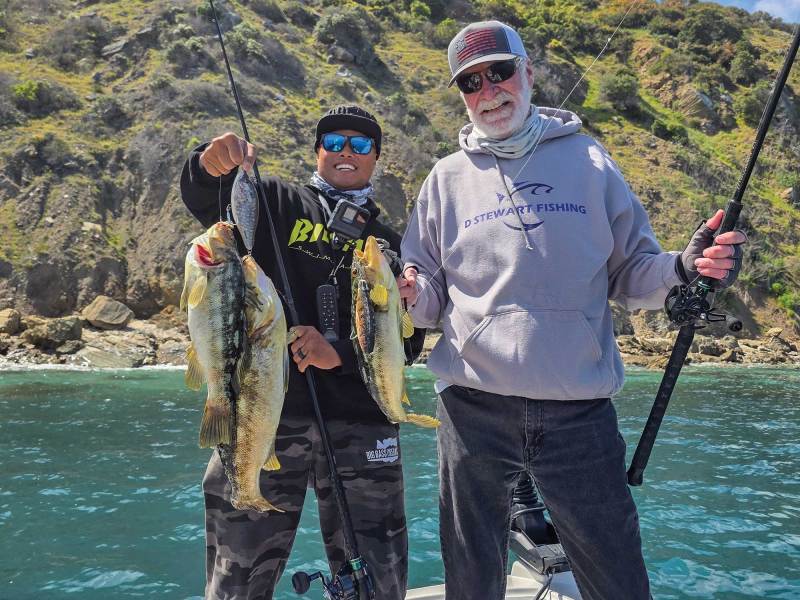
Over the past decade, pioneering guides began experimenting during off-peak months. They discovered that calicos readily smashed surface glides, walk-the-dog baits, and fast-retrieved swimbaits in the dead of winter—provided one critical environmental condition was met: stability.
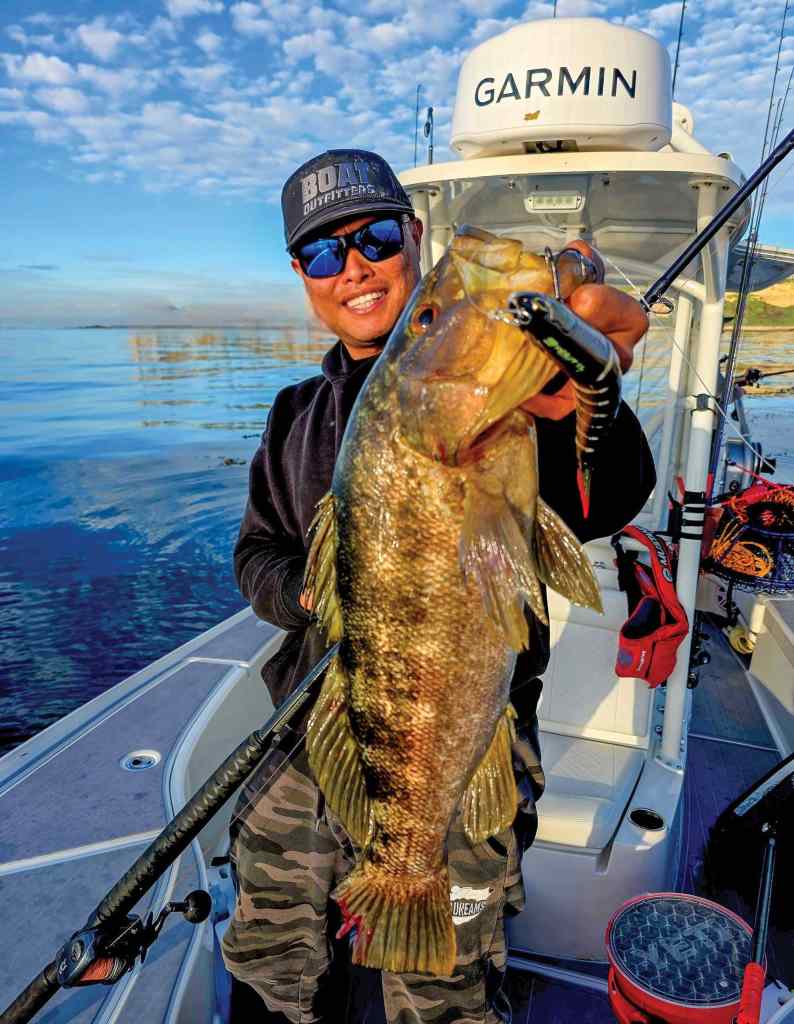
Rather than fleeing to the deep abyss at the first sign of a chill, calicos prove remarkably resilient to cold water, so long as that cold water remains consistent. A stable 55°F marine environment offers just as much topwater potential as a stable 70°F summer day. Conversely, a sudden, sharp downturn in temperature—even a minor 3-degree drop from 71°F to 67°F driven by an overnight upwelling or passing front—will instantly shut down a surface bite, sending aggressive fish scurrying for the safety of the bottom structure regardless of the calendar month.
Supporting Context & Metrics: Environmental Drivers of Calico Behavior
Optimizing catch rates for Paralabrax clathratus requires analyzing the biological and physical mechanisms governing their behavior. Temperature stability, forage ecology, and current vectors form the holy trinity of successful inshore bass fishing.
[Temperature Stability] + [Forage Location (Anchovies)] + [Current Vectors]
       │
       ▼
[Explosive Topwater / Upper-Column Calico Strikes Year-Round]
The 3-Degree Rule and Temperature Fluctuations
Marine teleosts like the calico bass are sensitive to rapid osmotic and thermal shifts. While they can comfortably metabolize across a wide thermal band typical of the Southern California Bight, sudden drops in temperature trigger a preservation reflex.
- The Volatility Factor: A rapid 3-degree Fahrenheit drop in ambient water temperature signals a destabilization of the local food web, causing calicos to drop down in the water column and enter a reluctant, lock-jawed funk.
- The Stability Factor: If the water temperature holds steady—whether it is a brisk 55°F winter reading or a balmy 70°F summer average—for three or more consecutive days, the fish acclimate completely. Under these stable conditions, they routinely patrol the upper water column and the top of the kelp canopy.
Forage Dynamics: The Anchovy Factor
While temperature dictates comfort, food dictates location. In recent years, an influx of juvenile anchovies has reshaped inshore feeding patterns along Southern California kelp beds and rocky shorelines.
Unlike sardines, which roam freely throughout the entire water column, juvenile anchovies rely heavily on the safety of the kelp canopy or turbid shorelines to evade pelagic predators. Consequently, they remain tightly pinned to the surface. Calico bass, being opportunistic ambush predators, have adapted by positioning themselves in the upper water column on a permanent vigil, waiting for anchovies to concentrate near the surface.
Recognizing Bait Signatures:
- Surface Activity: Obvious signs include bait "puddling" on the surface or diving seabirds working an area.
- Subtle Cues: Anglers should look for solitary cormorants sitting low in the water or catch glimpses of fleeing baitfish while idling along a kelp line.
Official Strategies & Tactical Execution
Finding bait is only the initial step; verifying fish activity requires a disciplined approach to casting and boat positioning.
The Upcurrent Kelp Assessment
When approaching a new kelp bed, resist the urge to drift aimlessly or fire blind casts into the middle of the jungle. Instead, locate the upcurrent edge of the bed.
- Positioning: Maneuver the boat on the upcurrent side of the kelp structure.
- First Casts: Make precise casts directly to the leading stringers where the current hits the bed first.
- The Rule of Engagement: If active, biting calicos are present, they will reveal themselves immediately through explosive strikes. If zero strikes occur within the first few casts along the leading edge, continuing to fish that specific bed is often a waste of time. Move on until active fish are located.
Lure Selection & Rigging Matrix
Lure selection must match the structural density of the habitat:
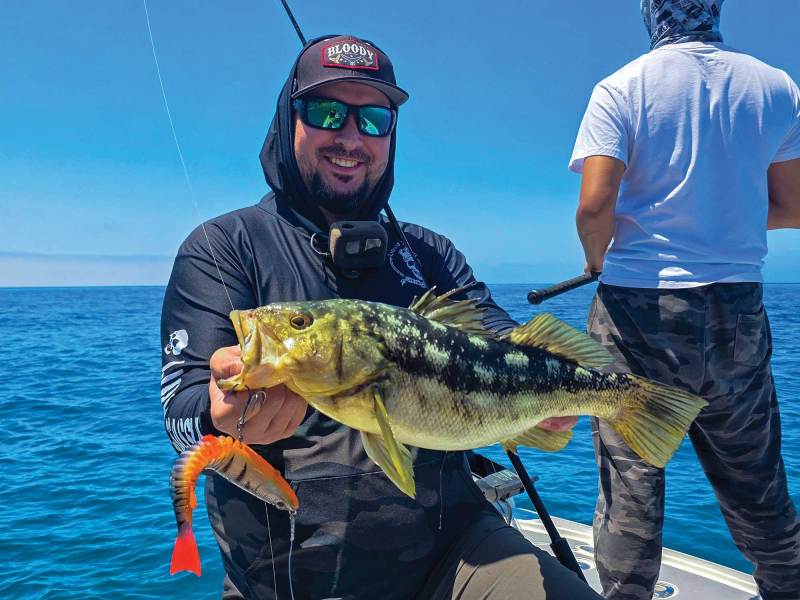
- Open Lanes & Isolated Stringers: Utilize treble-hooked hard baits such as floating walk-the-dog lures (e.g., Yo-Zuri Hydro Pencil) or large stick baits (e.g., AFTCO Blue Fever 160).
- Dense Kelp Beds: Deploy weedless presentations, including 7-inch weedless swimbaits or 7-inch slugs rigged on heavy keel-weighted hooks, as well as oversized freshwater glide baits (e.g., BIWAA USA S’Trout or West Coast Baits Roma Trout).
| Habitat Type | Recommended Lure Class | Ideal Retrieve Speed & Action | Tackle Class |
|---|---|---|---|
| Kelp Canopies | Walk-the-dog surface glides, weedless swimbaits | Fast, erratic stop-and-go; steady surface burn | 300-size baitcaster, 50 lb braid, 40 lb fluorocarbon |
| Shallow Reefs / Boiler Rocks | Large freshwater glide/swimbaits | Slow-rolling, methodical cross-current presentation | Conventional/Baitcaster, 30–50 lb braid, 20–30 lb leader |
| Isolated Stringers | Treble-hooked stick baits / minnow plugs | Quick twitch-and-pause retrieve | Medium spinning or casting, 20 lb braid, 20 lb leader |
Mastering the Current Vector
One of the most critical elements in drawing strikes from calicos is the relationship between the retrieve path and the prevailing ocean current.
- The Mistake of Downcurrent Retrieves: Calicos naturally orient themselves with their noses facing directly into the current to hold position efficiently. If an angler retrieves a lure with the current, the bait overtakes the fish from behind. Because the fish sees it coming from a distance, the unnatural trajectory often exposes the artificial nature of the lure, resulting in a refusal.
- The Success of Cross-Current or Upcurrent Retrieves: When you wind your lure against or perpendicular to the current, the fish’s lateral lines pick up the acoustic vibration of the approaching bait. As the lure flashes past in a split-second window, the calico’s predatory instinct triggers an aggressive reaction strike.
Shallow Reefs and Boiler Rock Tactics
When transitioning from kelp beds to shallow-water reefs or high-energy boiler rocks, tactical adjustments are required. Calicos in these zones behave similarly to stream trout, tucking themselves into micro-eddies directly behind large boulders and rock formations to escape heavy currents while scanning for drifting forage.
- Targeting Visual Anomalies: In clear water, these hiding spots appear as distinct dark patches against the lighter sandy or reef bottom.
- Presentation Angles: Cast across these dark spots, bringing the lure systematically over the top and along both flanks. Note the exact angle of successful strikes, as fish holding on structured reefs often school in uniform patterns relative to the current break.
- Retrieve Speeds: Unlike the rapid burn required in open kelp beds, shallow reef presentations often benefit from a slower, methodical "slow-rolling" technique, allowing fish tracking via lateral lines to ambush the bait as it drifts through their strike zone.
Future Outlook
The modernization of Southern California’s inshore fishery highlights a broader shift toward scientific angling, behavioral conservation, and year-round versatility. As more coastal anglers abandon archaic seasonal dogma, the pressure on heavily fished summer grounds will likely distribute more evenly across the calendar year.
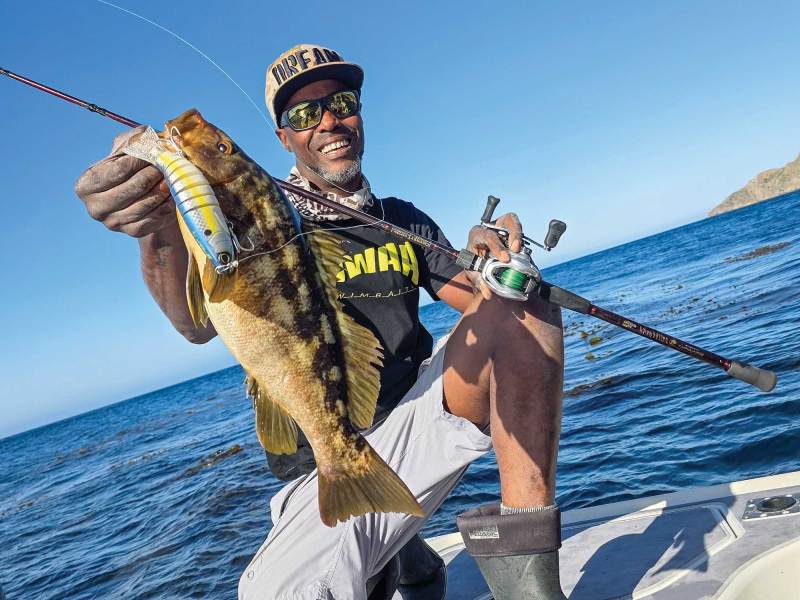
Future advancements in weedless soft plastics, marine acoustics, and high-strength, low-diameter braided lines will continue to expand the boundaries of where and how aggressively anglers can target trophy-class calico bass. Ultimately, the modern blueprint is clear: throw out the calendar, monitor your marine thermometers for stability, track the anchovy schools, and keep your topwater lures ready—because the best calico fishing of your life might just happen in the dead of winter.

0 Comments