

Executive Overview
Modern center consoles and wake boats have evolved drastically over the past decade. What was once considered a comfortably manageable 40-foot vessel has been eclipsed by floating powerhouses spanning 50 to 60 feet. These larger rigs come outfitted with imposing towers, heavy-duty generators, and extensive superstructures that obstruct vital sightlines from the traditional helm. Simultaneously, the demographics of modern boating have shifted. Many owners operate without a professional captain or a trained mate, relying instead on family and friends who may have limited experience handling lines, setting fenders, or securing cleats.
When it comes time to back into a tight slip, pick up a fallen wakeboarder, manage an anchor, or slide onto a trailer, the traditional helm configuration creates a bottleneck. The person who knows the boat best—and who holds the ultimate responsibility for its safe movement—is pinned behind the wheel.
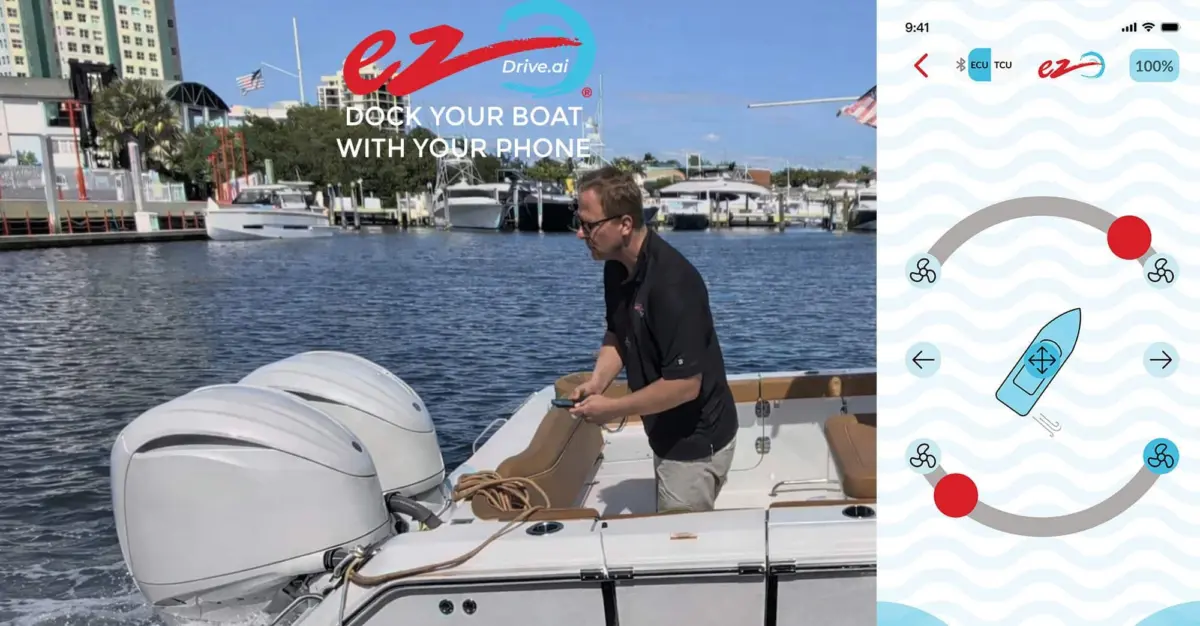
Enter ezDrive®️.ai, an innovative wireless, smartphone-driven docking and maneuvering system designed to eliminate this operational friction point. By turning an everyday smartphone into a full-fledged command center, ezDrive®️.ai gives skippers real-time, proportional control of their engines and thrusters from anywhere on deck. This comprehensive overview explores the engineering, architecture, safety mechanisms, and industry implications of a technology that is poised to change how boaters interact with their vessels.
Detailed Chronology & Technological Evolution
The journey toward smartphone-integrated marine vessel control did not happen overnight. For years, the yachting market relied on dedicated, handheld wireless remote controls that were often bulky, expensive, and limited in their computational flexibility. As outboard manufacturers—such as Yamaha, Mercury, and Suzuki—perfected digital switching, electronic steering, and joystick integration, a new opportunity emerged to leverage modern consumer electronics in the marine environment.
The Problem of Scale vs. Crew Experience
As center consoles grew heavier, wider, and taller, the gap between vessel size and crew capabilities widened. Docking a 50-foot center console in a crowded, wind-swept marina requires precision. Historically, this meant relying on verbal signals, hand gestures, and inexperienced deckhands who might panic or misinterpret commands.
The development team behind ezDrive®️.ai identified that the most effective way to solve this dilemma was to untether the captain from the helm entirely. By utilizing the computational power, wireless capabilities, and display technologies already embedded in modern smartphones, the engineering team set out to build a platform that could interface seamlessly with original equipment manufacturer (OEM) electronic control systems without requiring structural vessel modifications.
Refining the Interface: Three Distinct Operating Modes
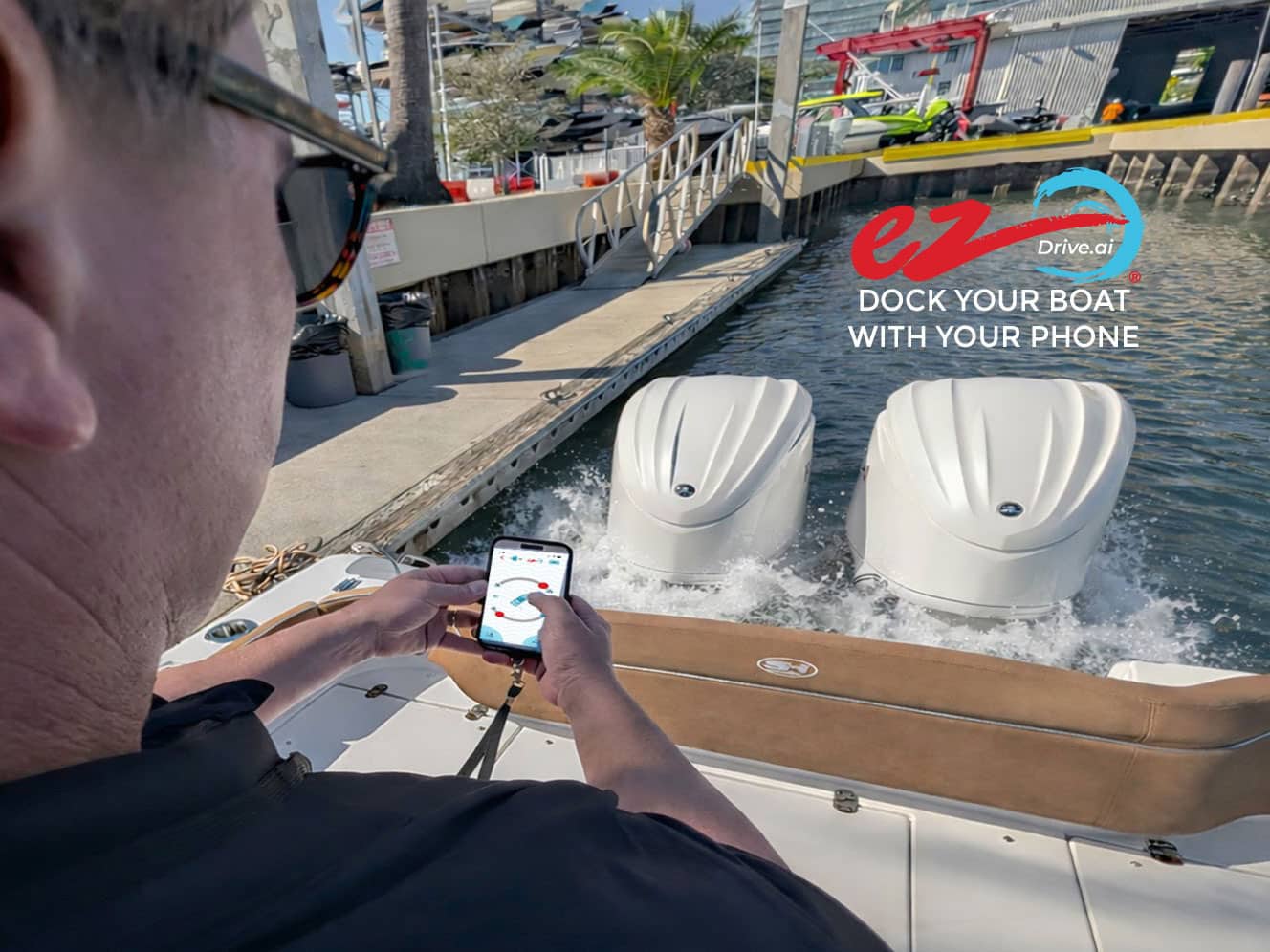
Recognizing that different skippers have different comfort levels with digital interfaces, ezDrive®️.ai incorporates three distinct control modes:
- Auto Mode: Designed for skippers who want a traditional feel, this mode delivers a true 3-axis joystick experience with proportional thruster control. It interfaces directly with joystick-equipped outboard systems from leading manufacturers. As the user interacts with the app, haptic feedback on the smartphone mirrors the tactile sensation of OEM controls, ensuring the operator maintains spatial awareness without looking down at the screen.
- AI Mode: Built for intuitive simplicity, AI Mode strips away complex joystick manipulation. The operator simply slides their finger across the screen in the direction they want the boat to move, and the system’s intelligent algorithms automatically fire the appropriate thrusters and engines to execute the maneuver.
- Console Controller Mode: Tailored for a gaming-controller style experience, this mode allows the user to hold their phone horizontally. A virtual joystick sits under one thumb, while directional sliding is handled by the other. This interface is instantly familiar to modern smartphone users, reducing the learning curve to mere minutes.
Supporting Context & Metrics: Overcoming Marine Realities
Developing software for a smartphone is straightforward; engineering a reliable control interface for the harsh, unpredictable marine environment is an entirely different challenge. ezDrive®️.ai’s architecture addresses three major technical hurdles: screen visibility, wireless connectivity range, and adaptive learning algorithms.
Sunlight Readability and Glare Management
Operating a boat in bright midday sun exposes electronics to extreme glare. Standard consumer apps often wash out under direct sunlight, rendering buttons invisible. ezDrive®️.ai solves this by incorporating an adaptive high-contrast interface that automatically modulates display parameters to ensure critical control icons remain legible under harsh marine lighting conditions.
Proprietary Long-Range Bluetooth Architecture
Standard Wi-Fi and basic Bluetooth connections frequently suffer from latency, interference, and limited range—especially on larger fiberglass or aluminum vessels where bulkheads and electronics can disrupt signals. Rather than adapting generic consumer electronics protocols, ezDrive®️.ai utilizes extended-range Bluetooth architecture.
While many modern smartphones feature the necessary internal hardware for long-range connectivity, few applications actually harness it. ezDrive®️.ai pairs directly with a dedicated onboard receiver, automatically establishing a robust, low-latency long-range connection. This provides ample signal coverage for an operator to move freely from the transom to the bow, whether managing a 40-foot center console or a specialized wakesurf boat.
Crowdsourced AI Optimization
The system features a built-in learning feedback loop. Every time a registered user docks or maneuvers using the app, telemetry data is anonymously fed back to the engineering team. This data pool is used to refine AI Mode performance continuously, allowing the system to adapt more fluidly to various hull shapes, wind loads, and hydrodynamic responses.
Official Statements and Industry Insights
The philosophy behind ezDrive®️.ai centers on practicality, safety, and cost-effectiveness. Industry professionals emphasize that the technology is not meant to replace good seamanship, but rather to augment the skipper’s capabilities when human resources are stretched thin.
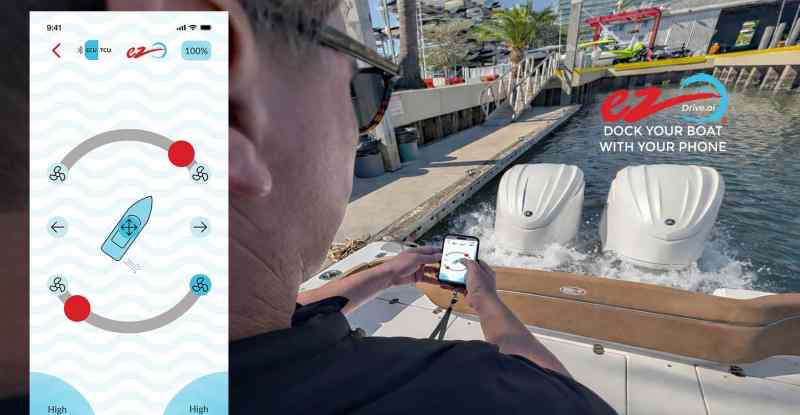
"Having control in the palm of your hands allows you to remain in control while you work on the bow line, drop anchor, get a line of sight on the dock, pick up a downed rider while wake surfing, and much more," explains Chris Willits, Account Manager for ezDrive.ai.
"If you’re in a 40- to 50-foot boat tied to the helm, it’s difficult to do certain tasks if you have an inexperienced person helping with lines. ezDrive.ai integrated into your phone has changed that dynamic. It lets you move wherever you need to and still have control while working on the trickier parts of an outing."
Plug-and-Play Installation Architecture
One of the primary concerns vessel owners have regarding aftermarket electronic additions is the risk of invasive wiring modifications. Cutting into factory wiring harnesses can void warranties and create points of failure. ezDrive®️.ai was engineered from the ground up to be completely non-invasive.
"We don’t want to disturb the user experience you’re already used to," Willits notes. "We create an accurate model that mimics the mechanics of your OEM equipment, and we don’t bypass any features or safety protocols you use on your boat."
Control handoff is seamless. Activating the app transfers power from the primary helm in the exact same manner as traditional secondary yacht control stations. Returning control to the physical helm requires nothing more than a simple throttle movement or joystick engagement.
Safety Engineered Into Every Layer
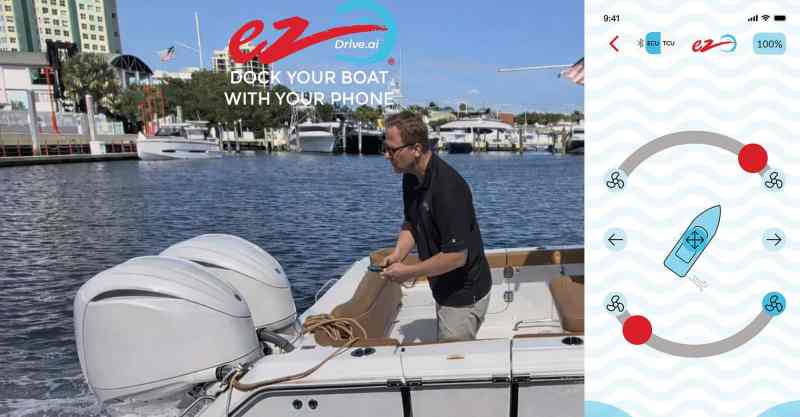
Entrusting engine and thruster propulsion to a handheld smartphone naturally invites scrutiny regarding fail-safes and redundancy. To prevent catastrophic scenarios, the engineering team has implemented multiple layers of safety:
- Battery Voltage Thresholds: The app continuously monitors the host smartphone’s battery charge. If the battery drops below 20 percent, the system refuses to transfer control to the device and issues early visual and haptic warnings to the user.
- Connection Monitoring: Should the long-range Bluetooth connection be interrupted or lost during operation, the smartphone immediately pulses with heavy haptic feedback accompanied by a prominent on-screen warning.
- Momentary Command Logic: The system operates exclusively on a momentary command basis. The operator must actively press and hold or slide their input on the screen for the engines or thrusters to respond. If a phone is dropped, let go of, or experiences a sudden software freeze, all thruster and engine inputs instantly return to neutral. There is zero risk of a "runaway" vessel caused by a lost signal or disconnected device.
Future Outlook: A New Standard for Single-Handed Operation
As center consoles and wake boats continue to push boundaries in length, weight, and amenity density, the challenges of marina navigation and trailering will only intensify. Traditional yacht-grade wireless remote systems have historically carried prohibitive price tags, placing them out of reach for many everyday boaters. ezDrive®️.ai bridges this gap by utilizing hardware that consumers already own—their smartphones.
By offering a cost-effective, highly secure, and intuitive bridge between the skipper and the vessel’s propulsion systems, ezDrive®️.ai shifts close-quarters maneuvering from a high-stress group project into a manageable, precise, one-person operation. With integration support expanding across major outboard and thruster manufacturers ahead of its official market rollout, this technology marks a pivotal step forward in modern marine engineering.

0 Comments