
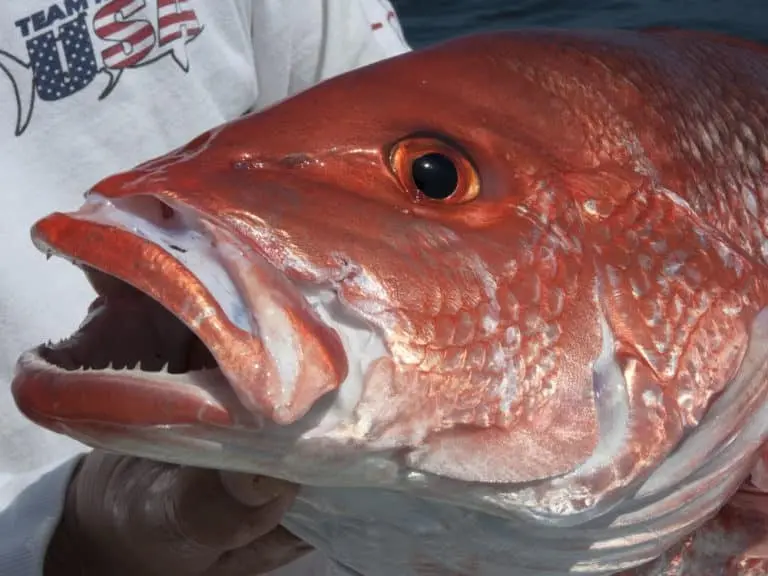

Executive Overview
Following years of contentious, highly restricted, and abruptly canceled recreational openings, federal regulators have officially thrown a lifeline to anglers across the Southeast. The National Oceanic and Atmospheric Administration (NOAA) Fisheries, in tandem with state wildlife agencies, has announced a 14-day fall red snapper season for federal and state waters off Florida, Georgia, and South Carolina.
This upcoming fishing window, scheduled to run from October 9 through October 22, is made possible through newly approved Exempted Fishing Permits (EFPs). While the allocation falls short of the expansive summer seasons long desired by the angling community—and still smarting from the sudden cancellation of the planned 2026 summer frameworks—it represents a massive logistical and structural step up from the agonizing one- or two-day seasons that have defined the fishery in recent years.
At the core of this initiative is a modernized, state-level data collection experiment. For decades, federal stock assessments and broad-brush recreational catch estimates have driven friction between fishermen, marine scientists, and management councils. Under the new EFPs, Florida, Georgia, and South Carolina will pilot test localized, rigorous reporting architectures designed to capture precise harvest metrics in real time.
The underlying gamble is simple yet high-stakes: if these three states can prove they can accurately track recreational mortality down to the fish, NOAA may finally possess the empirical confidence required to expand access permanently. However, participation in this extended two-week window is not a free-for-all. It requires strict adherence to new registration mandates, mandatory electronic reporting within strict 24-hour windows, and unwavering compliance with daily bag limits. This comprehensive report breaks down the chronological development of the season, the granular state-by-state rules, the broader management context, and what this pilot program means for the future of South Atlantic sportfishing.
Detailed Chronology: From Summer Frustration to Fall Relief
To understand the significance of the October 2023 EFP announcement, one must look at the turbulent history of South Atlantic red snapper management leading up to this point. For generations, the red snapper population in the South Atlantic suffered from severe overfishing, prompting aggressive conservation measures initiated in the late 2000s and early 2010s. While these closures successfully stimulated a biological recovery, the sheer abundance of red snapper has created an unprecedented management paradox. Anglers routinely report encounters with swarms of red snapper that aggressively strike baits intended for other bottom-dwelling species, leading to high rates of discarded catch mortality that complicate stock assessments.
The boiling point for recreational fishermen arrived during recent regulatory cycles. Hopes had surged around long-term planning models that pointed toward a potential return to traditional summer fishing windows, only for those expansions to be scaled back or entirely pulled off the table at the eleventh hour due to lingering concerns over overfishing limits and data reliability. The abrupt cancellation of previously anticipated seasons left charter captains, tackle shops, and private boaters feeling alienated by a federal process they viewed as unresponsive to real-time water conditions.
The turning point materialized through cooperative diplomacy between state natural resource agencies and federal overseers. Recognizing that the status quo of a single-day federal season was untenable—generating compressed effort, unsafe marine conditions, and highly erratic catch estimates—NOAA Fisheries and state leaders engineered a compromise.
On September 21, NOAA Fisheries officially announced a baseline federal recreational red snapper season spanning October 9–11. Simultaneously, the agency executed the EFPs for Florida, Georgia, and South Carolina. These permits effectively supersede the standard three-day federal window for participating jurisdictions, extending the harvest opportunity through October 22.
Furthermore, the implementation timeline includes a safety valve: once the 14-day window closes on October 22, NOAA Fisheries and state delegations will convene to analyze aggregate catch data against pre-established mortality caps. If remaining quota allows without threatening the rebuilding plan, officials will weigh the possibility of an additional fishing window in December. This adaptive management approach marks a distinct philosophical shift away from rigid, predetermined calendar closures toward dynamic, data-driven responsiveness.
Supporting Context & Metrics: The Science of the EFP
The issuance of Exempted Fishing Permits is not merely a bureaucratic workaround to grant anglers extra days on the water; it is a calculated scientific experiment designed to cure the chronic data deficiency plaguing South Atlantic fisheries management.
Historically, federal managers have relied on the Marine Recreational Information Program (MRIP) to estimate recreational catch and effort. While MRIP provides broad, coast-wide trends, it has faced sustained criticism from state agencies and fishing organizations for its high standard errors and delayed data availability when applied to compressed, high-intensity reef fish seasons. When a red snapper season lasts only 48 hours, the statistical models struggle to accurately capture the sudden explosion of fishing effort, often leading to retroactive quota overages that invite subsequent draconian cuts.
The EFPs shift the burden and the capability of data collection directly to the state level, leveraging specialized regional surveys and mandatory digital logbooks. By forcing every participating vessel to register and report catches within a 24-hour window, the states are building a census-style dataset rather than relying purely on probabilistic telephone and intercept surveys.
+-------------------------------------------------------------------------+
|                  THE EFP DATA COLLECTION FRAMEWORK                      |
+-------------------------------------------------------------------------+
|                                                                         |
|  [ Angler Trip ] ---> [ Digital App / State Registry ] ---> [ 24-Hour ] |
|                                                                         |
|                                                                         |
|  [ State Analysis ] ---> [ NOAA Review ] ---> [ Potential Dec. Season ] |
+-------------------------------------------------------------------------+
Each state has been assigned a strict total harvest limit, calculated based on historical mortality allowances and current stock health projections. These caps ensure that the extended 14-day season does not compromise the ongoing biological recovery of the South Atlantic red snapper stock:
- Florida: 83,720 red snapper total harvest limit.
- South Carolina: 8,695 red snapper total harvest limit.
- Georgia: 4,859 red snapper total harvest limit.
These localized quotas reflect the relative distribution of the stock and historical fishing pressure across the three states. Florida, possessing an extensive coastline and a massive marine recreational infrastructure, commands the lion’s share of the quota. Meanwhile, South Carolina and Georgia operate under tighter ceilings reflective of their localized fleet sizes.
Official Statements and Industry Reaction
The announcement of the EFP-backed season has elicited a cautiously optimistic response from conservation groups, fishing coalitions, and state fisheries administrators. While seasoned anglers remain quick to point out that 14 days is still a fraction of the historical open seasons enjoyed decades ago, the collaborative framework has breathed new life into faith in the management process.
Pat Murray, president and CEO of the Coastal Conservation Association (CCA), captured the sentiment of the organized angling community in a formal statement following the announcement.
"We appreciate the states’ perseverance and believe that their efforts are going to pay off with better data that will increase both recreational access and faith in the fisheries management system," Murray stated. "We look forward to working with the state agencies to establish the new data systems and begin building a better future for recreational angling in the South Atlantic."
State wildlife agencies have echoed this forward-looking perspective, emphasizing that the success of future seasons rests entirely on angler compliance. Fisheries biologists stress that if participants fail to report their catches accurately or attempt to bypass registration mandates, the resulting data corruption could prompt federal regulators to revoke the EFPs in subsequent years. Conversely, demonstrating that localized reporting can keep total harvest securely beneath the assigned caps will provide state agencies with an ironclad defense when lobbying for expanded seasons in future management cycles.
State-by-State Regulatory Breakdown
While the overarching dates and goals of the EFP apply uniformly across the tri-state area, the specific rules, bag limits, and reporting mechanisms vary by jurisdiction. Anglers must ensure they are fully compliant with the exact legal frameworks of the state from which their vessel departs.
Florida Regulations
For anglers launching from Sunshine State ports, the October 9–22 season is open to properly licensed private recreational anglers, as well as for-hire charter and headboat operations.
- Quota & Limits: Florida’s total harvest limit is set at 83,720 red snapper. The daily bag limit is strictly one red snapper per angler, which must fit within a broader 10-fish aggregate bag limit. Crucially, once an angler reaches their 10-fish aggregate limit (combining all applicable reef fish species), all bottomfishing must cease immediately.
- Vessel Requirements: Every participating vessel must carry official EFP documentation aboard. All trips must depart from and return to a Florida port.
- Reporting Protocols: Private anglers must register and report their fishing effort and catch data through the Florida Fish and Wildlife Conservation Commission’s (FWC) State Reef Fish Survey. FWC strongly encourages private boaters to utilize their voluntary smartphone application for trip declarations and catch reporting, which must be completed within 24 hours of a trip concluding. For-hire vessels will continue to report through established federal reporting channels.
Georgia Regulations
Georgia’s marine waters will also welcome participants to the October 9–22 EFP harvest window, catering to both private and for-hire sectors under tight localized constraints.
- Quota & Limits: Georgia has been allocated a total harvest limit of 4,859 red snapper. The daily bag limit is one red snapper per person, per day. In a specific restriction designed to curb commercial-style effort on charter vessels, captain and crew operating for-hire boats are strictly prohibited from retaining any red snapper.
- Trip Parameters: All fishing trips must begin and end within the state of Georgia.
- Reporting Protocols: Participating private anglers must formally register, declare their trips ahead of time, obtain unique authorization codes, and submit detailed trip reports within 24 hours of departure. As with Florida, for-hire captains will maintain compliance through federal reporting systems.
South Carolina Regulations
South Carolina’s marine management division has integrated its reporting structure directly into specialized mobile software to streamline data collection during the 14-day window.
- Quota & Limits: South Carolina’s harvest ceiling is capped at 8,695 red snapper. The bag limit is one red snapper per person per day, subject to a strict minimum size limit of 20 inches total length. Similar to Georgia, captain and crew members aboard for-hire charter vessels are barred from retaining red snapper.
- Trip Parameters: Vessels must successfully depart from and return to South Carolina ports to qualify under the state’s EFP umbrella.
- Reporting Protocols: All participating anglers must register and log their trips via the VESL app. Mandatory catch and effort reports must be filed within 24 hours of leaving the dock for each respective trip.
Future Outlook: A Turning Point for South Atlantic Fisheries?
The October 2023 EFP season serves as a high-profile stress test for modern fisheries management in the South Atlantic. For years, the dynamic between federal regulators and coastal anglers has been characterized by mutual distrust—anglers accusing science-based councils of ignoring on-the-water reality, and managers accusing the recreational sector of unaccounted-for mortality.
By devolving data collection responsibilities to the state level and utilizing modern mobile applications, this 14-day pilot program bridges the gap between grassroots angling participation and rigorous federal oversight. If Florida, Georgia, and South Carolina can successfully execute this season without exceeding their mortality allocations—and if the data gathered proves robust enough to satisfy the exacting standards of NOAA’s scientific advisors—the implications will extend far beyond a single two-week autumn window.
Success in this endeavor could permanently reshape how reef fish are managed in the Atlantic, laying the groundwork for predictable, longer-duration seasons, customized regional rules, and restored confidence in marine stewardship. However, the onus now rests squarely on the shoulders of the angling community. Compliance with size limits, strict adherence to the one-fish daily cap, and diligent, timely reporting are no longer just regulatory suggestions—they are the mandatory investments required to secure a sustainable and accessible future for South Atlantic red snapper fishing.

0 Comments