Every autumn, as the searing heat of summer begins to relent and a crisp, subtle shift in the wind hints at the changing seasons, one of the most awe-inspiring spectacles in the marine world unfolds along the coasts of the United States. Spanning from September well into November—and occasionally bleeding into December—millions upon millions of striped and silver mullet pour out of the labyrinthine rivers, bays, and brackish estuaries of the Atlantic Coast and the Gulf of Mexico.
This mass migration is an ecological phenomenon more akin to the transcontinental flights of migratory birds or the legendary movements of terrestrial lemmings than to the behavior of marine fish. Ranging in size from delicate, translucent fingerlings to heavy, three-pound adults, these baitfish form colossal, undulating schools that blanket the nearshore waters.
However, this is not merely a peaceful journey; it is a high-stakes gauntlet. As the mullet push past the breakers and cruise parallel to the beaches, they draw an extraordinary assemblage of apex predators. For inshore and offshore anglers alike, the fall mullet run represents the ultimate angling opportunity. It is a months-long forage feast where redfish, snook, tarpon, king mackerel, sharks, and jack crevalle go into a feeding frenzy. Understanding the mechanics of this run, tracking its progression, and deploying the right strategies are the keys to experiencing some of the most explosive saltwater fishing on earth.
Detailed Chronology: The Fall Migration Unfolds
While marine biologists and veteran captains have tracked the mullet run for decades, its precise timing and exact triggers remain wrapped in a degree of natural mystery. Nevertheless, the migration follows a reasonably predictable seasonal chronology that dictates the rhythm of coastal fishing.
September: The Kickoff in the North
The curtain rises on the mullet run just after Labor Day, typically triggered by the first genuine cold fronts pushing down from the northern latitudes. In the Carolinas and northern Georgia, rivers and sounds begin to empty as massive schools of mullet coalesce and head toward the ocean. At this stage, the fish are often fired up by dropping water temperatures and falling barometric pressure.
In these northern reaches, the action is predominantly coastal and beach-oriented. Tarpon, redfish, and aggressive bluefish eagerly intercept the vanguard of the migration as it exits the inlets and turns south. For anglers in the Carolinas and north Florida, September marks the beginning of dawn-to-dusk vigilances along the surf line, where the telltale bronze hue of a bait pod rippling the water’s surface can erupt into violent surface crashes at any moment.
October: The Peak Convergence in Florida
By October, the migration is in full swing, turning the waters off Florida’s Atlantic and Gulf coasts into a raging marine battlefield. This is the absolute peak of the run. Striped and silver mullet flood past popular geographic landmarks like Sebastian Inlet, Cape Canaveral, and the St. Lucie River.
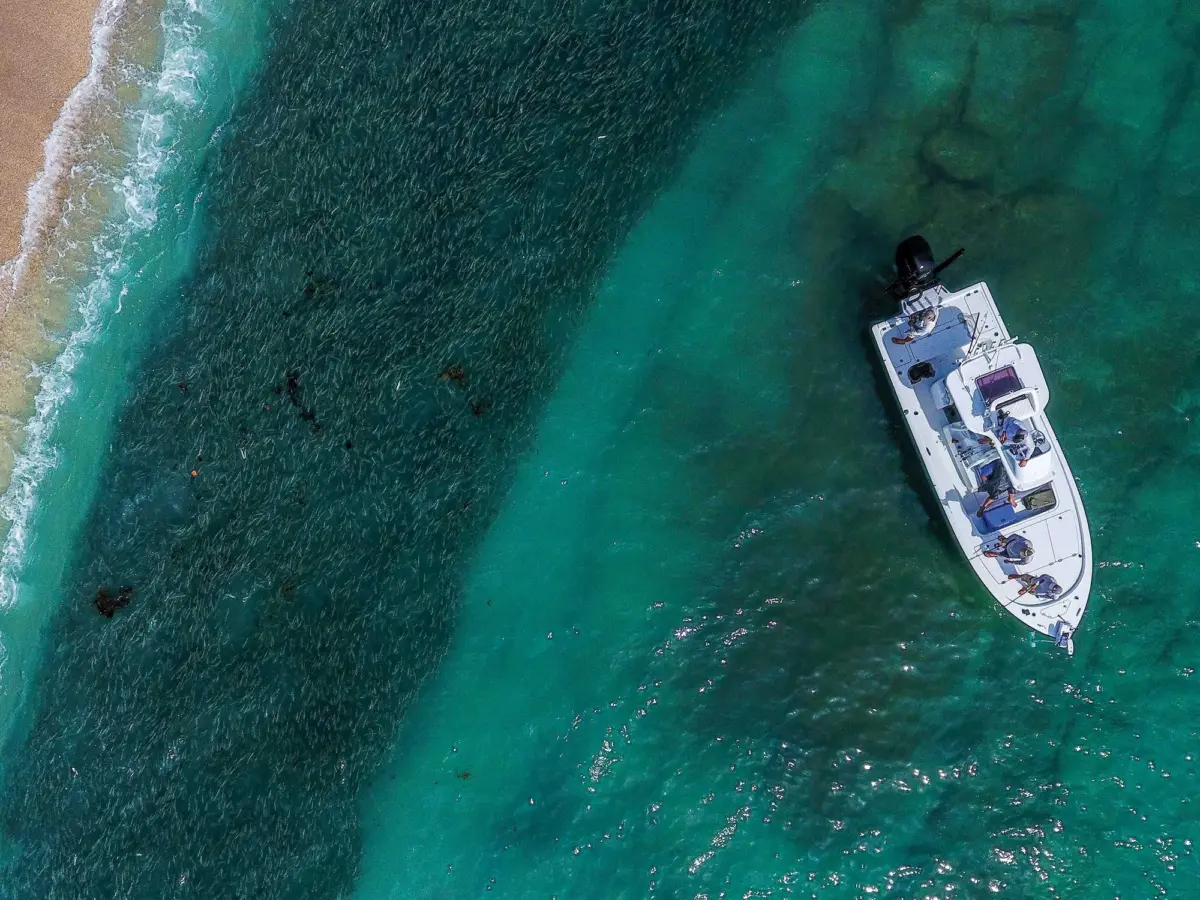
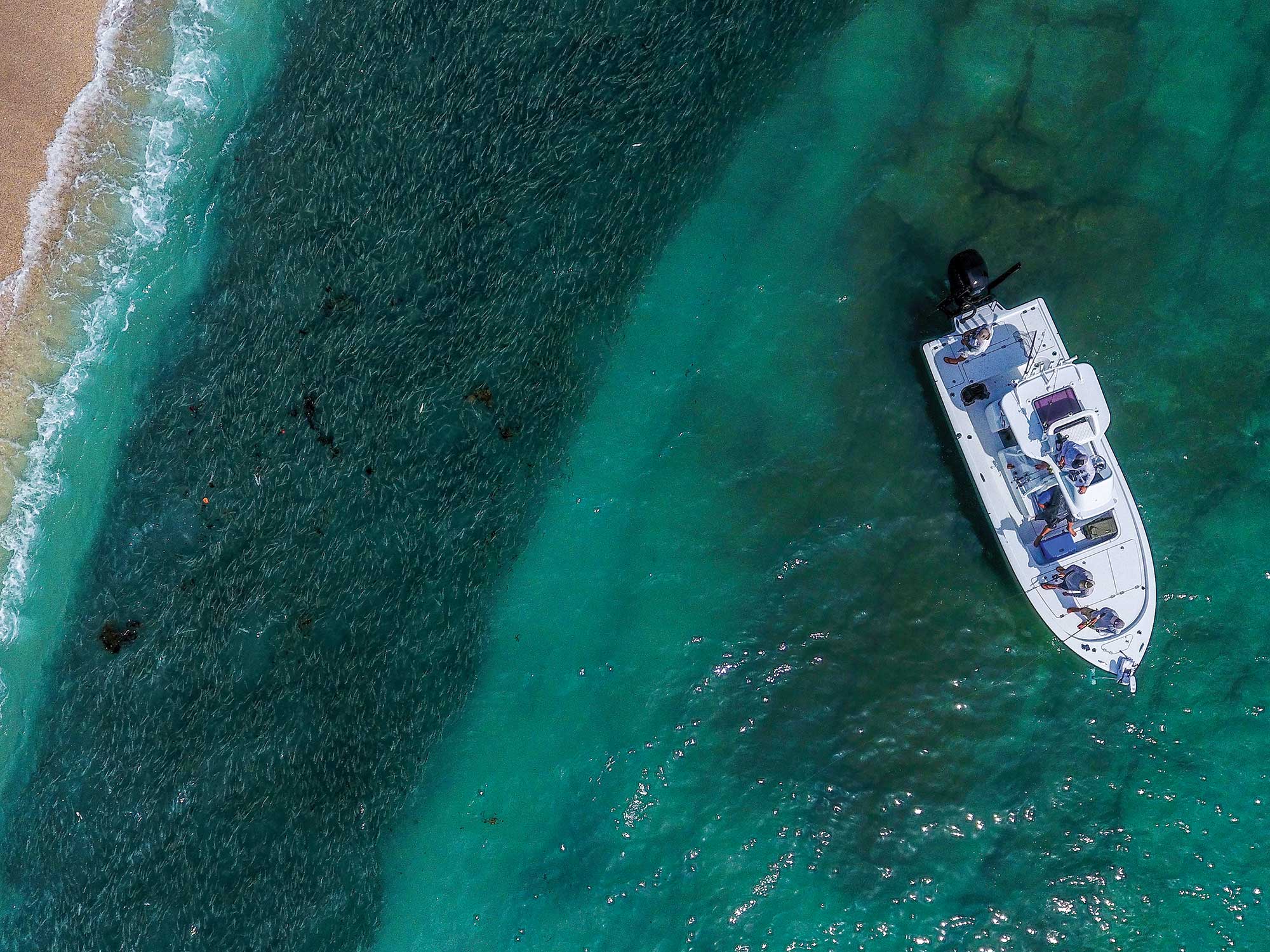
During this window, the sheer volume of baitfish is staggering. Mullet stretch for miles along the beaches, packed so tightly that they often push each other out of the water. Predators are locked in a relentless feeding cycle. Snook populations from Sebastian Inlet down to Miami go on an absolute feeding orgy, while oversize redfish crowd the inlets and river mouths. Offshore, king mackerel and roving sharks hound the outer edges of the bait pods. It is a period of non-stop action where endurance, gear maintenance, and reflexes are tested to their absolute limits.
November and Beyond: The Southern Push and Spawning
As November progresses, the bulk of the surviving mullet school pushes deep into South Florida waters, wrapping around the peninsula into the Keys or pressing down the Gulf Coast. The primary biological driver of this entire journey is reproduction. Biologists note that mullet seek out specific, highly precise saline concentrations to successfully release their eggs and milt.
Once these environmental thresholds are met, the spawning occurs, and the surviving adult mullet disperse or perish, while microscopic larvae begin their long, passive drift back toward the nursery estuaries. For fishermen, the late-run phase offers a final, desperate window of opportunity as the last remaining schools of weary baitfish are systematically decimated by lingering predators before winter sets in.
Supporting Context & Metrics: The Biology and Mechanics of the Run
To successfully target gamefish during the mullet run, an angler must understand the biological imperatives driving the baitfish. Mullet spend the vast majority of their lives safely tucked away in low-salinity estuaries, tidal creeks, and winding rivers. They are resilient, adaptable, and feed primarily on detritus, algae, and micro-organisms.
The Salinity Trigger and Migration Patterns
Why do they leave this relative safety? According to leading marine biologists, the annual exodus is strictly tied to reproduction. Mullet require high-salinity oceanic environments to spawn. As autumn arrives, hormonal cues prompt them to school up and head seaward.
Interestingly, the behavior of the migration varies by region:
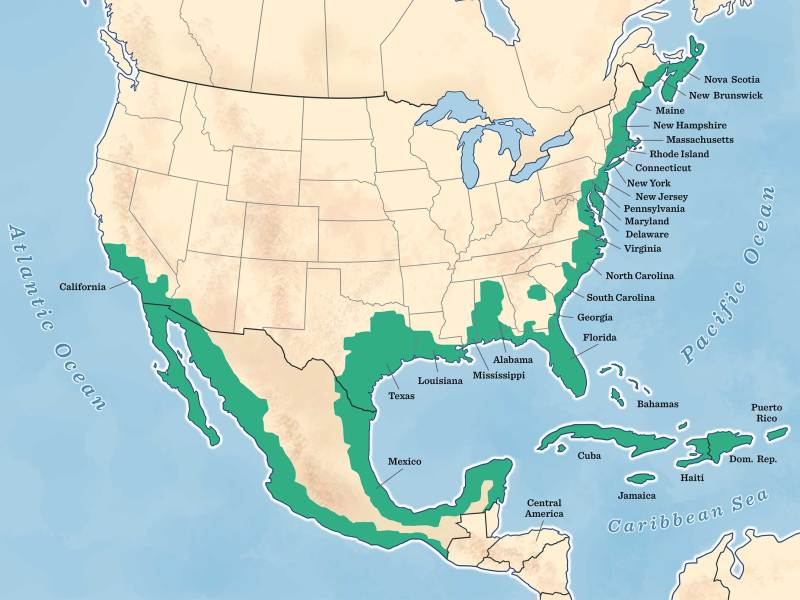
Atlantic Coast: The migration is primarily a north-to-south coastal highway. Millions of fish hug the shoreline, navigating the surf zone as they travel down the Florida peninsula.
Gulf of Mexico: Research has documented Gulf white mullet executing lateral migrations of up to 100 miles, moving primarily east and west rather than strictly north and south to find the ideal mixing zones of fresh and saltwater.
Why Do Mullet Jump?
One of the most iconic and mesmerizing sights of the fall run is the constant leaping of mullet into the air. While amateur observers often assume this is merely playful behavior, marine scientists and veteran guides point to a more practical biological explanation: oxygen acquisition and predator avoidance.
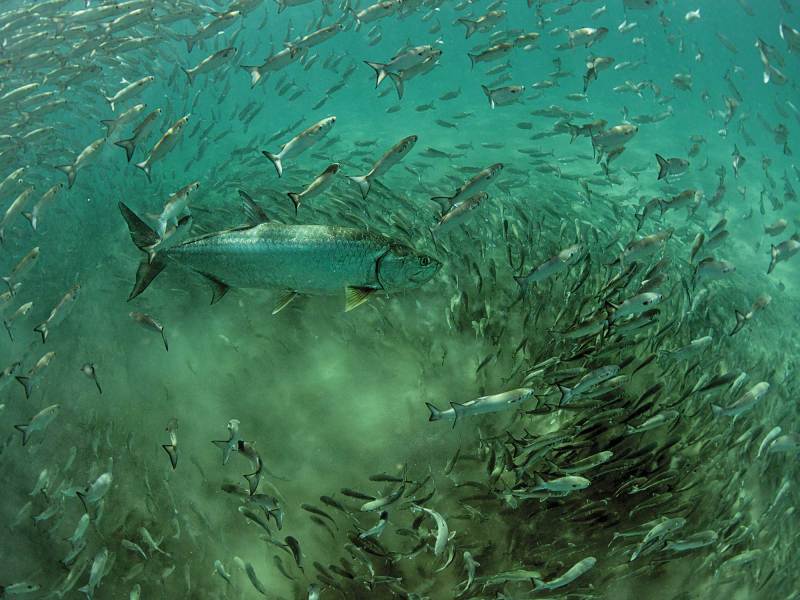
When millions of fish pack into dense pods that stretch for acres, dissolved oxygen levels in the water plummet rapidly. By breaking the surface, mullet can skim oxygen-rich air across their gill membranes. Simultaneously, jumping serves as a panic response; when a predator surges from beneath, the shockwave of jumping fish creates chaos, confusing tracking predators and occasionally allowing individual mullet to escape the jaws of an attacking tarpon or jack.
Official Perspectives: Expert Insights on Targeting Apex Predators
The sheer abundance of food during the mullet run changes the rules of engagement for predatory gamefish. Rather than hunting individual prey, apex predators can gorge themselves selectively, presenting a unique challenge to anglers trying to trick a fish with an artificial lure or a hooked bait.
Capt. Phil O’Bannon on Matching the Hatch for Snook
Capt. Phil O’Bannon, a legendary Charlotte Harbor guide with extensive experience targeting linesiders on both the Atlantic and Gulf coasts, emphasizes the importance of precision during the height of the run.
"One important key for snook is to match the size bait to the size mullet in a school where linesiders are feeding," O’Bannon explains. "If, for example, bait pods are holding mostly mullet in the 6-inch range, that’s the size bait to employ, preferably caught from the same schools snook are hitting."
When snook are locked onto a specific size class of mullet, they will frequently ignore offerings that are even an inch too large or too small. Anglers must observe the water closely, capture live baits directly from the active pods using a cast net, and present them naturally on light tackle.
Navigating State Regulations for Oversized Redfish
The mullet run coincides directly with the autumn spawning runs of massive, mature redfish (drum) into inlets, sounds, and lower river systems. While catching a 30-pound redfish in the surf is the stuff of angling dreams, conservation regulations play a critical role here.
Most mature redfish that actively ambush mullet along beach zones far exceed the maximum size limits established by state wildlife agencies for harvest. Consequently, anglers targeting these trophy-class "bull reds" must practice proper catch-and-release techniques. Utilizing heavy spinning gear to quickly land and revive these spawning fish ensures the future health of the fishery.
Managing Offshore Predators: Kings and ‘Cudas
When the mullet schools venture a mile or two offshore, a different class of predator takes over. King mackerel in the 20-pound class and aggressive barracuda crash the party, utilizing high-speed slashing attacks to clip the rear ends of live mullet.
For anglers targeting these toothy speedsters, standard monofilament or fluorocarbon leaders are instantly severed. Successful offshore captains rely on wire leaders and slow-trolling live baits using tandem-hook rigs. Vigilance is paramount; watching the horizon for skyrocketing king mackerel allows captains to run—not walk—to breaking fish, setting up precise, slow turns around the outer perimeter of the bait pods without spooking the school.
Future Outlook: Conservation, Climate, and the Fishery
As coastal development accelerates and marine ecosystems face mounting pressures from climate change, habitat degradation, and shifting water temperatures, the long-term health of the fall mullet run remains a subject of intense interest among conservationists and fisheries managers.
Environmental Pressures on Estuaries
Because mullet spend their formative years in rivers, bays, and marshes, the degradation of estuarine nurseries poses a direct threat to the magnitude of future runs. Loss of mangrove fringes, commercial overharvesting of adult mullet for bait and food markets, and declining water quality in major river systems can all suppress recruitment year over year. Protecting these crucial inshore habitats is vital to ensuring that the autumn migration continues to occur on such a grand, awe-inspiring scale.
The Evolving Role of Catch-and-Release Ethics
With modern sonar, high-speed center consoles, and instant communication via social media, today’s anglers can track and intercept mullet schools and their accompanying predators with unprecedented precision. While this has unlocked incredible fishing opportunities, it also places a heavier burden of stewardship on the angling community.
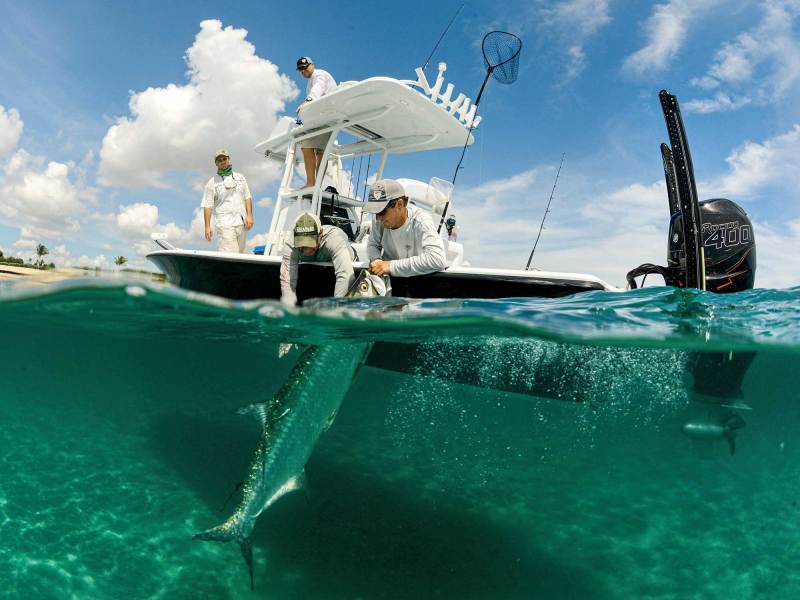
Forward-thinking fishermen are increasingly adopting catch-and-release practices for apex predators like tarpon, large snook, and oversized redfish, recognizing that these older, breeding-age fish are the foundation of the coastal ecosystem. By respecting size limits, using barbless hooks when appropriate, and minimizing handling time for exhausted fish, anglers can ensure that the ecological fireworks of the fall mullet run will dazzle generations to come.
Essential Tackle & Strategy Summary
Target Species
Prime Location
Preferred Technique / Gear
Key Consideration
Redfish
Inlets, river mouths, surf zone
Live mullet under a cork or bottom rig; daybreak casting
Check state regulations; many large beach reds are protected.
Snook
Sebastian Inlet southward, dock lights
Match-the-hatch live baiting; precision topwater lures
Match the exact size of the bait in the local pod.
Tarpon
Beaches of Carolinas, Georgia, Florida
Sight-casting large swimbaits, streamers, or live mullet
Competing against a sea of natural bait requires absolute patience.
King Mackerel
1–2 miles offshore near bait pods
Slow-trolling live bait with wire leaders and tandem hooks
Avoid driving directly through bait pods; troll the edges.
Jack Crevalle
Inshore bays, beach troughs, inlets
Fast-moving topwaters, spoons, and heavy fly gear
Incredibly aggressive; perfect for introducing anglers to fast action.



0 Comments