

Executive Overview
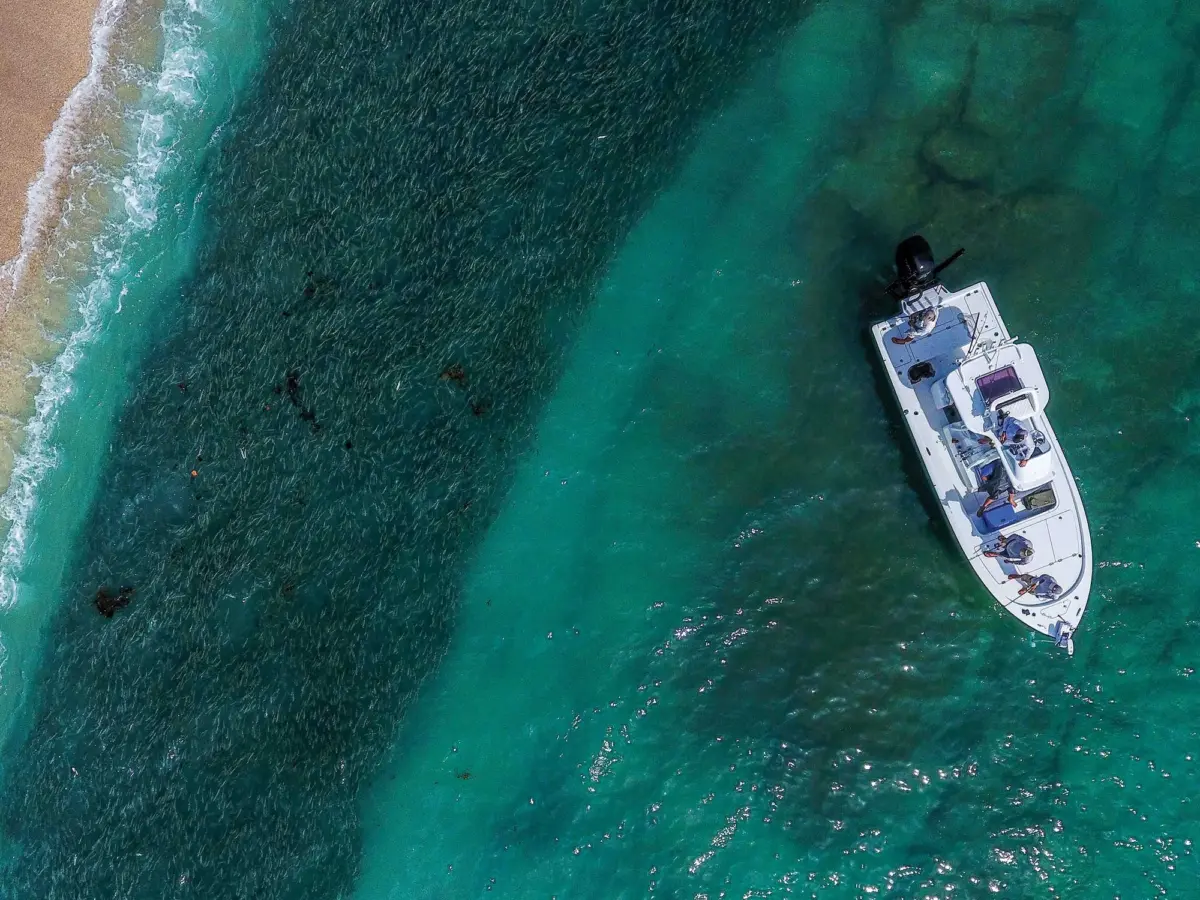
Every autumn, as the oppressive heat of summer begins to break along the Atlantic Coast and the Gulf of Mexico, a natural phenomenon of staggering proportions unfolds. Millions upon millions of striped and silver mullet pour out of brackish rivers, sprawling bays, and quiet estuaries, embarking on a mass coastal migration that defies standard marine biology. More akin to the mass overland movements of far-traveling birds or lemmings than traditional fish migrations, the annual fall mullet run is a spectacle of epic proportions.
Spanning from September well into November—and occasionally lingering into the winter months—this biological event transforms the nearshore Atlantic and Gulf waters into a hyper-charged predatory gauntlet. Ranging in size from tiny fingerlings to robust three-pound adults, these immense schools of baitfish push along the beaches, inlets, and sounds, drawing an impressive array of apex inshore and offshore gamefish. For anglers, guides, and marine researchers alike, the mullet run represents the absolute pinnacle of seasonal fishing opportunities.
However, mastering the mullet run requires far more than simply casting into boiling water. It demands an understanding of fish behavior, hydrological science, strategic positioning, and precise gear selection. This exhaustive report explores the mechanics of the run, breaks down the premier gamefish species that capitalize on the bounty, and provides actionable, expert-backed strategies for capitalizing on one of the most exhilarating fisheries on earth.
Detailed Chronology: The Seasonal Progression of the Run
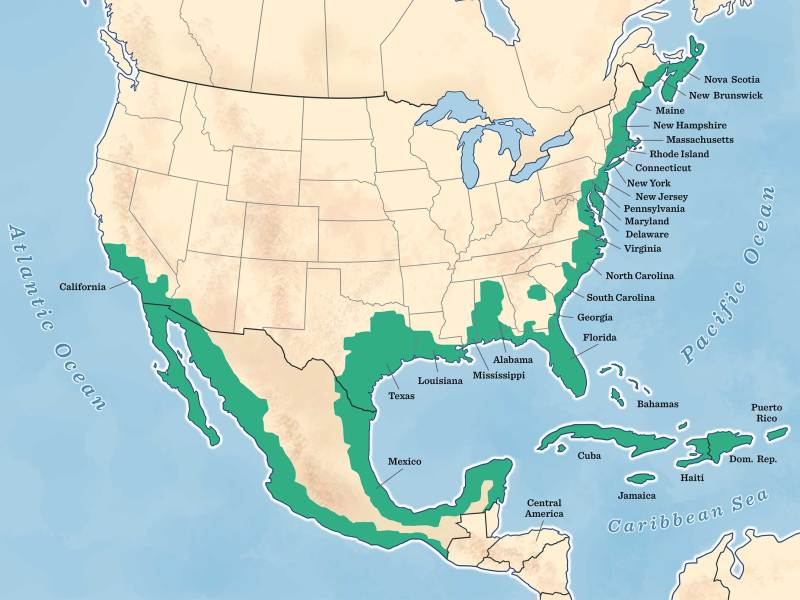
To successfully target gamefish during the mullet run, anglers must understand the timeline and geography of the migration. The event is not a sudden, singular explosion, but rather a rolling wave of biological activity that tracks down the coastline over a span of several months.
Phase 1: The September Catalyst (Northern Ranges)
The migration generally kicks off in earnest after the first cooling fronts of September brush the upper Atlantic Coast and northern Gulf regions. Mullet, which have spent the spring and summer maturing within the protective, nutrient-rich confines of inland estuaries, begin to school up densely near river mouths and inlets. Driven by primordial urges, they move outward into the surf zone. During this initial phase, anglers in the Carolinas and northern Florida experience the first major wave of surface blitzes, where aggressive tarpon, oversized redfish, and roaming bluefish eagerly intercept the vanguard of the bait pods.
Phase 2: The October Peak (Central Florida and Inlets)
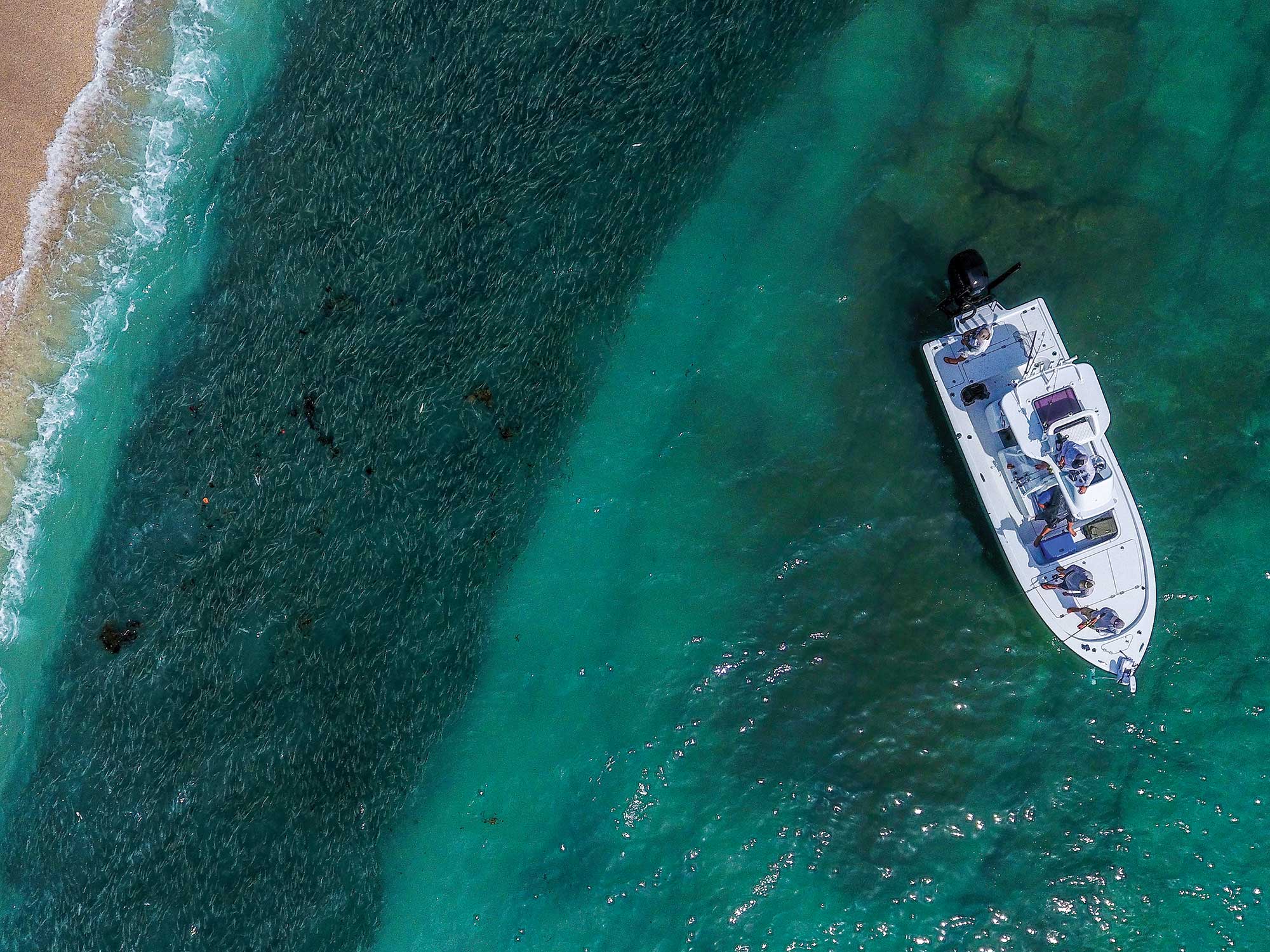
By October, the run reaches a fever pitch along the central Atlantic coastline of Florida, particularly surrounding major hydrological arteries like Sebastian Inlet and the Indian River Lagoon system. At this stage, the sheer volume of biomass moving south along the beaches is difficult to comprehend. Satellite imagery and aerial spotting often reveal massive, dark-brown bait shadows stretching for miles just beyond the breaking surf. This is the golden window for coastal predators. Snook move out of the backwaters to stage heavily around jetties and island points, while king mackerel and barracuda cruise slightly deeper water just offshore, waiting to ambush stragglers.
Phase 3: The November Finale (South Florida and the Gulf)
As November progresses, the core of the migration pushes deep into South Florida—sweeping past Palm Beach, Miami, and into the Florida Keys—while Gulf populations execute their distinct lateral and coastal movements. While the sheer density of the bait begins to taper off in the northern zones, the southern reaches experience explosive, late-season feeding frenzies. Water temperatures begin to moderate, and gamefish gorge themselves relentlessly to build fat reserves for the impending winter months. Even as the primary schools disperse into the Everglades or offshore wintering grounds, lingering pods continue to provide exceptional target-rich environments for dedicated anglers.
Supporting Context & Metrics: The Science Behind the Migration
Why do millions of mullet leave the safety of the estuaries, exposing themselves to a merciless gauntlet of sharks, tarpon, and human anglers? While the complete answer remains partially veiled, marine biologists have established several key drivers behind this coastal mass movement.
[Estuaries / Rivers]
      │
      ▼ (September: Cooling fronts trigger schooling)
[Inlets & Surf Zone]
      │
      ▼ (October: Peak biomass movement & spawning triggers)
[Coastal Waters / Spawning Grounds] (Salinity balancing & egg release)
The Salinity Imperative
The primary catalyst for the run is reproductive necessity. Mullet are catadromous-adjacent in their spawning habits; while they spend the majority of their adult lives thriving in low-salinity estuaries and freshwater rivers, they require precise marine salinity levels to successfully release their eggs and milt. As autumn approaches, biological telemetry indicates that mature mullet seek out exact oceanic salt-to-freshwater ratios. They push along the coast, oscillating between the breaking surf and several miles offshore, searching for these optimal hydrological zones. Once located, they broadcast-spawn in high-salinity waters before returning to coastal shallows.
Distance and Scale Metrics
- Migration Distances: While Atlantic mullet primarily track north-to-south down the eastern seaboard, biological tagging studies in the Gulf of Mexico have documented white mullet executing lateral migrations of up to 100 miles east and west to find ideal spawning conditions.
- Size Distribution: Schools are remarkably diverse, featuring finger mullet measuring under two inches alongside heavy adult breeders weighing upward of three pounds.
- Predator Mass Multipliers: During peak concentrations, a single acre of ocean surface can hold hundreds of thousands of individual baitfish, creating localized dissolved oxygen spikes and surface chaos that attracts predators ranging from 5-pound bluefish to 500-pound bull sharks.
Targeted Gamefish Species and Expert Tactics
Each gamefish species approaches the mullet run with distinct hunting strategies. To be successful, anglers must tailor their presentations to match these predatory behaviors.
Raging Redfish in the Surf and Inlets
The autumn mullet run coincides perfectly with the annual redfish spawning migration. Mature, oversized "bull" redfish congregate around inlets, sounds, and river mouths, where they gorge on the passing protein parade.
- Key Conditions: Anglers seeking trophy reds should target daybreak hours, specifically scanning for dark-brown colored bait ripples in slick water. A gentle northeast wind is considered the holy grail for surfcasters, as it physically stacks the mullet tight against the beach, trapping them in the shallow wash where redfish can easily corner them.
- Conservation Note: Many of the largest redfish feeding in the surf exceed state-mandated slot limits. Anglers must exercise proper catch-and-release handling to ensure the survival of these vital spawning-age fish.
Snook Feeding Orgies in Central and South Florida
Beginning prominently around Sebastian Inlet and extending southward through Miami, the arrival of the mullet triggers an absolute feeding frenzy among common snook (linesiders).
- Expert Insight: Capt. Phil O’Bannon, a renowned Charlotte Harbor guide with decades of multi-coast experience, emphasizes the importance of size matching. "One important key for snook is to match the size bait to the size mullet in a school where linesiders are feeding," O’Bannon advises. "If, for example, bait pods are holding mostly mullet in the 6-inch range, that’s the size bait to employ, preferably caught from the same schools snook are hitting."
Tarpon on a Tear
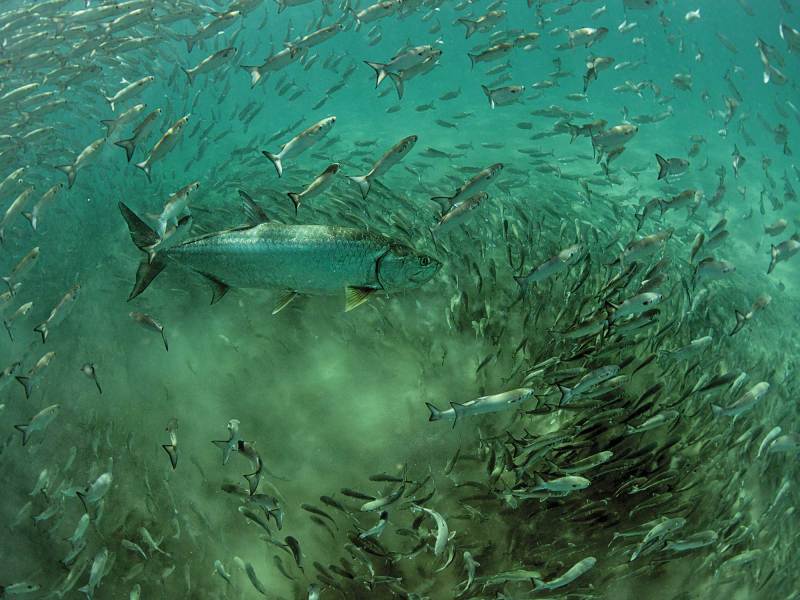
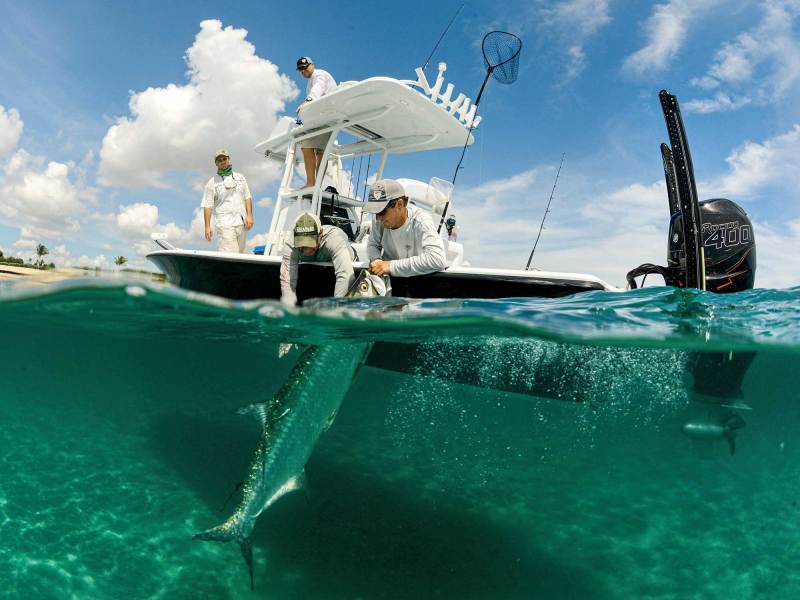
For fly-fishermen and conventional light-tackle enthusiasts alike, there is no more electrifying fishery than targeting tarpon during the mullet run. From the Carolinas down through the entire span of the Sunshine State, "silver kings" carve explosive paths directly through the center of dense bait pods. In northern zones and along Georgia beaches, tarpon can frequently be spotted sky-dancing out of the waves as they crush hapless mullet. The primary challenge is not getting a tarpon to strike, but rather convincing a fish to take a hooked offering when billions of natural, unhooked baits surround it.
Offshore Interceptors: King Mackerel and Barracuda
While inshore anglers focus on the beach wash, offshore trollers find incredible action just a mile or two out where the mullet schools extend into deeper water.
- Tackle Adjustments: King mackerel (averaging the 20-pound class) and aggressive barracuda possess formidable teeth that require wire leaders. Because both species have a habit of clipping live baits from behind, tandem-hook trolling rigs are essential.
- Presentation Strategy: Slow-trolling live mullet around deepwater bait pods is devastatingly effective. Anglers should maintain a respectful distance from the schools; getting too close can spook the baitfish, causing them to dive and subsequently pull the pelagic predators away from your spread.
High-Energy Action: Jacks, Crevalle, Bluefish, and Spanish Mackerel
While tarpon and snook capture headlines, the supporting cast of the mullet run offers some of the most reliable, high-adrenaline rod-bending action available. Schools of 15-pound yellow-tinged jack crevalle, aggressive bluefish, and lightning-fast Spanish mackerel will mangle a mullet pod with reckless abandon. For fly-rodders and youth anglers looking for non-stop surface explosions, these ferocious schooling fish provide unrivaled sport.
Future Outlook: Conservation and Fishery Management
As coastal development, shifting weather patterns, and increasing fishing pressure continue to impact nearshore marine ecosystems, the long-term health of the mullet run remains a focal point for fisheries management agencies.
Healthy mullet populations are the absolute cornerstone of the southeastern marine food web. Without robust stocks of striped and silver mullet, the high-profile gamefish populations—tarpon, snook, redfish, and king mackerel—would experience severe nutritional deficits during their critical autumn spawning cycles. State wildlife agencies along the Atlantic and Gulf coasts are increasingly emphasizing sustainable commercial net regulations and stringent recreational bag limits to ensure that baitfish biomass remains stable.
Furthermore, habitat restoration efforts focusing on inland estuaries, salt marshes, and mangrove fringes are vital. Because juvenile mullet spend their formative months sheltered in these brackish nurseries, protecting water quality and preventing coastal degradation directly correlates to the intensity and success of future fall runs.
For the modern angler, the takeaway is clear: respect the resource, practice ethical catch-and-release on oversized breeding stock, and prepare meticulously for nature’s grandest aquatic migration. When the September winds shift and the first great waves of silver pour out toward the surf, be ready to witness—and participate in—the greatest show on the coast.

0 Comments