

Executive Overview
For decades, outfitting a boat with marine electronics meant navigating a tangled web of proprietary cables, incompatible interfaces, and isolated data streams. A depth sounder could not speak to a GPS unit; radar data remained trapped behind a dedicated screen; and monitoring engine performance required an analog gauge cluster prone to vibration, corrosion, and wiring failure.
The introduction of the National Marine Electronics Association (NMEA) 2000 standard—commonly abbreviated as N2K—fundamentally transformed the architecture of modern vessels. By establishing a high-speed, standardized plug-and-play digital networking system, N2K allowed disparate marine electronics and onboard systems to communicate seamlessly over a single shared data pathway, known as a backbone.
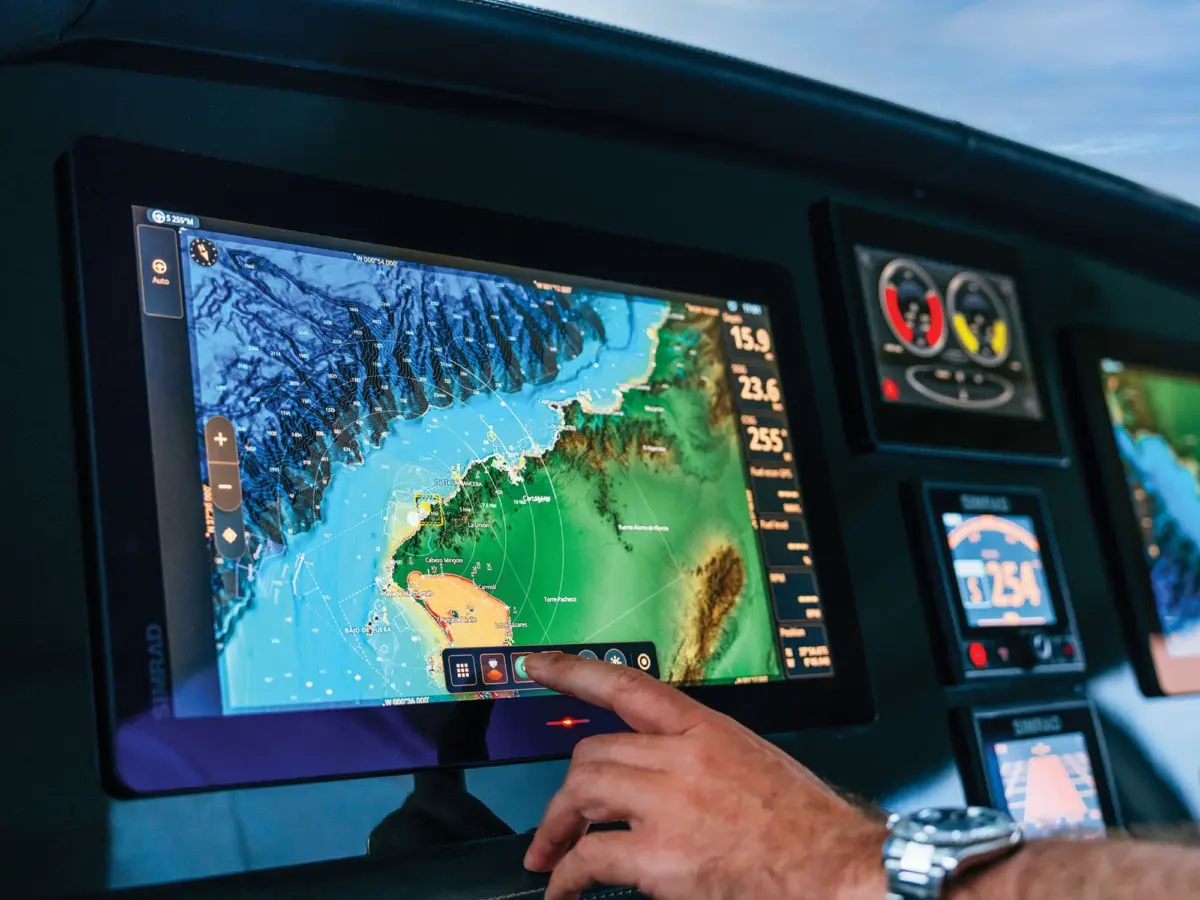
Today, NMEA-2000 networking is the invisible engine driving modern marine navigation, safety, and sportfishing efficiency. Hidden behind helms from modest center consoles to multi-million-dollar sportfishing yachts, this technology empowers captains to view, monitor, and control complex onboard functions directly from a single or multiple Multifunction Displays (MFDs). As marine systems evolve to include advanced attitude control systems, digital switching, automated autopilots, and real-time boat monitoring, understanding the principles, layout requirements, and expansion potential of N2K networking has transitioned from a niche technical skill to an essential competency for every modern mariner.
Detailed Chronology: The Evolution of Marine Digital Networking
To understand the omnipresence of N2K networking today, it is helpful to trace its lineage back to the foundational eras of marine electronics communication.
The Pre-Digital and Early NMEA Era
Before digital networking, marine instruments operated in relative isolation. The earliest attempts at standardization led to the NMEA 0183 protocol, introduced in 1983. While NMEA 0183 was a massive step forward—allowing devices to share data using asynchronous serial communication via simple wiring (talking and listening over positive and negative data lines)—it suffered from severe limitations. It was fundamentally a point-to-point system. Each device required dedicated wiring connections, baud rates had to match precisely, and system expansion quickly devolved into a complex maze of terminal strips and splice blocks.
The Dawn of N2K (2001)
Recognizing the rapid proliferation of digital sensors, computerized engine management systems, and high-resolution chartplotters, the National Marine Electronics Association recognized that a faster, more robust network architecture was required. In 2001, the NMEA officially released the NMEA 2000 standard.
Based on Controller Area Network (CAN) bus technology—an architecture originally developed for heavy automotive and industrial applications where reliability in harsh environments is paramount—N2K could transmit data at 250 kilobits per second. This was a quantum leap over NMEA 0183’s 4,800 baud standard. More importantly, N2K permitted up to 50 distinct devices to be connected simultaneously to a single network, sharing multiple parameters seamlessly across the entire system.
Early Adoption and DIY Integration (2010)
By the turn of the decade, early adopters and do-it-yourself boaters began experiencing the practical benefits of N2K firsthand. A typical early installation might have consisted of a single plug-and-play cable bridging an MFD at the helm to an external GPS antenna mounted on a hardtop. These straightforward projects demonstrated the undeniable reliability and simplicity of the platform, encouraging mainstream marine electronics manufacturers to bake N2K compatibility natively into every new radar, sonar module, and VHF radio they produced.
Modern Proliferation and Full-Vessel Integration (Present Day)
Fast forward to the present day, and N2K networks have expanded exponentially. A contemporary 21.5-foot center console often features an intricate web of integration encompassing the primary MFD, dual engine displays, high-definition radar, AIS (Automatic Identification System), precision heading sensors, advanced CHIRP sonar, state-of-the-art autopilots, outboard engine gateways, and dynamic attitude control systems like the Seakeeper Ride. On larger sportfishing vessels, the network grows even wider, incorporating remote digital switching, multi-zone marine audio, integrated boat security systems, and redundant MFD arrays.
Supporting Context & Metrics: Why N2K Is Essential
The true value of an N2K network lies in its democratization and cross-sharing of data. Without a unified network, every instrument is an island. With N2K, every connected device acts as both a contributor to and a consumer of vital vessel information.
The Data Ecosystem in Action
Consider the complex choreography of data required during a high-speed offshore run to a fishing hotspot:
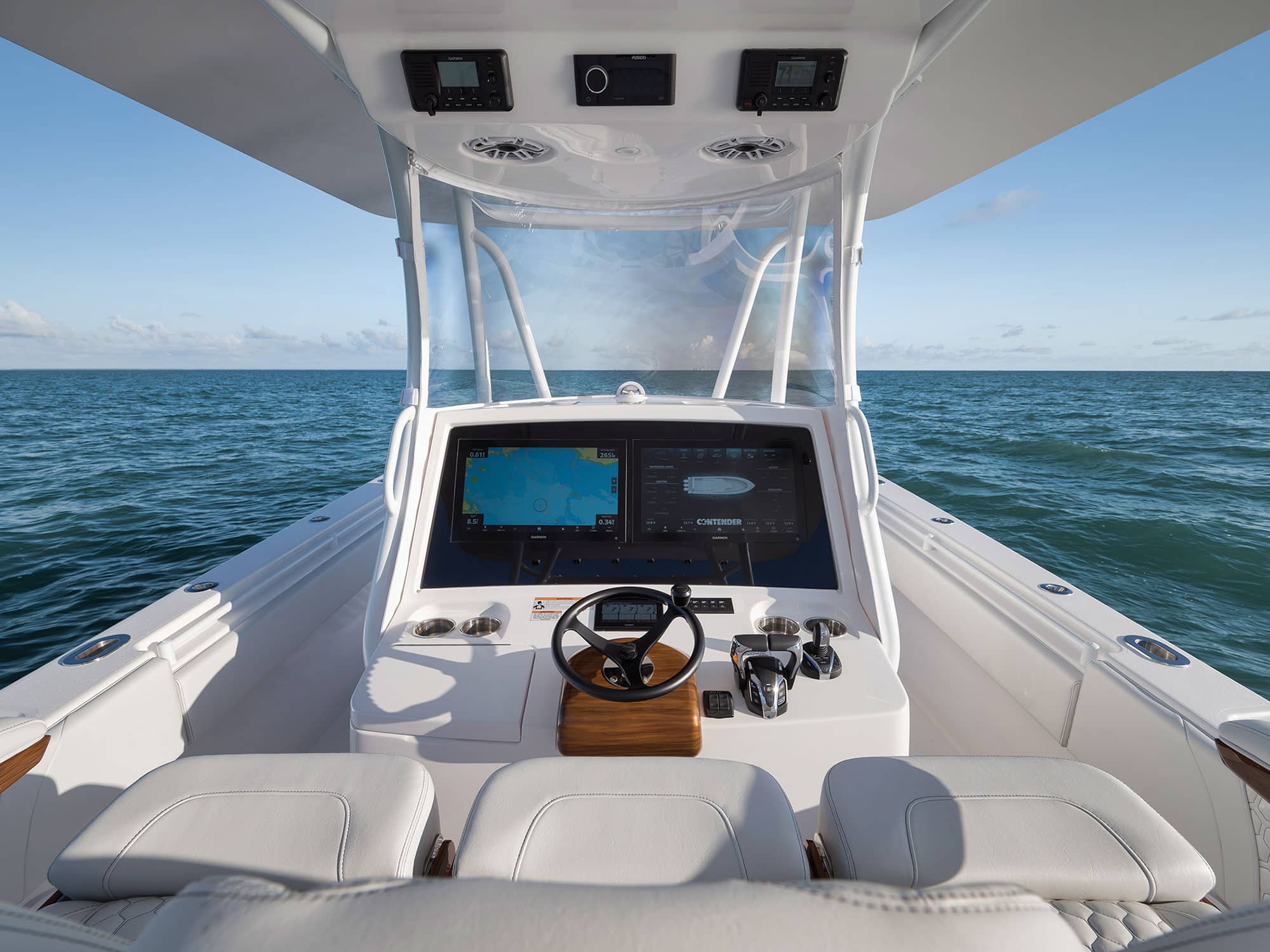
- Radar Optimization: The marine radar system accesses high-precision heading data from an external compass sensor, ensuring accurate target overlay on the chartplotter regardless of vessel yaw or sea state.
- Attitude and Speed Integration: Dynamic attitude control systems (such as Seakeeper Ride) ingest real-time boat speed and GPS data via the N2K network to automatically adjust interceptors and optimize running angles, smoothing out rough water.
- Safety and Compliance: The VHF radio taps directly into the GPS network to broadcast precise latitude and longitude coordinates instantly should a Digital Selective Calling (DSC) distress alert be triggered.
- Situational Awareness: Multiple MFDs across the helm share sonar profiles, bathymetric mapping, and AIS target lists simultaneously, ensuring that the captain and crew have complete operational visibility from any vantage point on the boat.
Industry Standardization and Compatibility
One of the primary drivers behind the success of N2K is universal manufacturer adoption. Every major marine electronics brand—including Furuno, Garmin, Humminbird, Lowrance, Raymarine, and Simrad—incorporates N2K networking capability as a core design feature. Because the hardware relies on standardized micro-C connectors and standardized Parameter Group Numbers (PGNs) to transmit data packets, equipment from competing brands can coexist peacefully on the exact same physical network backbone.
Official Guidelines for Designing and Installing an N2K Network
While NMEA-2000 is marketed as a plug-and-play system, designing and installing a robust network requires adherence to strict engineering principles. A poorly planned network will suffer from voltage drops, data packet corruption, and intermittent device dropouts. Experienced marine technicians and seasoned DIYers adhere to several golden rules during installation and expansion.
1. Power Delivery and Voltage Regulation
An N2K network operates on 12-volt DC power, distributed through the central communications channel known as the backbone.
- Injection Points: Power should ideally be injected near the center of the backbone to ensure balanced voltage distribution across the entire linear run.
- Voltage Limitations: The system must be tied exclusively to a 12-volt DC source. Connecting an N2K network to a 24-volt DC power supply without a dedicated step-down converter will result in catastrophic damage to connected electronics.
- Extended Runs: If a backbone extension or drop cable reaches or exceeds 20 feet in length, voltage drop becomes a measurable concern. In such scenarios, an auxiliary power cable injection tee must be added to maintain network signal integrity.
2. T-Crossings and Backbone Topology
The physical architecture of an N2K network is built around T-connectors (often called tees).
- The Backbone: T-connectors are strung together in a linear fashion, either directly or via extension cables, forming the main data highway (the backbone). Multiple backbones can span a vessel, bridged together using extension cables where necessary.
- Junction Blocks: On complex vessels, multi-port junction blocks are frequently utilized in place of long strings of individual T-connectors, streamlining installations behind crowded helms and reducing potential mechanical failure points.
3. Managing Drop Cable Lengths
Drop cables act as the individual on-ramps and off-ramps connecting discrete marine electronics units to the T-connector ports on the backbone.
- Keep Them Short: Installers must avoid unnecessarily long drop cables. Electrical resistance across long drop cable runs causes voltage attenuation, which can degrade data packets and cause devices to drop off the network.
- Mitigation Strategies: If a peripheral sensor—such as a specialized transducer or a remote sea-surface temperature probe—requires a lengthy cable run, installers should bring the backbone closer to the sensor using an extension cable or introduce a localized power insertion tee to stabilize local voltage.
4. Termination: The Critical Final Step
Perhaps the most common pitfall in N2K installations involves network termination.
- Terminating Resistors: An N2K linear backbone must be capped at both physical ends using specialized terminating resistors—specifically, one male terminator cap and one female terminator cap.
- Signal Reflection Prevention: These small threaded caps contain internal resistance designed to absorb data signals at the end of the line. Without them, data signals bounce back along the wire, causing catastrophic data collisions and total network failure. Ensuring both ends of the backbone are properly terminated is non-negotiable.
Future Outlook: Beyond N2K and the Horizon of Marine Networking
While NMEA-2000 remains the undisputed gold standard for marine vessel networking, the relentless advancement of marine technology means network engineers are already looking toward the horizon.
Modern high-definition sonar imaging, uncompressed digital video streaming from security and docking cameras, and ultra-high-speed mapping updates demand data bandwidths that far exceed the 250 kbps capacity of the traditional CAN-bus-based N2K architecture.
To address these expanding needs, the National Marine Electronics Association has developed NMEA OneNet, an Ethernet-based marine networking standard designed to run concurrently with existing N2K infrastructure. OneNet will bridge the gap between legacy sensor data and high-bandwidth multimedia payloads, allowing anglers and boaters to stream high-definition radar imagery, live-action underwater sonar video feeds, and IP-based vessel surveillance systems across a unified, high-speed ethernet backbone.
However, even as NMEA OneNet begins to enter the commercial and high-end recreational markets, the foundational principles of N2K remain intact. The vast ecosystem of sensors, GPS receivers, autopilots, engine gateways, and instruments will continue to rely on N2K for precise, low-latency communication. For boaters, mastering the layout, power management, and expansion protocols of N2K networking ensures a safer, more intuitive, and infinitely more productive day on the water—solidifying digital networking as the true cornerstone of modern seamanship.

0 Comments