

Executive Overview
Every autumn, as the searing heat of summer relents and the first crisp northern breezes sweep down the Atlantic Seaboard and into the Gulf of Mexico, a marine spectacle unfolds that rivals any terrestrial migration on Earth. Millions upon millions of striped (Mugil cephalus) and silver (Mugil curema) mullet pour out of backwater rivers, salt-marshes, bays, and sprawling estuaries. Ranging anywhere from tiny, shimmering fingerlings to thick-bodied, 3-pound adults, these baitfish embark on a mass coastal journey.
While marine biologists attribute this incredible push to an evolutionary drive to find precise salinity levels for spawning, the broader coastal ecosystem treats the migration as an all-you-can-eat buffet. A terrifying gauntlet of apex predators—ranging from record-class redfish and acrobatic tarpon to marauding sharks, king mackerel, and linesider snook—shadows the bait schools every inch of the way.
For the saltwater angling community, the fall mullet run represents the ultimate calendar event. It is a season defined by surface explosions, rod-bending chaos, and unmatched tactical challenges. To consistently score during this multi-month feeding frenzy, fishermen must understand the timing, geography, and predator-prey dynamics that dictate life and death in the surf zone.
Detailed Chronology: The Rhythm of the Run
The autumn migration does not happen overnight; it is a meticulously timed seasonal progression that stretches from early September well into November, and occasionally spills over into December.
Phase I: The Early Spark (September)
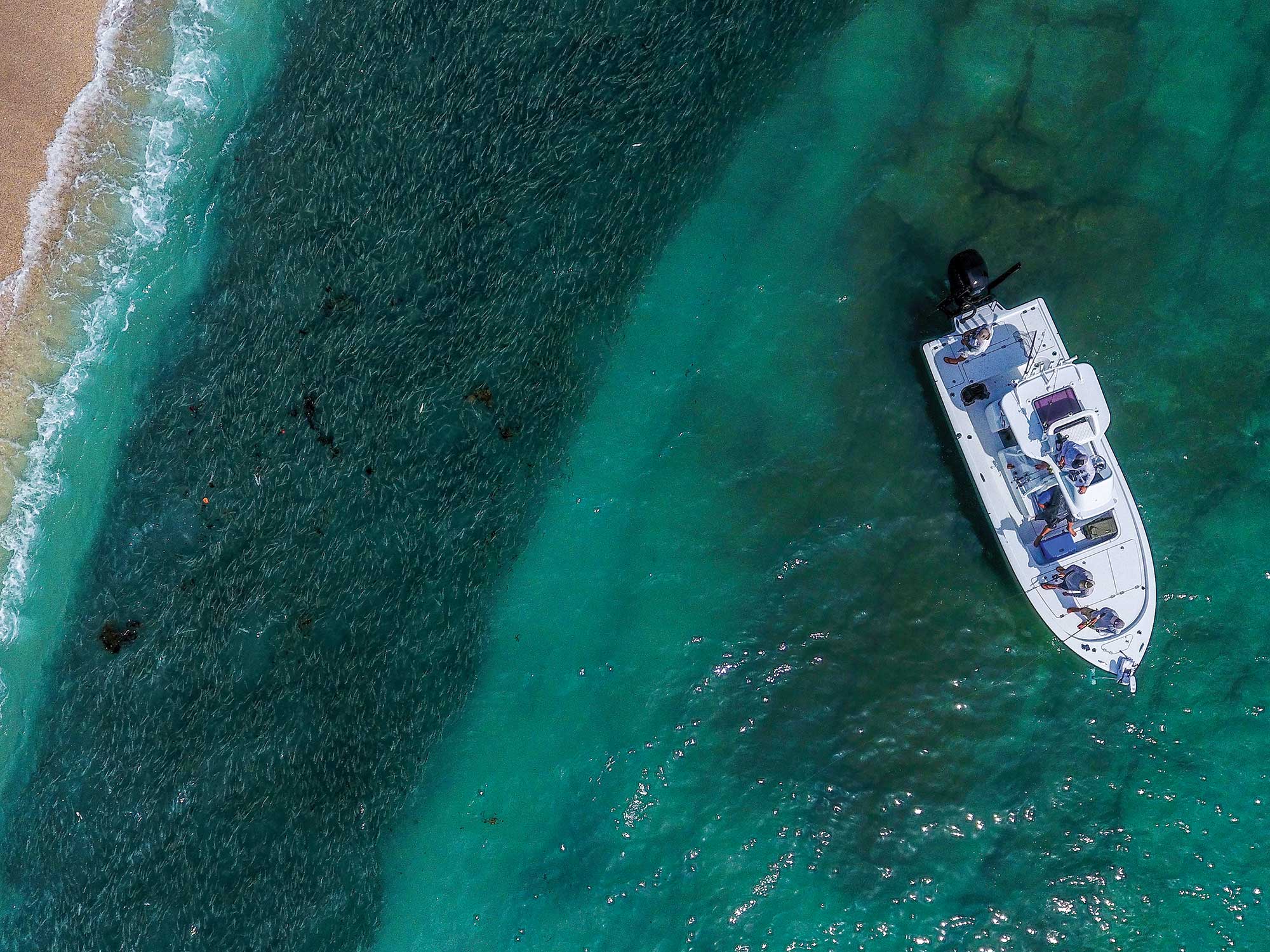
The curtain rises on the mullet run just as the calendar flips to September. As inland waters begin to cool slightly and photoperiods shift, mature mullet begin staging near river mouths and estuary passes. During this initial phase, the schools are often composed of smaller finger mullet. Anglers patrolling the beaches and inlets will notice nervous water, occasional predatory swirls from juvenile tarpon and snook, and the distinctive "nosing" behavior of mullet pushing along the surface.
Phase II: The Peak Carnage (October)
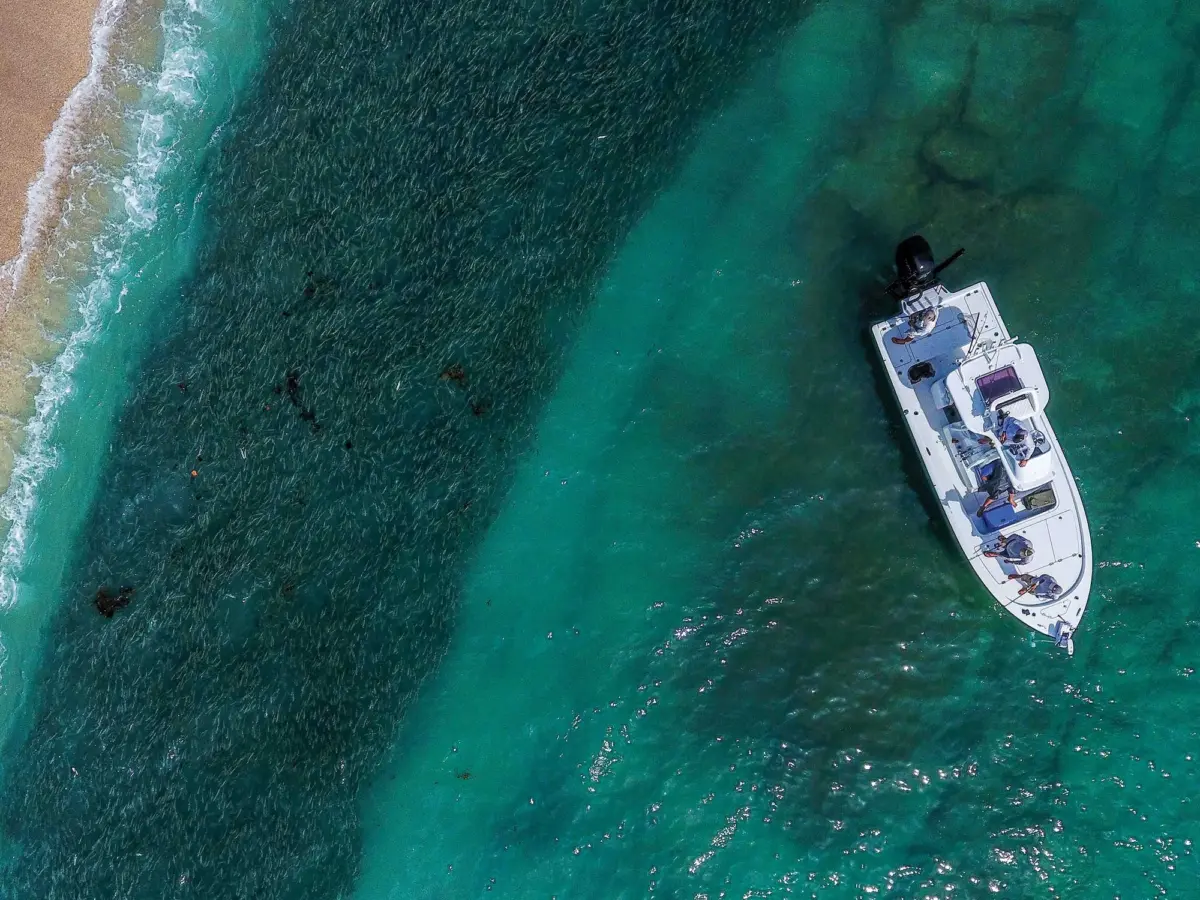
By mid-to-late October, the migration hits its crescendo. Millions of fish—now including larger, three-pound adults—pour into the open ocean, turning the nearshore Atlantic into a churning soup of scales and fins. This is when the offshore and inshore worlds collide. A slight northeast wind is considered the holy grail by surfcasters, as it stacks the baitfish tight against the sandy beaches. The result is an explosive gauntlet where redfish, massive snook, and heavyweight sharks trap the mullet against the shoreline.
Phase III: The Southern Push and Dissipation (November – December)
As November progresses, the main bulk of the migration marches steadily southward down the Florida peninsula. While the action slows in the Carolinas and northern Florida, South Florida destinations—from Sebastian Inlet down to Miami and the Keys—explode with predatory activity. By late December, the survivors have completed their spawn, scattering into nearshore reefs or drifting back into warmer southern estuaries, bringing a close to another unforgettable season of the great coastal forage feast.
Supporting Context & Metrics: The Science of the Migration
To truly master fishing the mullet run, anglers must look past the surface chaos and examine the biological engine driving the phenomenon.
Salinity, Spawning, and Survival
Marine biologists have long studied the triggers of the mullet migration. The prevailing consensus points toward osmoregulation and reproductive biology. Mullet spend the majority of their lives thriving in brackish estuaries and freshwater rivers, but they cannot successfully spawn in low-salinity environments.
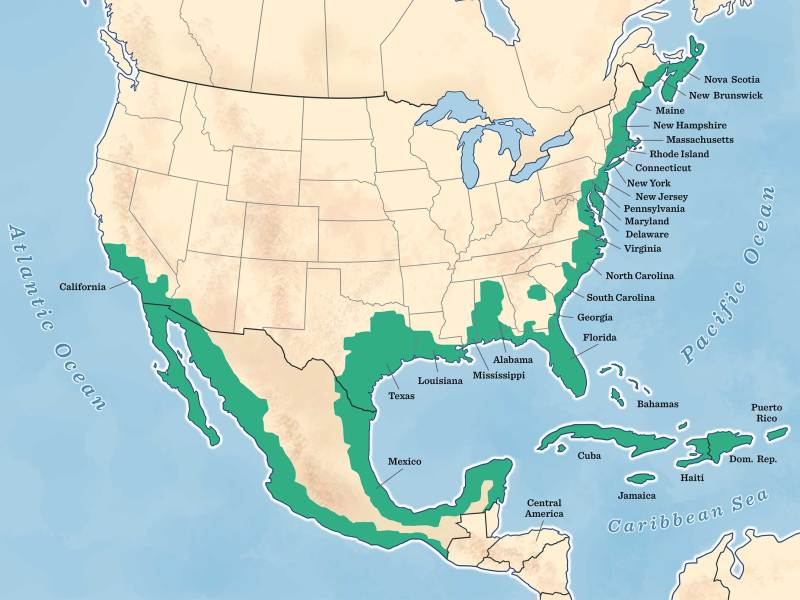
As autumn approaches, physiological changes compel the fish to seek out high-salinity oceanic waters to release their eggs and milt. In the Gulf of Mexico, white mullet have been documented traveling upwards of 100 miles, moving primarily along an east-west trajectory, while Atlantic striped mullet march relentlessly southward along the coast.
Environmental Metrics for Success
- Water Temperature: The drop from summer’s 85°F+ averages down to the mid-70s is the primary meteorological trigger.
- Wind Direction: A persistent northeast wind (5 to 15 knots) is ideal. It generates onshore chop that disorients the bait and forces massive schools of mullet to hug the shallow beachfront.
- Tide Stages: Moving water—particularly the last of the incoming tide and the beginning of the outgoing—concentrates bait pods near inlet mouths, creating natural ambush points for gamefish.
Official Insights: Targeting the Species of the Run
A wide array of gamefish species follow the mullet schools, each presenting a distinct angling challenge. Understanding how these predators interact with the bait is the key to filling coolers and landing trophy catches.
Raging Redfish
Along the southeast coast, river mouths, and inlets, the autumn mullet run coincides with the redfish spawning migration. Oversized "bull" redfish gorge themselves on the sudden abundance of protein.
- Tactics: Anglers target these fish at daybreak by scanning slick waters for bronze-tinted bait pods. Because many mature breeder redfish exceed state-mandated slot limits, catch-and-release is common, making proper handling paramount.
Snook in the South
The snook fishery explodes from Sebastian Inlet southward through Miami. According to legendary Charlotte Harbor guide Capt. Phil O’Bannon, matching the hatch is non-negotiable.
- Expert Quote: "One important key for snook is to match the size bait to the size mullet in a school where linesiders are feeding," O’Bannon advises. "If, for example, bait pods are holding mostly mullet in the 6-inch range, that’s the size bait to employ, preferably caught from the same schools snook are hitting."
Tarpon on a Tear
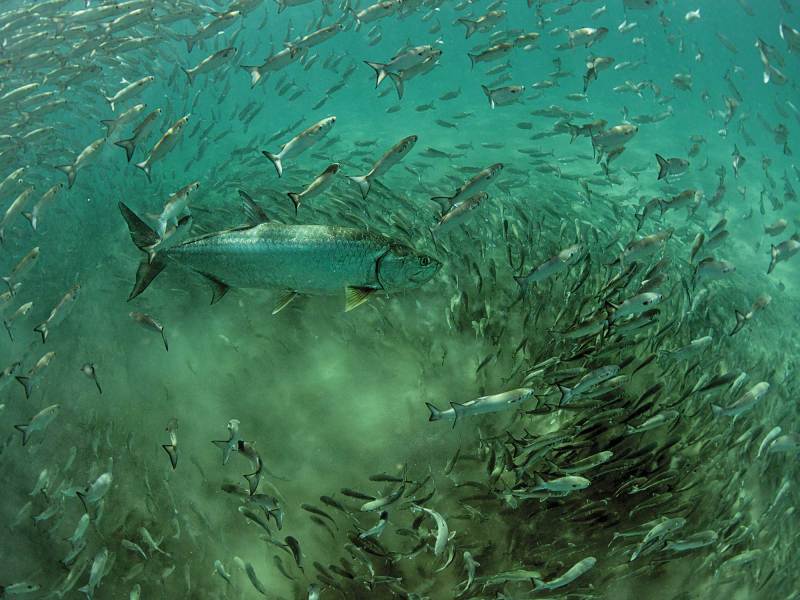
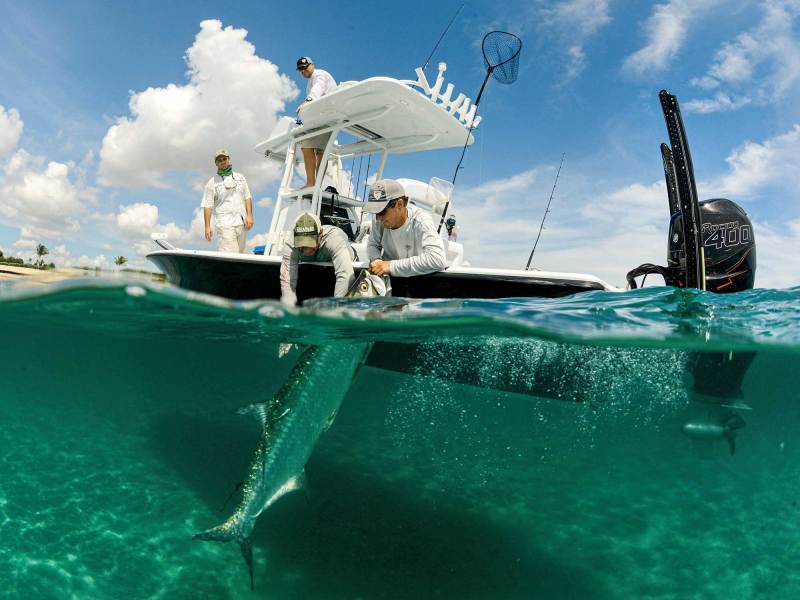
No species showcases raw power during the mullet run quite like the silver king. From the Carolinas through Georgia and the entire coast of Florida, tarpon slice straight through the middle of massive bait pods. One quick lunge, and an unlucky mullet simply vanishes. Convincing a tarpon to strike an artificial or hooked live bait when real food is omnipresent requires pinpoint presentation and absolute patience.
Sharks, Kingfish, and Barracuda
- Sharks: Large bull sharks and relentless blacktips hound the edges of the schools. While massive quarter-ton bulls offer a punishing test of endurance, mid-sized spinners and blacktips under 70 pounds provide blistering aerial displays and respectable table fare.
- Kingfish & Barracuda: When mullet push a mile or two offshore, 20-pound-class king mackerel and razor-toothed barracuda crash the party. Slow-trolling live baits on tandem-hook wire-leader rigs around deepwater mullet pods is the most effective way to intercept these high-speed predators.
Jacks, Blues, and Spanish Mackerel
Often overshadowed by tarpon and snook, aggressive species like jack crevalle, bluefish, and Spanish mackerel add incredible fast-paced action to the mix. A school of 15-pound yellow-tinged jacks tearing through a mullet pod will turn any day on the water into a high-octane fly-rodder’s or light-tackle enthusiast’s dream.
Future Outlook: Preservation and Conservation
As coastal development, habitat loss, and climate shifts continue to impact marine ecosystems along the Atlantic and Gulf coasts, the health of the annual mullet run remains a vital bellwether for overall marine vitality. Mullet serve as the critical energy bridge between primary producers (plankton, detritus) and top-tier apex predators.
State and federal fisheries management agencies closely monitor commercial and recreational mullet harvest limits, especially during the fall spawning windows when schools are most vulnerable to commercial netters. Ensuring sustainable harvest practices guarantees that future generations will continue to witness the breathtaking autumn phenomenon of millions of silver fish marching down the coast, accompanied by the predatory thunder that follows in their wake.
For the modern angler, the takeaway is clear: respect the resource, master the art of matching the hatch, and be ready when the Atlantic turns to silver and gold.

0 Comments