

Executive Overview
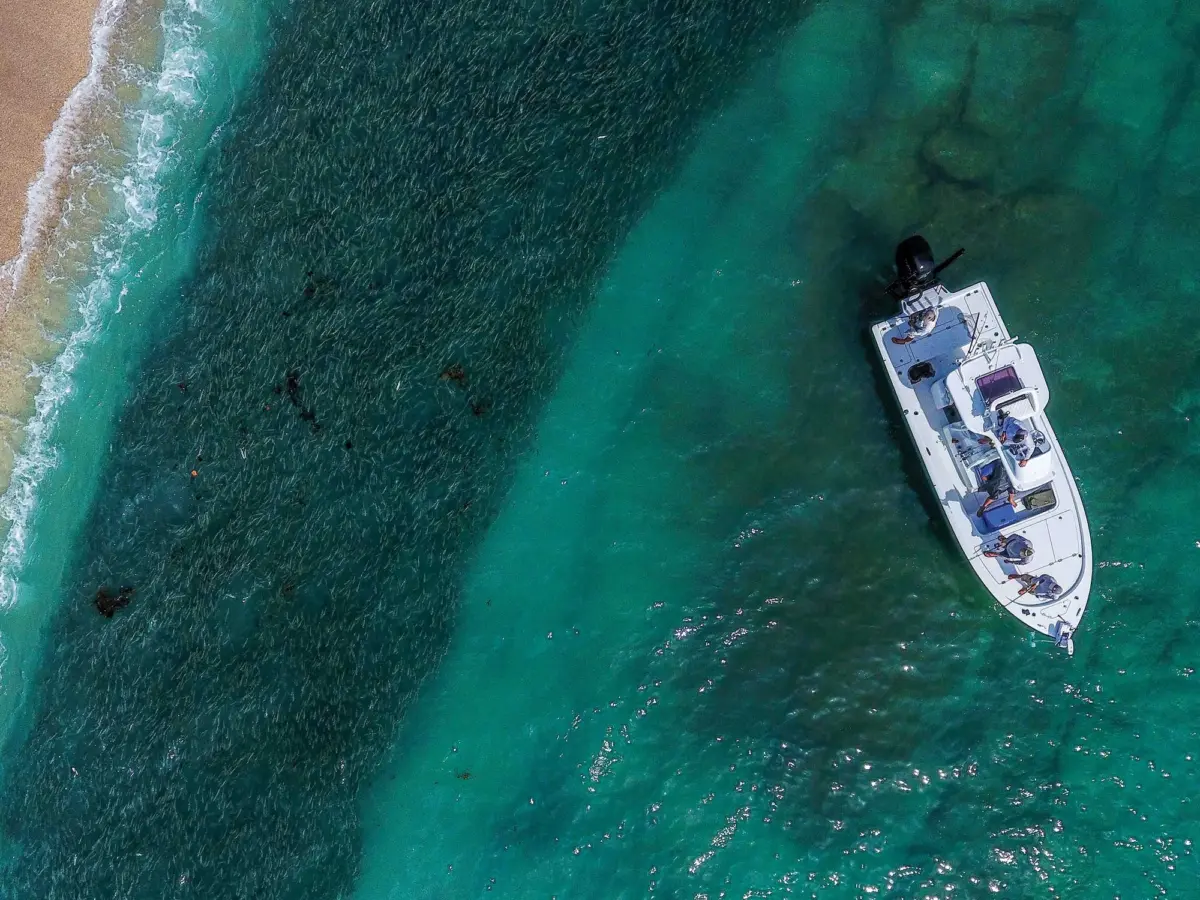
Every autumn, as the searing heat of summer begins to relent across North America, a marine phenomenon unfolds along the Atlantic Coast and the Gulf of Mexico that rivals any terrestrial migration on earth. Beginning reliably in September and stretching well into November—and occasionally lingering into the winter months—millions upon millions of striped and silver mullet pour out of brackish rivers, sprawling bays, and quiet estuaries. This massive exodus is a biological spectacle more akin to the seasonal flights of migratory birds or the legendary movements of lemmings than to the typical behavior of marine fish.
Ranging in size from tiny two-inch fingerlings to hefty three-pound adults, these baitfish form vast, swirling pods that paint the nearshore waters dark brown and black. Driven by an ancient, instinctual imperative to find the ideal saline environment for spawning, these schools embark on perilous coastal journeys.
For recreational and professional anglers alike, the fall mullet run represents the ultimate angling calendar highlight. It triggers a multi-species feeding frenzy of epic proportions. From massive redfish and acrobatic tarpon to line-burning king mackerel and aggressive jack crevalle, every apex predator in the coastal ecosystem converges on the moving buffet. Understanding the mechanics of this run, tracking the behavior of the bait, and employing precise tactics are the keys to experiencing some of the most explosive light-tackle and fly-fishing action available in saltwater angling.
Detailed Chronology: The Seasonal Progression of the Run
To successfully target gamefish during the mullet run, anglers must understand the timeline and geography of the migration. The movement is not a chaotic free-for-all; rather, it follows a structured chronological and spatial progression dictated by latitude, water temperature, and reproductive biology.
Early September: The Kickoff in the North
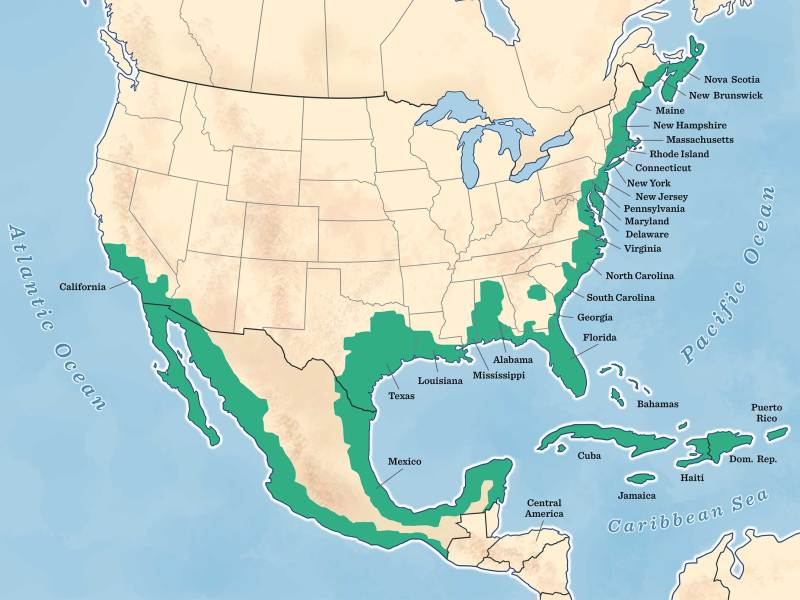
The curtain rises on the mullet run in the northern reaches of the fishes’ range, including the Carolinas and northern Georgia. As the first crisp northern cold fronts begin to shave degrees off the water temperature, mature mullet that have spent the spring and summer gorging themselves in fertile back-bays and salt marshes suddenly mass near river mouths and inlets.
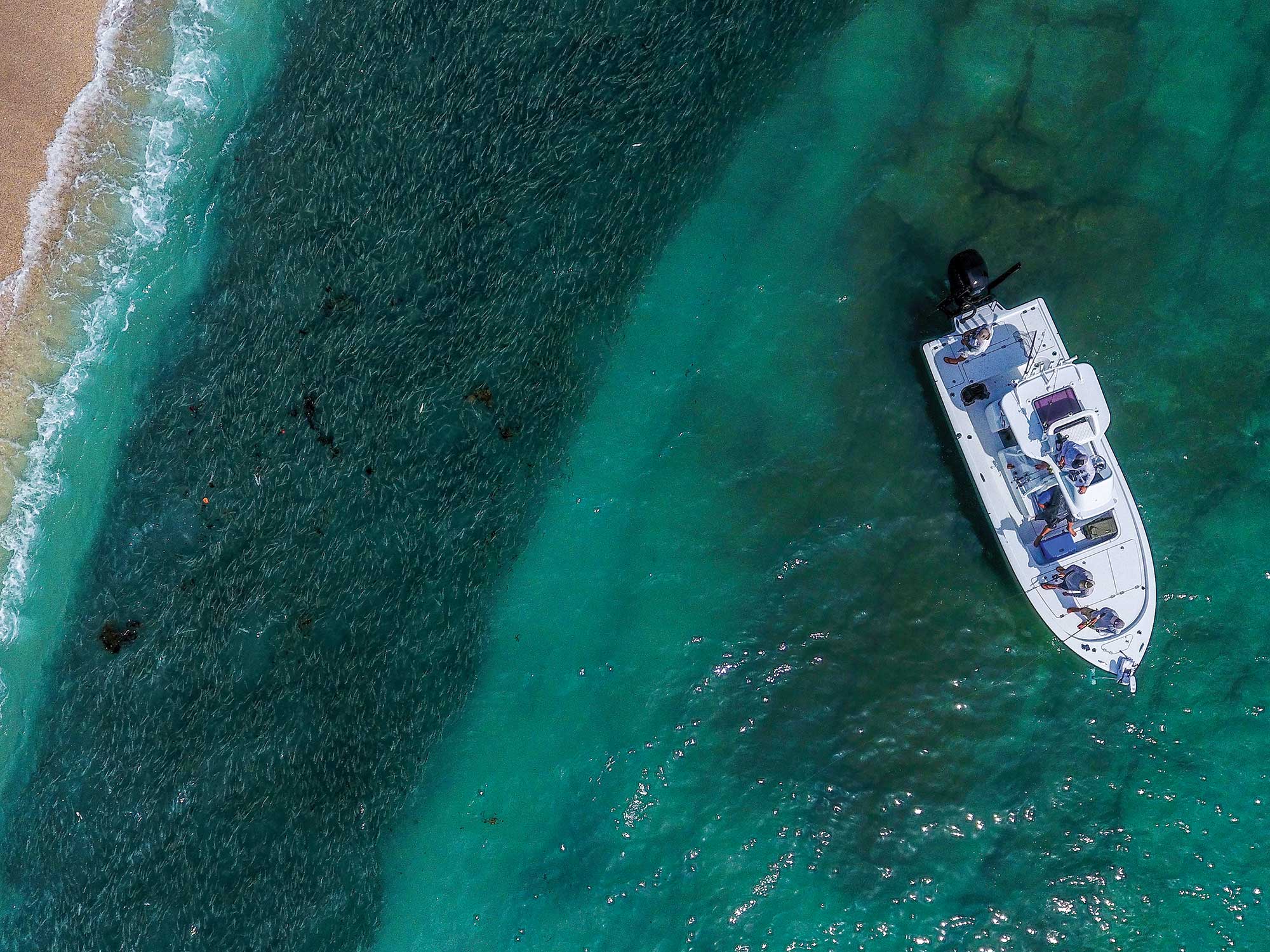
During this initial phase, the bait is often composed of mixed sizes. Anglers working the surf zones and beachfronts during early September will frequently encounter pods of smaller finger mullet. These are aggressively targeted by resident snook, oversized redfish, and roaming schools of juvenile tarpon. The action is characterized by sudden, violent surface blowups just beyond the breaking waves, where nervous water gives away the presence of panicked baitfish trying desperately to elude their pursuers.
Mid-October: The Peak Along Florida’s Atlantic Seaboard
By October, the heart of the migration shifts southward, slamming into the central and southern Atlantic coast of Florida. This is where the mullet run achieves legendary status. Millions of fish crowd the coastline, stretching in continuous ribbons from Daytona Beach down past Cape Canaveral, Sebastian Inlet, and into the waters of Miami.
The sheer volume of bait during peak season creates a gauntlet of predators. The nearshore Atlantic waters transform into a battleground. Offshore species like king mackerel and barracuda push tight to the beach to capitalize on the bounty, while massive schools of silver kings (tarpon) carve violent paths straight through the center of giant bait pods. This is the prime window for anglers; weather conditions featuring a gentle offshore or slight northeast wind tend to stack the mullet tight against the beaches, making them exceptionally vulnerable to coastal predators and shore-bound fishermen.
November and Beyond: The Gulf Coast Dynamics and Finale
While the Atlantic coast sees a dramatic, linear north-to-south migration, the Gulf of Mexico tells a slightly different story. Biologists studying Gulf white mullet have documented migrations spanning upwards of 100 miles, with these populations moving primarily along an east-west axis rather than strictly north and south.
As November transitions into winter, the final waves of mature, heavy-bodied mullet push out of Gulf estuaries to complete their spawning cycles. While the frantic intensity of the September blitzes begins to cool, late-season surges still offer phenomenal opportunities for anglers targeting cold-tolerant species like trophy redfish and large sharks patrolling the deeper drop-offs and passes.
Supporting Context & Metrics: The Science Behind the Migration
To truly master fishing the mullet run, one must look beneath the surface waves and examine the biological and environmental drivers governing this immense biomass.
Salinity, Spawning, and Survival
Marine biologists have long studied the triggers of the mullet run. The primary catalyst is reproductive imperative. Throughout the warm months, adult mullet inhabit low-salinity estuaries, rivers, and tidal creeks, feeding heavily on detritus, algae, and micro-organisms. As autumn approaches, internal physiological changes signal that it is time to spawn.
According to leading fisheries biologists, mullet seek precise ratios of salinity and water temperature to successfully release their eggs and milt. This quest sends them cruising along the coastline, constantly moving between the surf zone and open ocean waters until they find the ideal environment. Interestingly, not all mullet participate in every run; a significant portion of the population remains behind in the estuaries, raising questions about age-class participation and multiple spawning cohorts.
The Physics of the "Nosing" and Jumping Behavior
Anglers tracking mullet pods often observe peculiar behaviors, such as fish "nosing" the surface or leaping entirely out of the water. While folklore attributes the jumping to everything from escaping predators to pure exuberance, marine scientists point to a more practical physiological need: oxygen regulation.
When millions of mullet pack tightly together into dense pods—often referred to by locals as "schools so thick you could walk across them"—they rapidly deplete the dissolved oxygen in the immediate water column. Leaping into the air or skimming the surface allows the fish to gulp atmospheric oxygen across their gill membranes, ensuring they do not suffocate in their own immense aggregations. For the observant angler, these surface disturbances act as a beacon, highlighting the exact location of the bait pods and, by extension, the predators hunting them.
Official Perspectives: Expert Insights on Targeting Apex Predators
The sheer scale of the mullet run can be overwhelming. With baitfish scattered from the horizon right up to the wet sand of the beach, figuring out where to cast can test the patience of even seasoned anglers. Industry professionals and legendary guides rely on decades of on-the-water experience to cut through the chaos.
Matching the Hatch with Capt. Phil O’Bannon
One of the cardinal rules of fishing the mullet run is avoiding the trap of throwing the wrong presentation into a sea of natural forage. When gamefish have millions of live, perfectly scaled options at their disposal, they become notoriously selective.
"One important key for snook is to match the size bait to the size mullet in a school where linesiders are feeding," explains Capt. Phil O’Bannon, a renowned Charlotte Harbor guide with extensive experience targeting snook on both of Florida’s coasts during the mullet run. "If, for example, bait pods are holding mostly mullet in the 6-inch range, that’s the size bait to employ, preferably caught from the same schools snook are hitting."
O’Bannon emphasizes that live-lining a bait netted directly from the local school imparts the exact scent, flash, and nervous swimming cadence required to trigger a strike from a wary, well-fed snook.
Navigating the Predator Hierarchy
Different gamefish interact with the mullet run in distinctly unique ways, requiring tailored approaches from the angler:
- Raging Redfish: The autumn redfish spawning run coincides perfectly with the mullet parade. Mature, oversized red drum (often exceeding state slot limits) flood into lower rivers, inlets, and sounds. Anglers targeting these bruisers look for slick water and brown-colored bait schools at daybreak. A slight northeast wind is considered the holy grail, as it pins the bait against the shore and puts redfish into a frenzy.
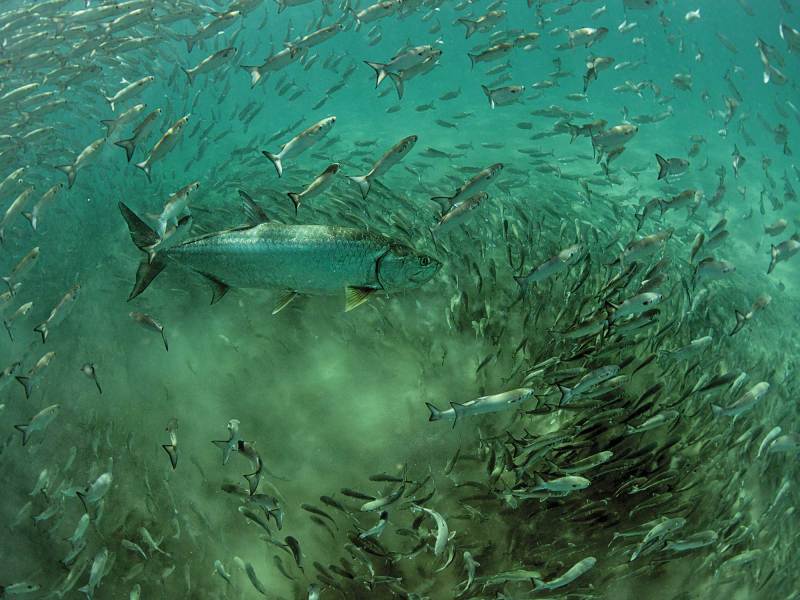
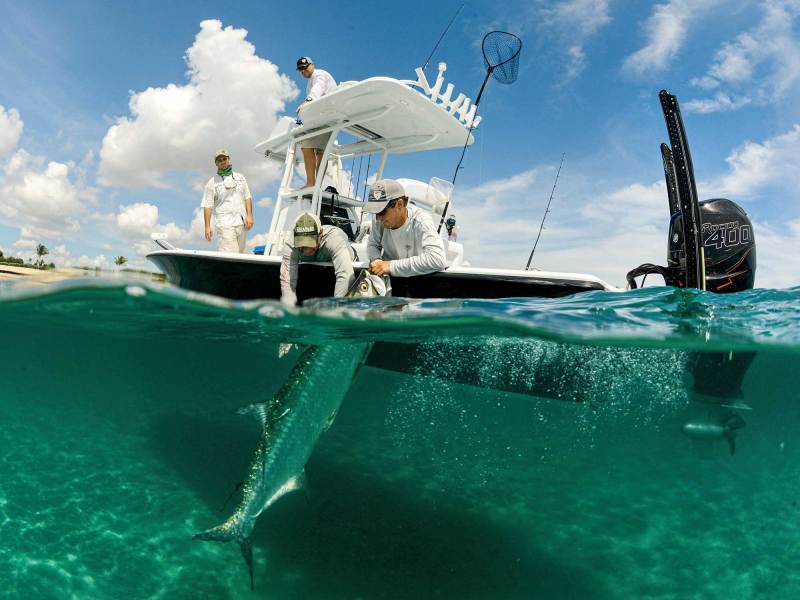
- Tarpon on a Tear: From the Carolinas down through the Sunshine State, tarpon crash through mullet schools with terrifying efficiency. A single lunge through a bait pod leaves an unlucky mullet vaporized. The challenge for tarpon chasers is convincing a "silver king" to inhale a hooked offering when a trillion free meals surround it. Persistence, accurate placement, and heavy tackle are mandatory.
- Kingfish and Barracuda: Moving offshore from the breakers, 20-pound-class king mackerel and opportunistic barracuda shadow the outer edges of the mullet schools. Trolling live baits on wire-leadered, tandem-hook rigs using slow, careful turns around deepwater bait pods is the definitive method for landing these razor-toothed speedsters.
- Jacks, Blues, and Spanish Mackerel: Often viewed as the character actors of the mullet drama, aggressive species like jack crevalle, bluefish, and Spanish mackerel offer unrelenting action. When a school of 15-pound yellow-tinged jacks mobs a mullet pod, fly-rodders and light-tackle enthusiasts are treated to some of the most heart-pounding surface blitzes imaginable.
Future Outlook: Conservation and the Sustainability of the Run
As coastal development, habitat loss, and climate variability continue to place unprecedented pressures on marine ecosystems along the Atlantic and Gulf coasts, the long-term health of the annual mullet run remains a focal point for fisheries management agencies.
Striped and silver mullet are foundational keystops in the marine food web. Without their massive seasonal migrations, populations of coastal predators—from shorebirds and marine mammals to premier gamefish—would lose a vital caloric injection necessary for their own survival and reproductive success.
State and federal wildlife agencies increasingly monitor commercial mullet harvesting, particularly during the vulnerable pre-spawning aggregation periods. Ensuring that adequate escapement occurs—allowing adult mullet to successfully reach spawning grounds and complete their life cycles—is essential for maintaining the robust population levels required to fuel future autumn runs.
For the recreational angling community, stewardship goes hand in hand with participation. Adhering strictly to bag limits, practicing careful catch-and-release handling for oversized breeding stock (such as large redfish and tarpon), and respecting the fragile nearshore habitats ensure that this breathtaking natural spectacle remains intact for generations to come.
When September arrives, and the first cool breeze sweeps down the coast, the ocean will once again darken with the silver flash of millions of migrating mullet. Armed with the right knowledge, proper tactics, and a profound respect for the marine ecosystem, anglers stand ready at the water’s edge to witness—and participate in—the greatest show on the saltwater calendar.

0 Comments