

Executive Overview
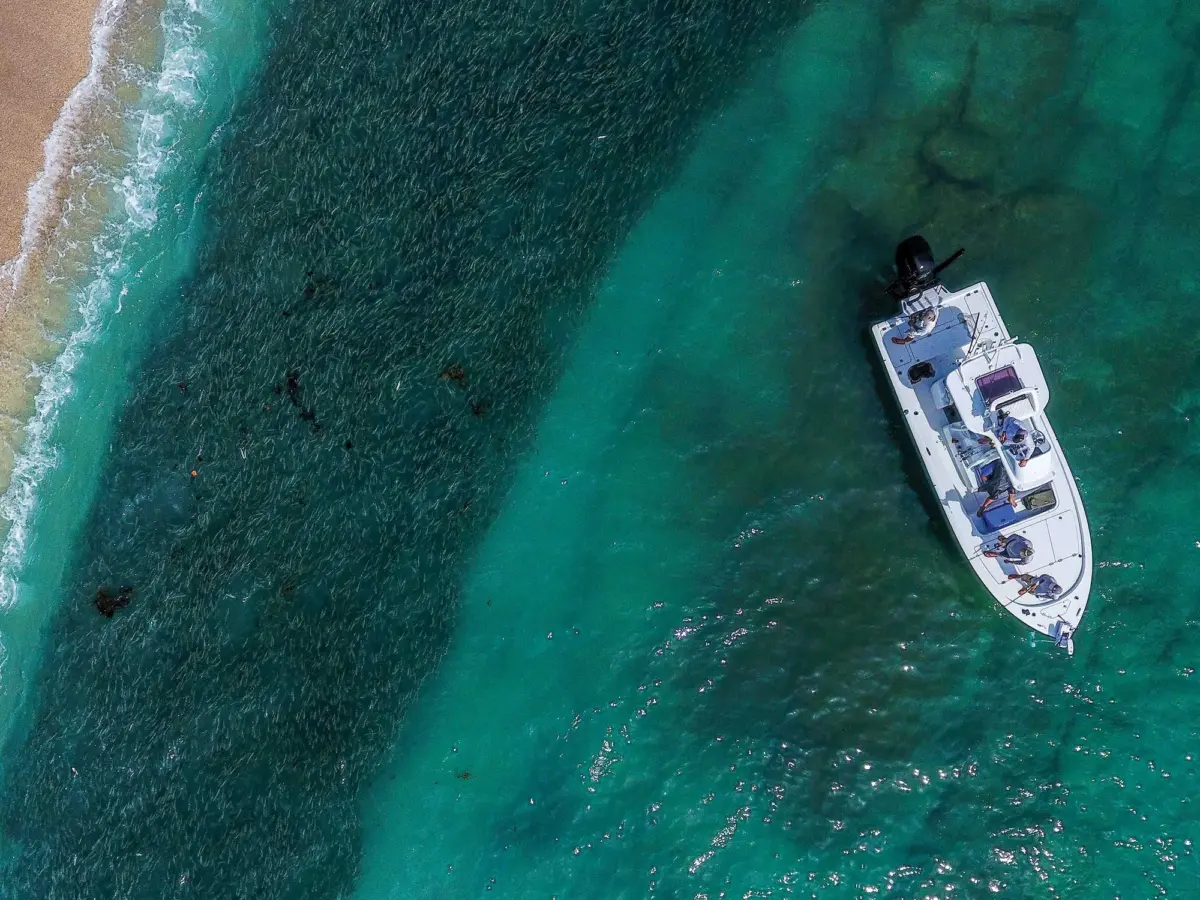
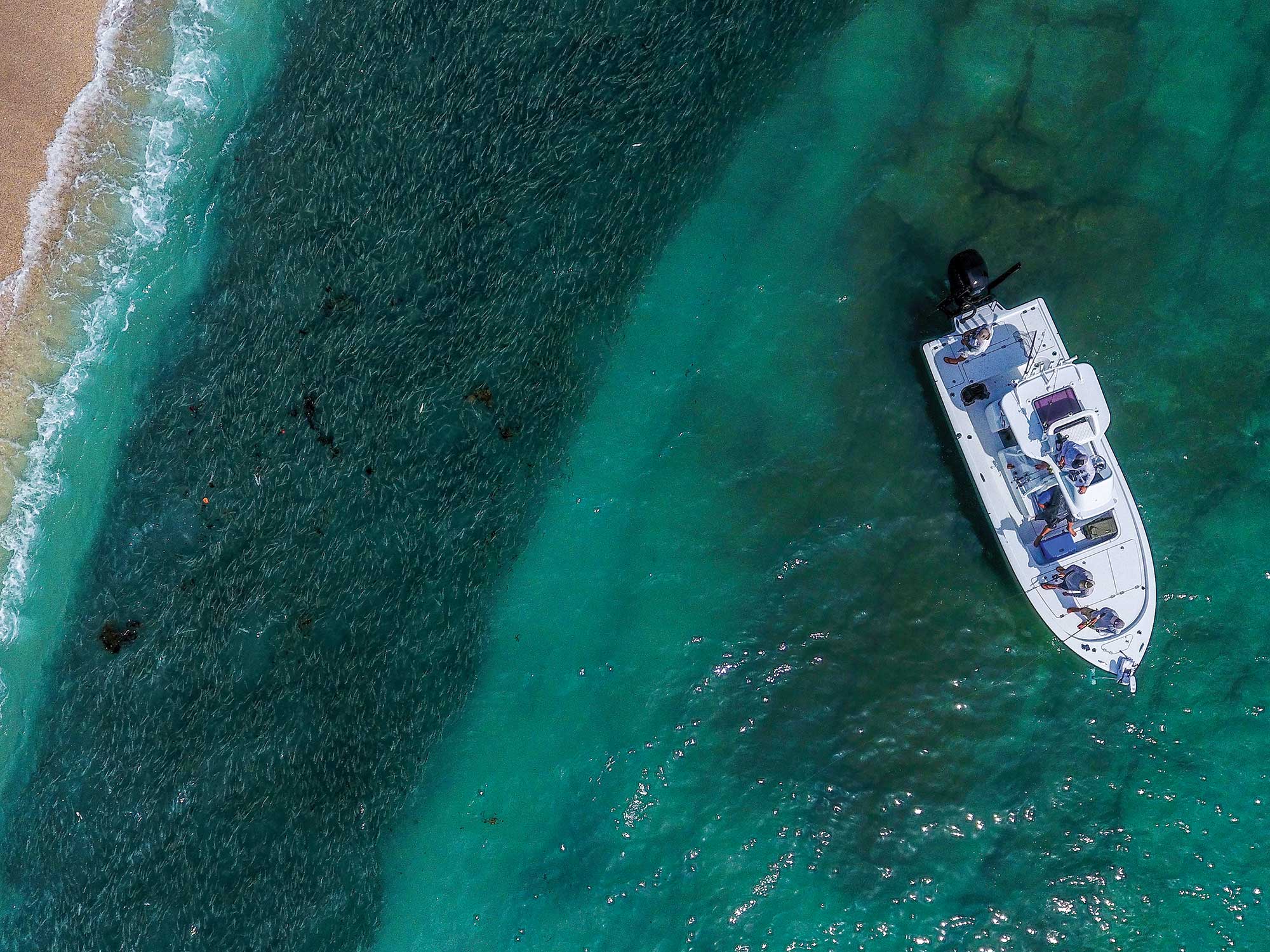
Every autumn, along the sun-bleached stretches of the Atlantic Seaboard and the emerald-toned waters of the Gulf of Mexico, one of the most astonishing marine spectacles on the planet unfolds. Beginning reliably in September and stretching well into November—and occasionally lingering into the biting chill of December—millions upon millions of striped and silver mullet pour out of coastal rivers, bays, and brackish estuaries. This massive coastal exodus is a baitfish migration more akin to the transcontinental flight of migratory birds or the legendary overland marches of lemmings than to the typical movements of marine teleosts.
Ranging in size from delicate 2-inch fingerlings to hefty, 3-pound adult breeders, these dense schools of forage fish form living ribbons that hug the shoreline, push through churning surf zones, and occasionally venture miles offshore. Their destination and the precise ecological triggers that compel them to move remain a subject of ongoing study, but the biological imperative is clear: finding the optimal balance of salinity to release their eggs and milt into the coastal current.
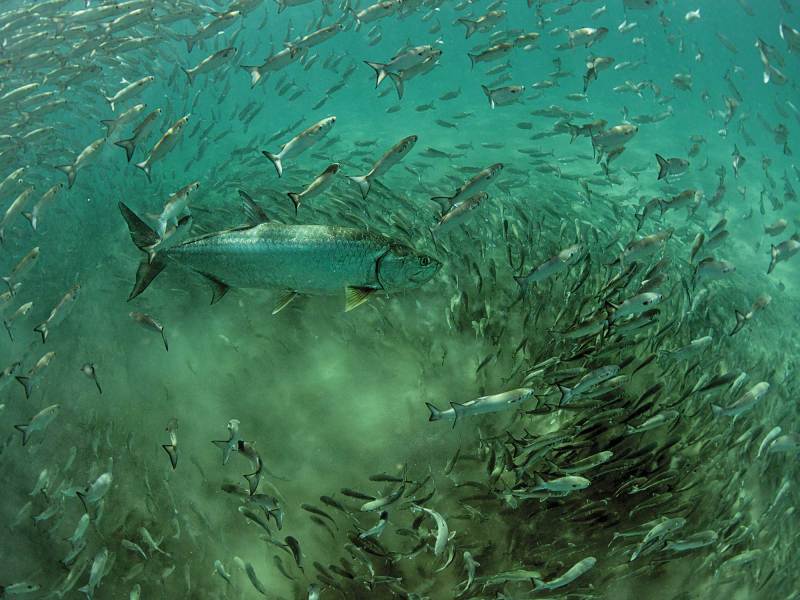
For the sportfishing community, the annual fall mullet run is nothing short of a seasonal holiday. It is an apex predator feeding frenzy of epic proportions. A vast, opportunistic gauntlet of coastal gamefish—including massive redfish, explosive tarpon, aggressive snook, and a revolving cast of pelagic marauders—follows the moving bait pods. For anglers who understand the timing, geography, and mechanics of this coastal convergence, the mullet run offers the premier opportunity of the year to lock horns with trophy-class fish in shallow, accessible waters.
Detailed Chronology: The Seasonal Progression of the Run
Understanding the cadence of the mullet run requires tracking its movement chronologically as it sweeps down the geography of the American coastline. The phenomenon is not a singular event, but rather a rolling wave of marine activity that shifts southward as autumn deepens into winter.
September: The Kickoff and Northern Manifestations
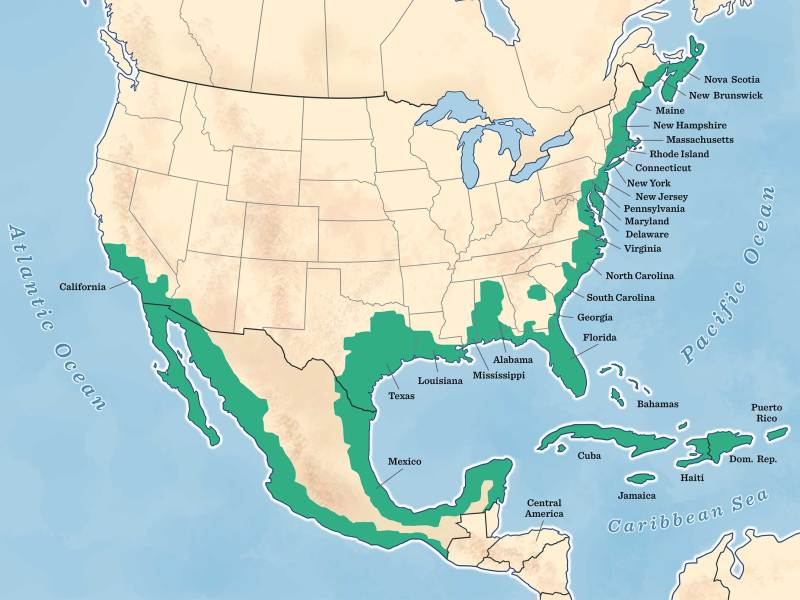
The curtain rises on the mullet run immediately after Labor Day, or sometimes as early as late August if an early cold front dips out of the Canadas. In the Carolinas and northern Georgia, rivers and sounds begin to empty out. Mullet schools organize into tight, nervous pods along the beachfronts. At this stage, the fish are heavily targeted by cruising tarpon and aggressive schools of oversized redfish that patrol the surf line. Anglers in these northern zones experience fast, frantic action as the baitfish first transition from brackish backwaters to the high-energy marine environment.
October: The Florida Explosion and the Mid-Peninsula Gauntlet
By mid-October, the epicenter of the mullet run shifts decisively into Florida waters. As the schools push past the Georgia border and down the Atlantic Coast toward Cape Canaveral and Sebastian Inlet, the sheer volume of bait reaches staggering proportions. This is the prime window for Florida’s legendary inshore gamefish. Snook, which have spent the summer fattening up in interior creeks, join the coastal procession in droves. Meanwhile, king mackerel and barracuda crash the offshore edges of the bait pods, creating a multi-tiered feeding opportunity that extends from the breaking waves out to the blue water.
November and Beyond: The Southern Convergence and Gulf Migrations
As November takes hold, the vanguard of the mullet run pushes deep into South Florida, converging around the keys and Biscayne Bay, while Gulf Coast populations orchestrate their own distinct east-west migrations. Biologists have documented Gulf white mullet traveling distances exceeding 100 miles in search of spawning grounds. Even as water temperatures drop, straggler schools continue to trigger late-season feeding binges. For dedicated anglers, this tail-end of the run offers a final, desperate chance to intercept gorged fish before the winter cooling patterns settle across the fishery.
Supporting Context & Metrics: The Science of the Run
To successfully intercept gamefish during the mullet run, anglers must look beyond basic fishing tactics and examine the biological and oceanographic drivers behind the migration.
The Salinity Imperative
Why do mullet run? While commercial harvesters and recreational anglers have tracked the migration for generations, marine biologists point primarily to osmoregulation and reproductive biology. Mullet are remarkably euryhaline—capable of surviving in freshwater rivers, hypersaline lagoons, and everything in between. However, to successfully spawn, adult mullet require precise oceanic salinity levels to trigger the release of their eggs and milt. As autumn approaches, internal biological clocks cue the fish to leave the low-salinity estuaries. They press along the coast, constantly testing the water, until they locate the exact marine conditions necessary for reproduction.
Size Dynamics and Species Breakdown
The migration features at least two primary commercial and sport species:
- Striped Mullet (Mugil cephalus): The heavyweight champion of the run, reaching weights up to 3 pounds or more. These are the fish that draw the attention of giant redfish, tarpon, and large sharks.
- Silver Mullet (Mugil curema): Generally smaller and sleeker, these fish travel in dense, hyperactive schools that ignite the feeding responses of mid-sized predators like snook, jack crevalle, and Spanish mackerel.
Environmental Catalysts: Wind, Tides, and Barometric Pressure
Not all days during the autumn months are created equal. The most successful anglers monitor atmospheric conditions closely to predict when the run will erupt:
- Wind Direction: A slight to moderate northeast wind is the holy grail for beach anglers. A northeast blow pushes waves diagonally toward the shore, naturally packing the migrating mullet pods tight against the sandbars where predators can corner them.
- Water Clarity and Temperature: A sudden drop in barometric pressure accompanied by the season’s first crisp northern breeze often serves as the starting gun for a massive push of bait. Slick, calm water surfaces make it easier to spot the dark, undulating brown shapes of cruising mullet schools from a distance.
Official Perspectives: Expert Insights on Targeting the Run
Mastering the mullet run requires tapping into the generational knowledge of veteran coastal guides who have spent decades tracking these migrations. Their field observations provide a masterclass in how to present baits when food is literally everywhere.
Matching the Hatch with Capt. Phil O’Bannon
One of the greatest challenges during the mullet run is convincing an apex predator to eat your offering when millions of real, live options are fluttering on the surface. Captain Phil O’Bannon, a renowned charter guide with extensive experience targeting snook on both of Florida’s coasts, emphasizes the absolute necessity of precision matching.
"One of the most important keys for snook is to match the size bait to the size mullet in a school where linesiders are feeding," O’Bannon explains. "If, for example, bait pods are holding mostly mullet in the 6-inch range, that’s the size bait to employ, preferably caught from the same schools snook are hitting."
When snook or tarpon are locked onto a specific size class of silver or striped mullet, throwing a mismatched lure or a badly proportioned live bait is a surefire way to get ignored. Guides recommend keeping a cast net ready on the deck to instantly harvest live baits directly from the trailing edge of the migrating schools.
Managing the Bait Pods
Another critical piece of tactical advice from professional captains is stealth. It is remarkably easy for an enthusiastic angler to run a boat directly over a migrating school of mullet, causing the bait to scatter, dive, or sound. When the bait panics and dives deep, the predators often follow them out of casting range.
The gold standard technique is to position your vessel well up-current or on the periphery of the bait pod. Allow your boat to drift naturally, or slow-troll live baits around the outer perimeter where cruising kings, tarpon, and barracuda are actively picking off stragglers.
Species Breakdown: Who’s Eating Who
The sheer diversity of marine predators participating in the mullet run is what elevates this event to legendary status. Here is how the primary gamefish interact with the migration.
Raging Redfish
Along the southeast coast, barrier island beaches, river mouths, and deep inlets, the arrival of the mullet run coincides perfectly with the annual redfish spawning migration. Oversized "bull" redfish are utterly delighted by the sudden abundance of high-calorie protein.
- Where to find them: Lower river systems, deep-water inlets, and the troughs just outside the breaking surf.
- Conservation note: Many of the mature redfish that gorge on beach mullet exceed maximum slot limits in various states. Anglers must exercise careful catch-and-release practices to preserve these vital breeding stocks.
Snook in the Southern Zones
While scattered snook can be found north of Daytona Beach, the true consistency of the snook run ignites around Sebastian Inlet and extends all the way down through Miami and the Ten Thousand Islands. When the mullet hit the mangroves and sandy beaches of South Florida, linesiders undergo a feeding orgy, positioning themselves around dock pilings, bridge fenders, and coastal structure to ambush passing bait.
Tarpon on a Tear
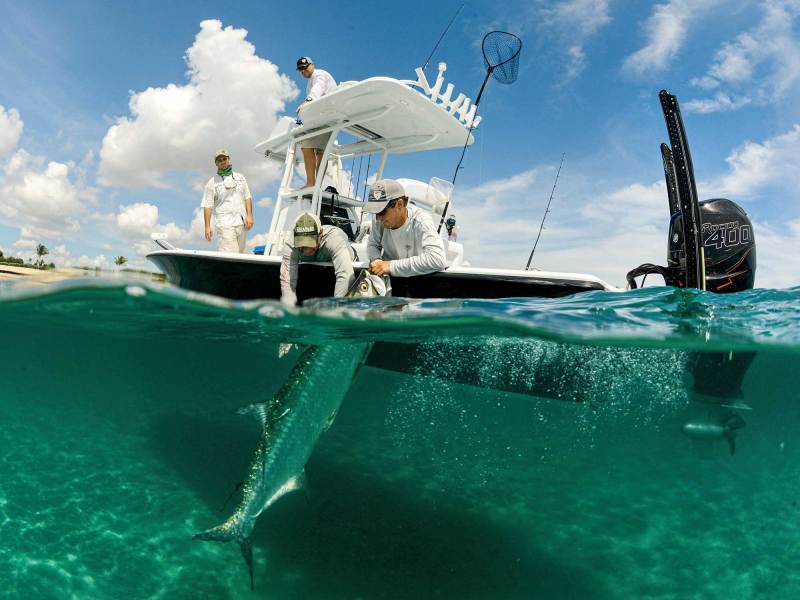
For fly-fishermen and light-tackle enthusiasts alike, there is no more thrilling sight than a rolling silver king erupting through a surface-shimmering pod of mullet. From the Carolinas through the length of Georgia and down the entire Florida peninsula, tarpon shadow the schools. Watching a 150-pound tarpon carve an open pocket inside a bait school, launch its entire body into the air, and snap up an unlucky mullet in a cloud of splashing spray is an experience that burns itself permanently into an angler’s memory.
Pelagic Invaders: Kingfish and Barracuda
For offshore and nearshore anglers, the mullet run pulls pelagic heavyweights in shockingly close to the beach.
- King Mackerel: Schools of 20-pound-class kingfish frequently track mullet pods extending a mile or two off the beachfront.
- Rigging Tactics: Because both kingfish and barracuda possess formidable teeth, wire leaders are non-negotiable. When live-baiting, tandem-hook trolling rigs are essential, as these aggressive predators have a frustrating habit of clipping the tails off live baits rather than swallowing them whole.
Supporting Cast: Jacks, Crevalle, Bluefish, and Spanish Mackerel
While the glamour species get the headlines, the supporting cast provides some of the most blistering, high-speed action of the season. Swarms of 15-pound yellow-tinged jack crevalle, aggressive bluefish, and screaming schools of Spanish mackerel will ruthlessly shred a mullet pod in seconds. For young anglers—or anyone looking to bend a rod repeatedly—these aggressive secondary predators offer non-stop, high-octane sport.
Future Outlook: Conservation and the Health of the Run
As coastal development, habitat degradation, and shifting climate patterns continue to exert pressure on marine ecosystems, the long-term health of the annual mullet run remains a focal point for fisheries management agencies and conservation-minded anglers.
Habitat Protection in Estuaries
Because mullet spend the vast majority of their lives maturing within inland rivers, creeks, and estuarine nurseries before ever embarking on their coastal spawning run, the protection of these fragile backwater habitats is paramount. Water quality degradation, loss of mangrove shorelines, and excessive nutrient runoff directly impact juvenile recruitment. Ensuring that juvenile mullet have clean, protected environments to grow in is the first line of defense for sustaining the massive biomass of the autumn migration.
Responsible Harvesting and Regulations
Mullet have long been targeted by both commercial cast-netters and recreational fishermen, who prize them not only as unmatched live bait for tarpon and snook, but also as table fare (mullet roe is considered a delicacy in many regional markets). State wildlife agencies continually monitor stock assessments to ensure that commercial netting pressure does not compromise the breeding population.
For the sportfishing community, the future of the mullet run relies heavily on ethical stewardship:
- Adhering strictly to bag and size limits for predatory gamefish like redfish and snook.
- Practicing revitalizing release techniques for oversized breeders.
- Minimizing tackle waste and monofilament loss along fragile beach environments during intense periods of surf casting.
By respecting the balance of this ancient marine migration, anglers ensure that the autumn skies will continue to echo with the splashing chaos of leaping tarpon, the dark shadows of giant redfish will continue to patrol the surf, and the great coastal mullet run will endure for generations of fishermen yet to come.

0 Comments