For the intrepid angler willing to trade the heavily trafficked waters of South Florida and the northern Bahamas for a genuine wilderness experience, the southwestern tip of Eleuthera Island represents a vanishing frontier. Cape Eleuthera—a far-flung destination anchored by the world-class Cape Eleuthera Resort & Marina—holds the promise of world-class pelagic action, aggressive reef inhabitants, and deep-drop treasures, largely unburdened by commercial and recreational fishing pressure.
In April, a dedicated team of anglers undertook a rigorous 252-mile open-ocean crossing aboard a state-of-the-art center console from Miami’s Haulover Inlet to the secluded shores of Exuma Sound. Their mission: to evaluate the fishery, test specialized trolling and bottom-fishing methodologies in shifting water temperatures, and document why this remote Bahamian sanctuary remains one of the last true secrets in sportfishing.
While legendary destinations in the Abacos and Bimini draw fleets of boats from Palm Beach and Fort Lauderdale, Cape Eleuthera’s geographic isolation—combined with its status as a cruiser’s paradise—insulates it from heavy angling traffic. The result is an exceptional marine ecosystem where mahi materialize in chum slicks, yellowfin tuna crash surface feeds with abandon, and heavy-tackle bottom-dwelling trophies patrol pristine reefs.
Detailed Chronology: The Journey and On-the-Water Tactics
Departure and Clearing Customs
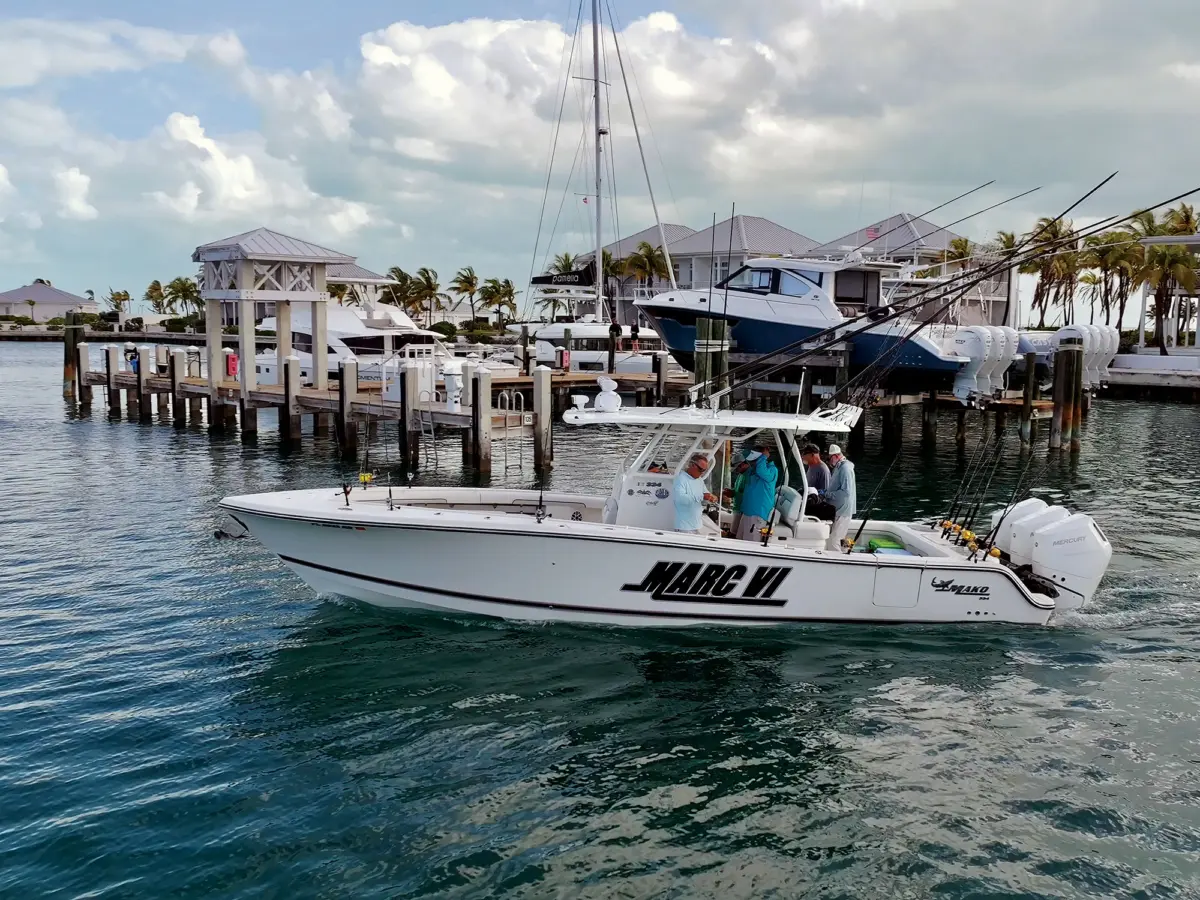
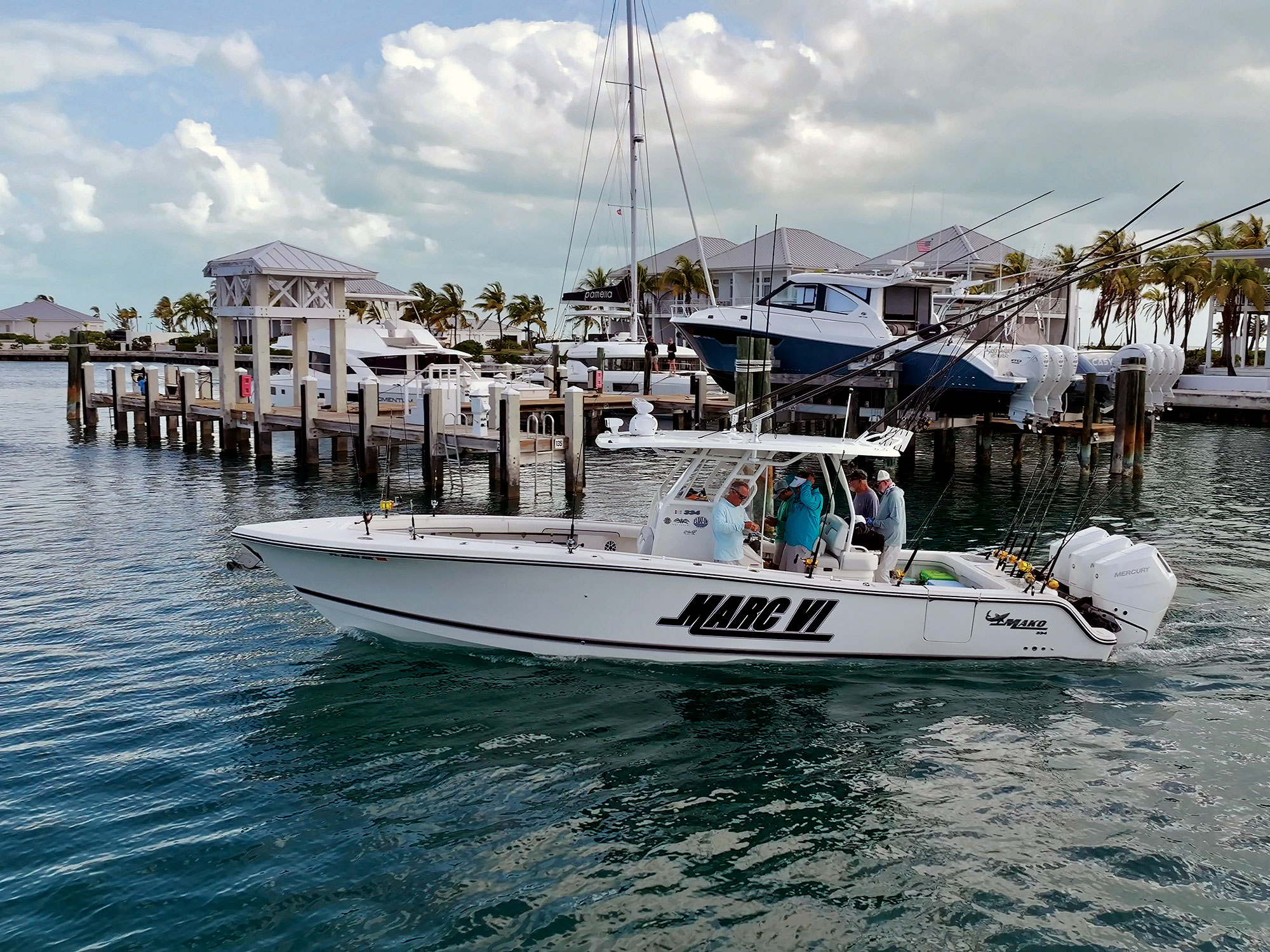
The expedition began at 6:00 a.m. at North Miami’s TNT Marine Center. A seasoned crew consisting of Harry Vernon, Mark Schmidt, Rob “The Swede” Greene, videographer Charles Gonzalez, and the skipper loaded the MARC VI—a high-performance Mako 334 center console—with essential gear, tackle, duffle bags, and mandatory safety equipment, including life jackets, throw cushions, and an emergency position-indicating radio beacon (EPIRB).
Clearing Haulover Inlet at 7:15 a.m., the crew made their initial 50-mile run to Bimini to legally clear Bahamian Customs and Immigration. Using the online Click2Clear.com portal a week prior, the team had pre-submitted cruising and fishing permit applications, vessel specifications, and crew manifests, paying applicable fees in advance. Armed with an official PCR number, the on-site clearance at Bimini took roughly one hour, yielding stamped and legal cruising and fishing permits ready for the waters ahead.
The Route to the Cape
From Bimini, the crew navigated 68 miles across the Great Bahama Bank into the deep waters of "The Pocket." Skirting Chub Cay after a 15-mile leg, they pushed onward another 35 miles to the Nassau Harbour entrance. To ensure optimal fuel margins, the vessel took on fuel in Nassau before crossing the Yellow Bank. A 40-mile traverse across these shallow waters brought them to Ship Channel Point, the gateway into the deep abyssal basin of Exuma Sound.
From Ship Channel Point, a final 44-mile run delivered the vessel to the Cape Eleuthera Resort & Marina. In total, the 252-mile maritime journey consumed 253 gallons of fuel. After docking, washing down the hull, checking into oceanfront accommodations, and enjoying a group dinner, the crew retired early to prepare for dawn operations.
Crossing "The Bridge" and Tackling the Atlantic
Exuma Sound is historically productive for pelagics, particularly when prevailing easterly or southeasterly winds push blue water and forage tight against the banks of Ship Channel and Highbourne Cay. However, a persistent northeast wind pattern prior to their arrival prompted the team to cross "The Bridge"—an underwater reef formation sitting between 25 and 60 feet deep that connects the southern tip of Eleuthera to Little San Salvador—and venture into the open Atlantic.
Targeting blue marlin, the crew deployed a spread of five circle-hook ballyhoo and chugger combinations on Penn International 50-pound reels, complemented by an elaborate teaser array. As the afternoon solunar period approached, the ocean erupted: flying fish broke the surface, diving birds worked frantic bait schools, and small blackfin and yellowfin tunas staged dramatic blitzes against the backdrop of Little San Salvador.
When standard marlin spreads drew blank looks from the tuna, the team adapted. Abandoning the heavy gear, they deployed light spin tackle equipped with small crankbaits and chuggers. After a brief lull and a few pulled hooks, the skipper orchestrated a tactical shift, swapping flat-line baits for Rapala X-Rap Magnum Xtreme and Rapala Countdown Magnum swimming plugs, alongside a pink-skirted ballyhoo on an 80-pound test fluorocarbon leader.
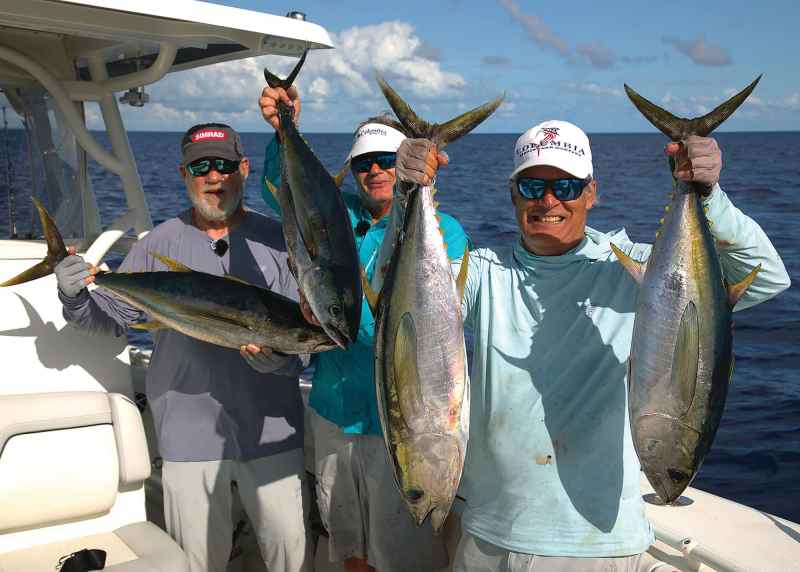
The adjustment cracked the code. The screaming of clickers announced a sudden onslaught of solid yellowfin tuna. The action escalated into a chaotic quadruple-header featuring strikes across the Rapala plugs and skirted ballyhoo, accompanied by a brief, teasing appearance by a small billfish before the ocean settled back into a calm slumber.
Reef Fishing, Mahi Encounters, and Heavy Weather
The destination’s versatility shone during a localized blow when a strong cold front ushered in northeast-to-east winds exceeding 25 knots. Sheltered in the lee of the resort side of Exuma Sound, the crew bypassed land-based downtime and targeted nearby patch reefs in 10 to 20 feet of water. Trolling small Rapala swimming plugs on 50-pound fluorocarbon leaders yielded steady releases of grouper, barracuda, and jacks, interspersed with losses to aggressive cero mackerel.
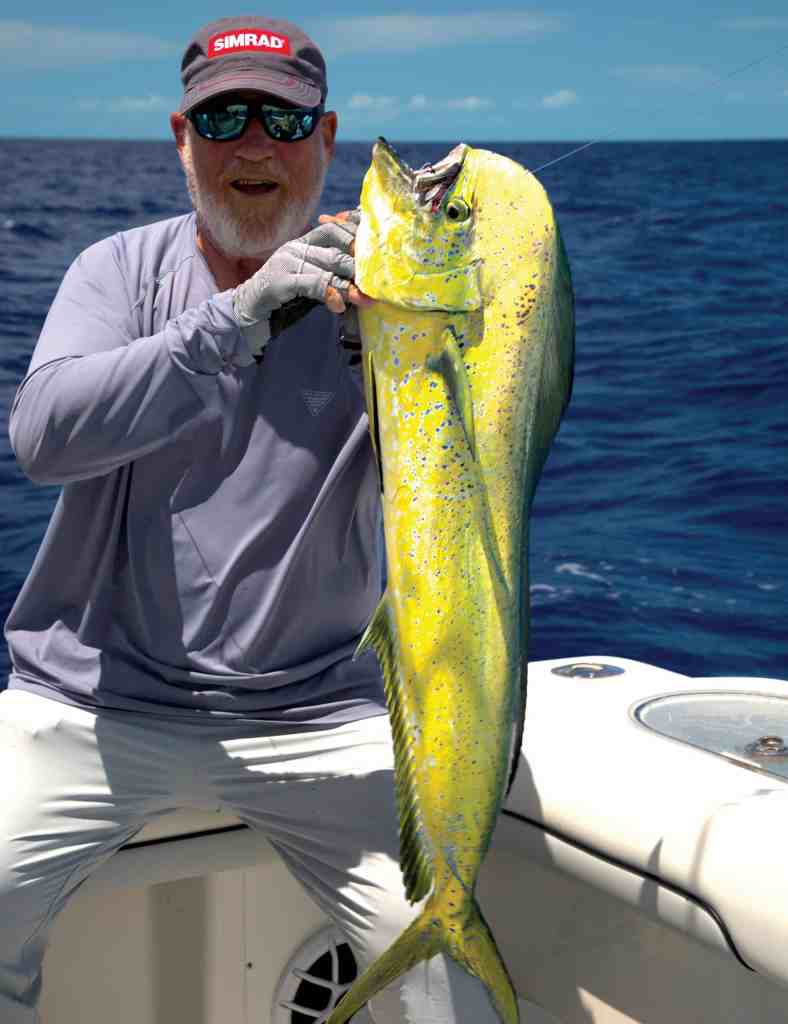
Mahi-mahi fishing proved equally prolific. Even with minimal sargassum weed lines present, blind trolling and searching out working birds produced steady action. In a testament to the local abundance, three 15- to 20-pound mahi aggressively charged the boat while the crew was anchored in 70 feet of water setting up a chum slick for yellowtail snapper.
The yellowtailing itself was exceptional. Anchored over proven bottom coordinates, the crew deployed a large mesh chum bag. Once marine sonar indicated fish rising from the 70-foot depths, the bite commenced. Using light knocker rigs with small yellowtail jigs, 1/0 in-line circle hooks, and baits consisting of silversides, ballyhoo strips, and squid, the anglers contended with robust specimens. To counter powerful runs and predatory sharks, the crew utilized 20-pound main lines and 20-pound fluorocarbon leaders. The session culminated in standout catches, including a personal-best yellowtail for videographer Charles Gonzalez and a trophy 27-inch specimen landed by the skipper.
Deep-Drop Exploits
On the final day of the itinerary, the expedition turned its attention to the abyss. Utilizing sonar to locate bottom contours between 600 and 1,000 feet, anglers Mark Schmidt and Vernon deployed squid-baited hooks on a pair of Penn Fathom electric reels while the skipper managed precise boat drifts. The deep-water drops produced a bounty of quality bottom dwellers, including yelloweye, wenchman, and blackfin snappers, before the vessel returned to port at 1:00 p.m. to refuel and prepare for the return transit.
Supporting Context & Metrics
Geographical and Logistical Overview
Total Transit Distance: 252 miles (Miami to Cape Eleuthera via Bimini, Chub Cay, Nassau, and Ship Channel Point).
Fuel Consumption: 253 gallons for the initial northward crossing.
Return Transit Time: 7 hours and 20 minutes, including a 45-minute fuel stop in Nassau Harbour, arriving back at Haulover Inlet at 1:30 p.m.
Target Species Profile: Blue marlin, white marlin, yellowfin tuna, blackfin tuna, mahi-mahi, wahoo, yellowtail snapper, yelloweye snapper, blackfin snapper, grouper, cero mackerel, and horse-eye jacks.
Environmental Conditions
The expedition encountered cooler-than-normal water temperatures for April, which temporarily delayed the primary pelagic migrations across Eleuthera and neighboring Cat Island 60 miles to the south. Oceanographic data retrieved via Roff’s Ocean Fishing Forecasting charts confirmed a late-season push of warm water moving toward Devil’s Point at Cat Island, underscoring the dynamic nature of Bahamian current systems and their direct correlation to offshore success.
Official Statements and Local Insights
Justin Dubowitz, manager of the Cape Eleuthera Resort & Marina, emphasized the unique value proposition that isolation brings to the property and its surrounding marine habitats:
"The tranquility and abundance found here are the direct fruits of our secluded location. It is just far enough of a maritime crossing to deter the massive fleets of South Florida anglers, preserving a pristine fishery for those willing to make the journey."
Reflecting on the expedition’s overarching success, the skipper noted the shifting landscape of modern sportfishing vessels:
"Given the ever-larger center consoles, increased fuel capacities, and high-horsepower outboards hitting the market, many more anglers will soon make short work of reaching what is rapidly becoming a once-remote paradise. Anglers would do well to experience Cape Eleuthera while the getting is good."
Future Outlook: The Evolution of Cape Eleuthera as an Angling Mecca
As marine manufacturing continues to push the boundaries of range, speed, and comfort in center console design, the traditional barriers protecting remote island fisheries are steadily eroding. Destinations that once required multi-day cruising commitments or commercial support are now accessible within a single daylight window from the Florida coast.
However, Cape Eleuthera remains a prime example of sustainable, low-pressure sportfishing. The combination of deep ocean troughs, intricate shallow reef structures, and world-class marina infrastructure ensures its status as a premier destination for both casual cruisers and tournament-grade anglers.
For those planning an expedition, April and May remain prime windows for migrating billfish, yellowfins, and mahi, while winter months offer exceptional wahoo opportunities. As warm-water currents continue to dictate seasonal migrations, utilizing modern oceanographic forecasting tools—coupled with a willingness to adapt terminal tackle on the fly—will separate successful voyagers from those who miss the bite. One thing remains certain: for anglers seeking solitude, unspoiled waters, and explosive action, Cape Eleuthera stands ready to deliver.



0 Comments