For the intrepid offshore angler, true reward lies beyond the heavy wake of the crowds. While legendary destinations in the Abacos, Bimini, and Spanish Wells draw fleets of sportfishermen from Palm Beach and Fort Pierce, a far more secluded, high-yield alternative quietly holds court on the southwestern tip of Eleuthera Island. Cape Eleuthera—situated deep within the Out Islands of the Bahamas—represents a masterclass in low-pressure, high-reward bluewater and reef angling.
Boasting the deepest marina in the Bahamas with dockage accommodating vessels up to 200 feet, the Cape Eleuthera Resort & Marina serves as the ideal launchpad for expeditions into the prolific, rugged waters of Exuma Sound and the open Atlantic. A grueling yet exhilarating 252-mile run from Miami’s Haulover Inlet deters the casual day-boater, preserving a pristine aquatic ecosystem where massive yellowfin tuna, aggressive pelagics, and trophy-sized reef species thrive with minimal human interference.
This comprehensive report chronicles a multi-day expedition aboard a high-performance center console, detailing the navigation logistics, technical adaptations required to crack stubborn bites, and the enduring allure of one of the Caribbean’s best-kept sportfishing secrets.
Detailed Chronology: The Journey and Execution
Phase 1: Departure and International Clearance
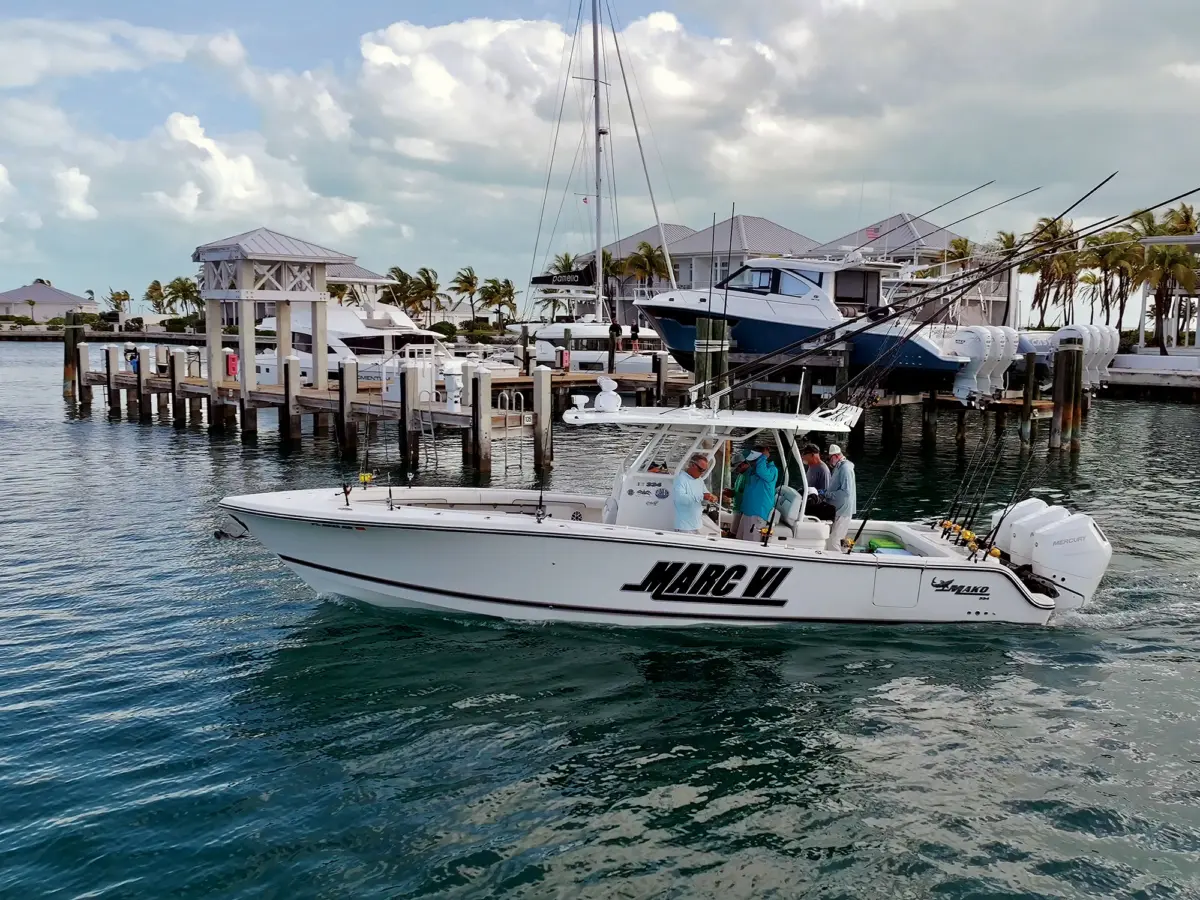
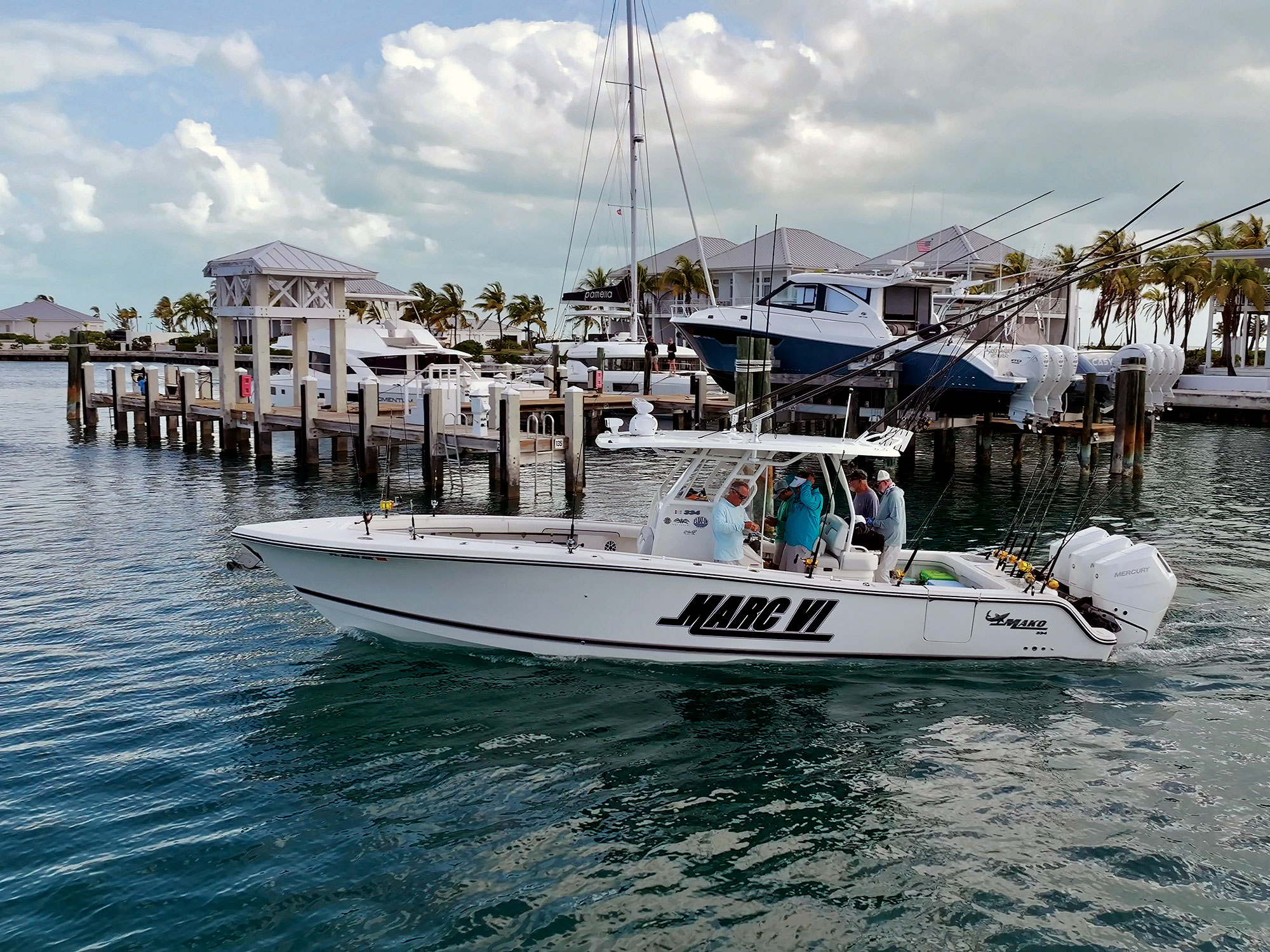
The expedition began at 6:00 a.m. at North Miami’s TNT Marine Center. Crew members Harry Vernon, Mark Schmidt, Rob "The Swede" Greene, and videographer Charles Gonzalez meticulously loaded tackle, gear bags, life safety equipment, and an emergency position-indicating radio beacon (EPIRB) aboard the center console MARC VI. At 7:15 a.m., the vessel cleared Haulover Inlet, setting a heading east-southeast across the Gulf Stream.
The initial leg covered 50 miles to Bimini, serving as the obligatory port of entry to clear Bahamian Customs and Immigration. Utilizing the online Click2Clear.com portal one week prior, the crew had submitted vessel documentation, crew manifests, and cruising and fishing permit applications, pre-paying all requisite fees. Presentation of the generated PCR number at the Bimini port facility streamlined the process, yielding stamped, legal fishing permits within an hour.
Phase 2: Crossing the Banks to Exuma Sound
With legal clearance secured, the journey continued eastward across the Great Bahama Bank for 68 miles into the deepwater corridor known as The Pocket. Skirting Chub Cay, the vessel advanced 35 miles to the Nassau Harbour entrance, where the crew topped off fuel reserves to ensure a generous safety margin.
Exiting Nassau, the route crossed the shallow waters of Yellow Bank for 40 miles before reaching Ship Channel Point—the primary gateway into the deep, indigo expanse of Exuma Sound. From there, a final 44-mile stretch delivered the crew to the Cape Eleuthera Resort & Marina. The 252-mile trek consumed 253 gallons of fuel. Upon arrival, the crew docked, washed the hull, checked into oceanfront accommodations, and prepared tackle for the following morning’s dawn patrol.
Phase 3: Venturing Across "The Bridge"
While Exuma Sound typically yields stellar pelagic action when prevailing easterly winds push blue water against the banks, a stubborn northeast breeze dictated a tactical pivot on Day One. The crew elected to cross "The Bridge"—an underwater reef formation ranging from 25 to 60 feet deep that bridges the southern tip of Eleuthera to Little San Salvador—and target the aggressive, untamed bottom topography of the open Atlantic.
Rigged primarily for blue marlin, the spread featured five circle-hook ballyhoo/chugger combinations deployed from Penn International 50-pound class reels, supplemented by an elaborate teaser array. As a minor solunar feeding window approached at 2:00 p.m., the ocean began to animate. Showers of flying fish erupted across the surface, pursued by frenzied schools of blackfin and yellowfin tunas crashing small forage under working seabirds. The scene mirrored the Pacific coast of Central America rather than the western Atlantic.
Phase 4: Cracking the Tuna Code
Initial attempts to target the boiling tunas with light spinning gear and small crankbaits yielded frustrating results; fish ignored standard presentations or pulled hooks during chaotic surface strikes. Recognizing that standard tactics were falling short, the helm adjusted strategy, replacing flat-line baits with high-performance swimming plugs—specifically Rapala X-Rap Magnum Xtreme and Rapala Countdown Magnum models—while positioning a small, pink-skirted ballyhoo rigged on 80-pound test fluorocarbon leader on the far center rigger.
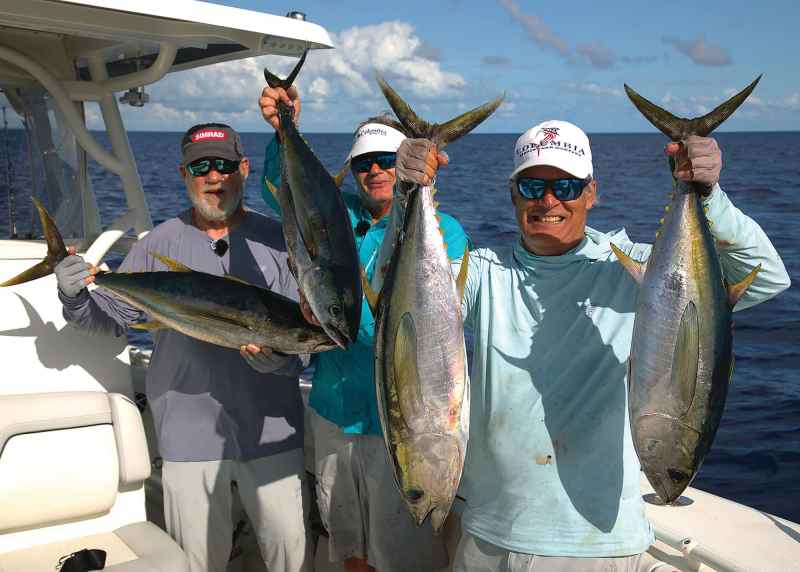
The tactical shift proved immediate. Screaming clickers announced aggressive hook-ups as solid yellowfin tunas attacked the diving plugs. Within minutes, the spread erupted into a chaotic quadruple-header involving both Rapalas and the skirted ballyhoo. Though some fish shook free, multiple quality yellowfins were successfully boated before the school vanished into the depths, signaling the close of a textbook tactical adjustment.
Phase 5: Reef Exploitation and Deep-Dropping
When a late-trip cold front brought 25-knot northeast winds, the lee of Exuma Sound provided optimal sea conditions for targeted reef fishing. The crew deployed small Rapala swimming plugs on 50-fluorocarbon leaders over shallow patch reefs in 10 to 20 feet of water, successfully releasing feisty groupers, barracuda, and jacks.
For bottom-dwelling prized catches, the crew anchored over proven coordinates in 70 feet of water. Utilizing large mesh chum bags to draw yellowtail snappers up from the substrate, anglers deployed knocker rigs featuring 1/0 in-line circle hooks, light weights, and natural baits (silversides, squid, and ballyhoo strips). Because high-grade yellowtails possess the power to retreat into sharp coral structures, the setup mandated 20-pound class main lines and 20-pound fluorocarbon leaders. The fast-paced bite yielded exceptional "flags," culminating in a trophy 27-inch yellowtail landed by the expedition leader, alongside impressive catches of cero mackerel and horse-eye jacks.
On the final day, the crew transitioned to deep-dropping. Without pre-determined waypoints, sonar scans along bottom irregularities between 600 and 1,000 feet directed the drifts. Using Penn Fathom electric reels spooled with squid-baited bottom rigs, the team hauled up healthy specimens of yelloweye, wenchman, and blackfin snappers before returning to the marina at 1:00 p.m. to prep the vessel for the homeward voyage.
Supporting Context & Metrics
Metric / Parameter
Operational Data
Total Distance Traveled (Round Trip)
~504 nautical miles (252 miles each way)
Total Fuel Consumed
253 gallons (One-way leg)
Primary Launch Point
Haulover Inlet, Miami, Florida
Destination Port
Cape Eleuthera Resort & Marina, Eleuthera Island, Bahamas
Key Fishing Zones
Exuma Sound, The Bridge (Atlantic side), Ship Channel Point
Primary Target Species
Yellowfin Tuna, Mahi-Mahi, Blue Marlin, Yellowtail Snapper, Blackfin Snapper
Recommended Tackle Class
20 lb. to 80 lb. test (Spinning, Conventional, and Electric Deep-Drop setups)
Official Statements and Industry Insights
Reflecting on the unique character of the destination, Justin Dubowitz, General Manager at Cape Eleuthera Resort & Marina, emphasized the natural advantages conferred by geography:
"We cherish the tranquility and absolute abundance found here—the clear, undeniable fruits of a truly secluded location. It sits just far enough across the water to deter the overwhelming droves of South Florida traffic, leaving a pristine fishery that rewards those willing to make the passage."
Expedition leader and veteran angling authority George Poveromo underscored the strategic value of timing and water temperature dynamics:
"Cape Eleuthera experienced cooler-than-normal water temperatures during our spring window, which temporarily delayed the heavy migration of pelagics. However, tracking thermal shifts via ocean forecasting tools like Roffer’s reveals how rapidly these waters transition into world-class fisheries. When the warm water pushes in, the ocean wakes up in spectacular fashion."
Future Outlook
The sportfishing landscape in the Out Islands of the Bahamas is undergoing a subtle yet profound evolution. As marine engineering advances—spurred by the widespread adoption of multi-outboard configurations, larger center console designs, and exponentially increased fuel capacities—the formidable 250-plus-mile barrier from the South Florida mainland is shrinking in terms of travel time and logistical friction.
For decades, the northern sectors of the Bahamas have absorbed the lion’s share of international angling pressure. Destinations like Cape Eleuthera, however, remain operational sanctuaries where heavy angling pressure is virtually non-existent. Resort infrastructure features deep-water berths capable of holding mega-yachts alongside luxurious residential and transient amenities, ensuring that roughing it is entirely optional.
Industry analysts predict that as word spreads regarding the staggering density of yellowfin tuna, aggressive mahi populations, and unpressurized reef ecosystems surrounding Exuma Sound, this remote frontier will inevitably see increased visitation. For the forward-thinking angler, the directive is clear: utilize modern high-performance vessels to secure safe weather windows, master the local bathymetry, and experience Cape Eleuthera’s unmatched fishery while the horizon remains wide open.



0 Comments