

Executive Overview
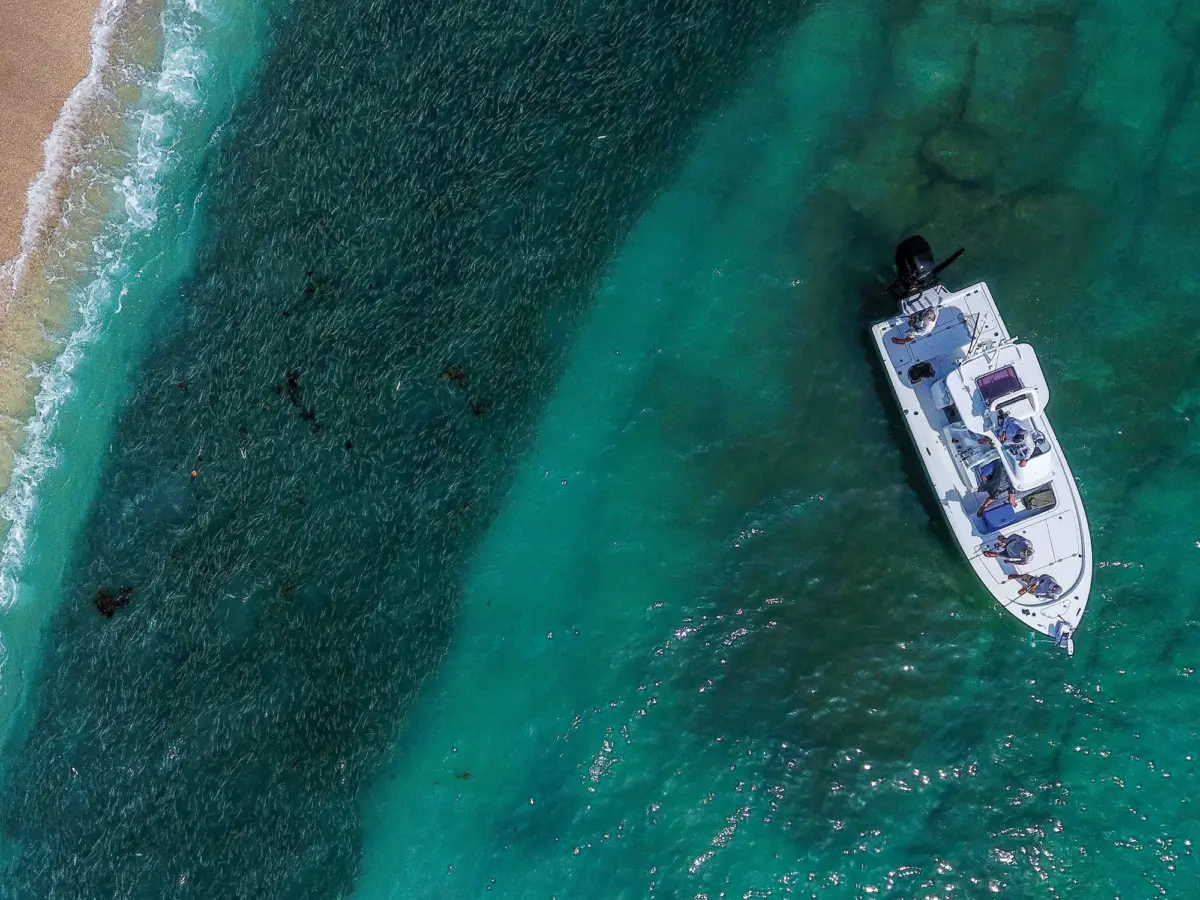
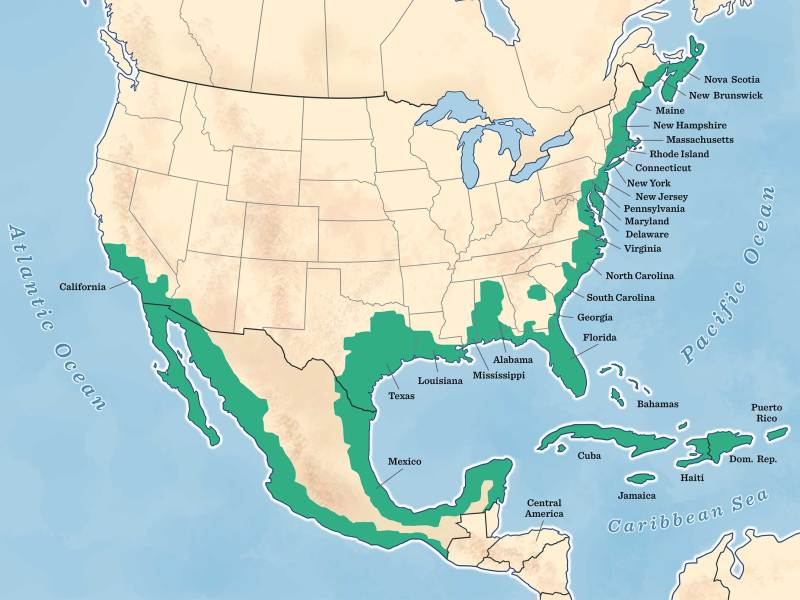
Every autumn, along the sun-drenched beaches of the Atlantic Coast and the expansive marine nurseries of the Gulf of Mexico, one of the most astonishing wildlife spectacles on the planet unfolds. Beginning in September and extending well into November—and occasionally lingering into the winter months—millions upon millions of striped and silver mullet pour out of coastal rivers, inland bays, and brackish estuaries. This mass exodus bears a striking behavioral resemblance to the transcontinental migrations of far-traveling birds or the legendary movements of terrestrial lemmings.
Ranging in size from delicate fingerlings to heavy, robust 3-pound adults, these schooling baitfish flood the surf zones, inlets, and nearshore waters, creating a shifting, bronze-hued highway of protein. While marine biologists continue to study the precise environmental cues and migratory pathways governing this phenomenon, the ecological reality is indisputable: the annual mullet run triggers an unparalleled feeding frenzy.
A veritable gauntlet of apex gamefish—including massive redfish, explosive snook, acrobatic tarpon, heavy-shouldered sharks, razor-toothed king mackerel, and aggressive jack crevalle—synchronizes its feeding patterns to exploit this seasonal bounty. For recreational anglers, charter captains, and fly-fishing enthusiasts, the fall mullet run represents the absolute pinnacle of inshore and nearshore saltwater fishing. Success during this chaotic window requires more than just casting into boiling water; it demands an understanding of bait behavior, tactical positioning, and precise gear selection to consistently hook trophy fish amid a sea of natural forage.
Detailed Chronology: The Seasonal Progression of the Run
The timeline of the mullet run is dictated by shifts in photoperiod, water temperature, and biological imperatives, unfolding in distinct phases across different geographic latitudes.
Phase One: The September Spark (North to South Initiation)
As early as late August, subtle drops in nighttime temperatures signal the impending seasonal shift in the mid-Atlantic and northern Florida waters. Mullet begin congregating in the upper reaches of tidal creeks and marsh systems. By mid-September, the vanguard of the migration pushes through river mouths and inlets. During this initial phase, the bait is often smaller—predominantly finger mullet ranging from 3 to 4 inches.
Inshore predators such as seatrout, juvenile tarpon, and snook intercept these early pods around docks, bridge pilings, and mangrove edges. Concurrently, surfcasters walking the beaches from the Carolinas down through northern Florida begin noticing dark, undulating patches of fish rippling the surface just beyond the breaking waves.
Phase Two: October’s Full-Scale Coastal Siege
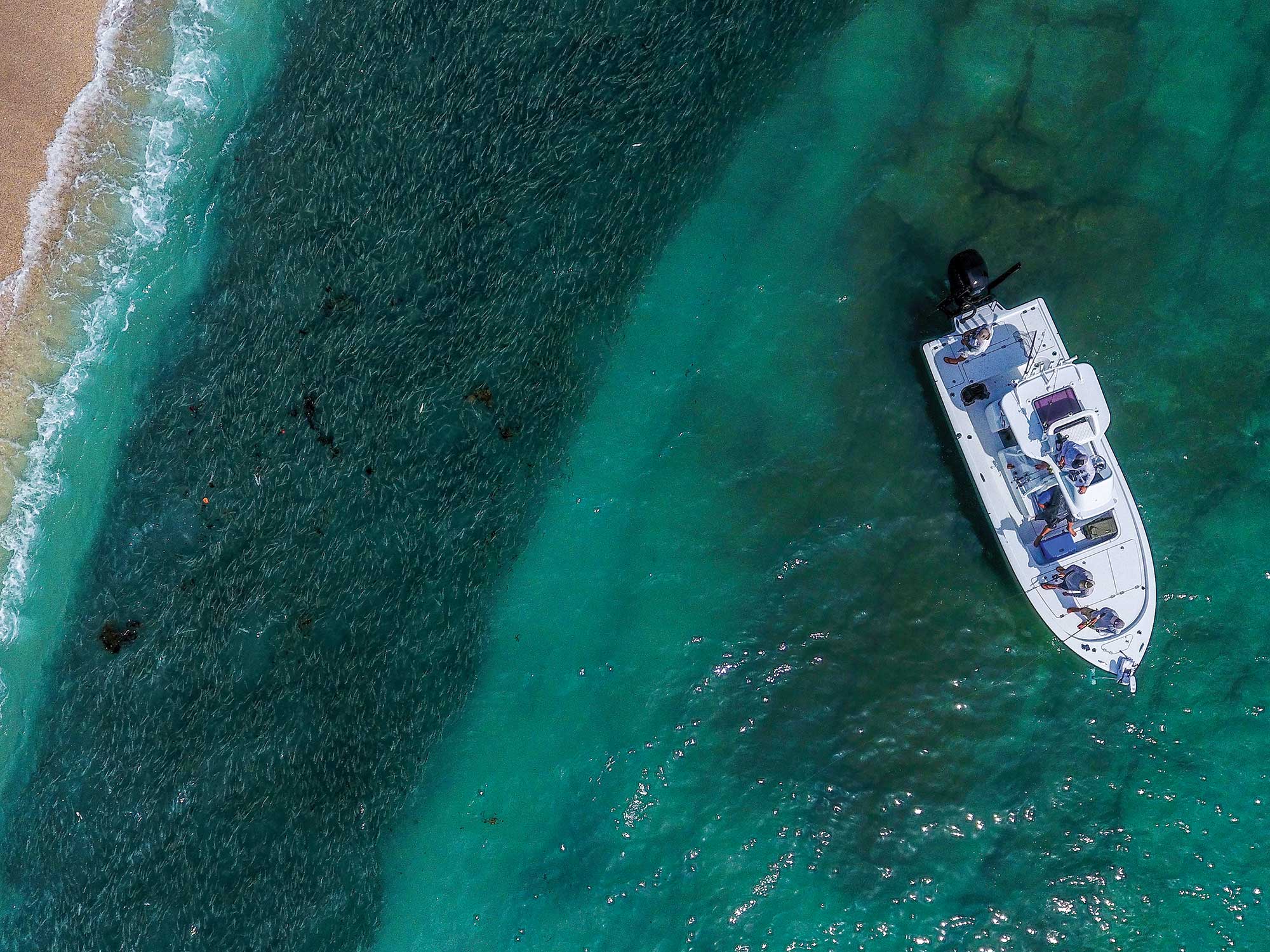
By October, the mullet run hits its deafening crescendo. Millions of fish are now on the move simultaneously, stretching for miles along the coastline. The composition of the schools diversifies, featuring everything from tiny baitfish to heavy, three-pound adults packing up for their offshore journeys.
This is the month of total marine warfare. Giant redfish stack up in inlets and sounds; massive schools of migratory tarpon hammer the surf zones from Georgia down to the Florida Keys; and king mackerel, barracuda, and bluefish patrol the outer edges of the bait pods. A slight northeast wind during this period is considered the holy grail by surfcasters, as it stacks the dense schools tight against the sand, pinning the mullet and setting the stage for blistering topwater strikes within wading distance of the shore.
Phase Three: November’s Deepwater Finale and the Gulf Dynamics
As November progresses, the character of the run shifts. While the primary Atlantic coastal migration continues its relentless push southward toward South Florida and the Keys, the biological drive reaches its climax: spawning. Biologists note that mullet seek out specific, highly precise levels of salinity to release their eggs and milt. This quest takes them from the surf out into deeper nearshore reefs and open ocean water.
Concurrently, in the Gulf of Mexico, a distinct east-west migration pattern takes shape. White mullet in the Gulf have been documented traveling upwards of 100 miles along parallel trajectories, drawing in a completely different suite of predators. By late November and December, the frantic surface blitzes begin to taper off, replaced by deepwater concentrations of fish gorging on the remaining dispersed schools before water temperatures force a seasonal slowdown.
Supporting Context & Metrics: The Biology and Physics of the Run
To effectively target gamefish during the mullet run, anglers must understand the ecological machinery driving the event.
Salinity, Spawning, and Scientific Theories
Marine biologists point to osmoregulation and reproductive biology as the primary catalysts for the run. Mullet spend the majority of their life cycle feeding and growing in low-salinity estuaries, rivers, and back bays. However, to complete their life cycle, adult fish must migrate to high-salinity marine environments to spawn. The physiological urge to find the exact saline mix triggers synchronized schooling behavior on a massive scale.
Adding to the mystery of the run is the iconic behavior of "jumping." Throughout the migration, millions of mullet periodically launch themselves into the air. While folklore attributes this to evading unseen predators, fisheries scientists offer a more fundamental physiological explanation: oxygenation. When massive schools compress into hyper-dense pods containing hundreds of thousands of individuals, dissolved oxygen levels plummet rapidly. Jumping allows the fish to rapidly ventilate their gills across the air-water interface, taking in a quick breath of pure atmospheric oxygen before plunging back into the safety of the school.
Forage Dynamics and Predator Metrics
The sheer volume of biomass moving along the coast creates staggering ecological metrics. A single consolidated mullet pod can span several acres, comprising upwards of 50,000 to 100,000 individual fish. When apex predators engage these pods, the kinetic energy released is immense.
- Redfish (Sciaenops ocellatus): Mature specimens weighing 20 to 40 pounds regularly cruise the surf and inlet mouths during peak migration, consuming up to 5% to 10% of their body weight daily in high-protein mullet.
- Tarpon (Megalops atlanticus): A feeding tarpon can accelerate from a dead stop to explosive speeds in fractions of a second, carving a distinct void inside a bait school before inhaling an adult mullet whole.
- King Mackerel (Scomberomorus cavalla): Operating in deepwater zones extending one to two miles offshore from the mullet pods, adult kingfish frequently reach the 20-pound class, relying on their blistering speed to clip the rear ends of migrating baitfish.
Official Statements & Expert Insights
Industry veterans and professional guides who spend hundreds of days a year on the water offer invaluable tactical wisdom for navigating the organized chaos of the mullet run.
Capt. Phil O’Bannon, a renowned charter guide with extensive experience targeting linesiders on both Florida coasts, emphasizes the critical importance of matching the hatch during peak feeding cycles:
"One of the most important keys for catching snook during the mullet run is matching the exact size of the bait to the size of the mullet in the specific school where the fish are feeding," O’Bannon explains. "If the bait pods you are working are holding mostly finger mullet in the 4-to-6-inch range, that is precisely the size bait you need to employ. Whenever possible, cast a cast net and live-line the exact baits that the snook are actively hunting from those very same schools."
Highlighting the unique behavior of tarpon during the migration, coastal tournament anglers note that presentation is everything. When millions of easy targets are readily available, convincing a "silver king" to strike an artificial or hooked live bait requires absolute stealth and precision.
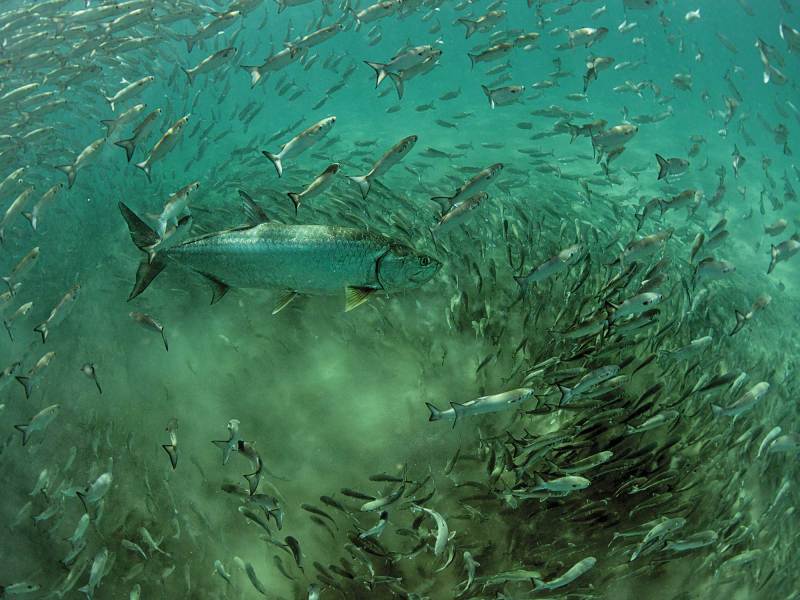
"The trick isn’t finding the tarpon; it’s convincing a fish to eat your offering when there is a literal grocery store of free food floating everywhere around it," notes veteran East Coast tarpon guide Jason Arnold. "You have to present your bait on the outer edges of the school where the predator can isolate it, rather than throwing blindly into the dead center of a massive, panicked pod."
Target Species Deep-Dive: Where, When, and How to Fish
1. Raging Redfish in the Surf and Inlets
The autumn redfish spawn coincides perfectly with the mullet run, creating legendary fishing opportunities around southeast and Gulf coast inlets, sounds, and river mouths. Oversized "bull" reds gorge on the sudden bounty, often patrolling within casting distance of the beach.
- Tactics: Fish at daybreak in slick-water conditions. Look for bronze-colored patches on the water and mullet "nosing" the surface. A light northeast wind is ideal because it pins the bait against the shoreline.
- Gear: Medium-heavy spinning setups paired with 30-to-40-pound braid and fluorocarbon leaders. Live mullet hooked lightly through the lips or dorsal fin work exceptionally well.
2. Snook Feeding Orgies from Sebastian Inlet South
Consistent, high-volume snook action ignites south of Cape Canaveral, peaking from Sebastian Inlet down to Miami. Linesiders position themselves around bridges, jetties, and mangrove points where tidal currents sweep migrating mullet past their ambushes.
- Tactics: Focus on structure where current compresses the bait schools. Pay close attention to water temperature drops, which can temporarily shut down the bite if they occur too rapidly.
- Gear: 7-foot, medium-heavy rods with high-speed spinning reels. Topwater plugs, heavy-weighted soft plastics, and free-lined live mullet are standard staples.
3. Tarpon on a Tear
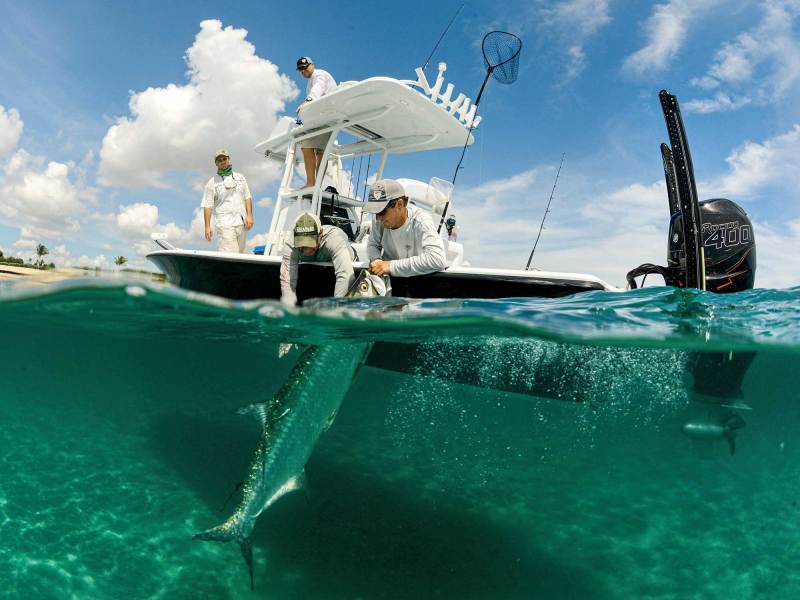
From the Carolinas through the length of Florida, tarpon arrive in force to exploit the migration. Beachfront tarpon fishing during September and October offers some of the most visual and heart-stopping angling in saltwater fishing.
- Tactics: Watch for rolling tarpon and showering bait along the outer breakers. Position the boat or wade cautiously outside the frantic zone, presenting live baits or large streamer flies just ahead of moving fish.
- Gear: Conventional or fly outfits capable of handling fish scaling 100 pounds or more, equipped with stout fluorocarbon tippets to withstand heavy abrasion against a tarpon’s rasping mouth plates.
4. Kingfish, Barracuda, and Pelagic Invaders
As bait schools push slightly offshore into deeper water (one to two miles out), pelagic predators crash the party. King mackerel up to 20 pounds and heavy barracuda join in the carnage.
- Tactics: Slow-troll live mullet around deepwater bait pods using tandem-hook rigs, as these species have a distinct habit of clipping the rear ends of live baits. Avoid running your boat directly through the center of the school, which sputters and scatters the bait.
- Gear: Conventional trolling reels spooled with high-capacity line, paired with dedicated wire leaders to prevent sharp teeth from slicing through the terminal tackle.
5. Aggressive Jacks, Bluefish, and Spanish Mackerel
Often overshadowed by glamorous gamefish, jack crevalle, bluefish, and Spanish mackerel provide non-stop, high-octane action when they blitz a mullet school.
- Tactics: Look for crashing water and diving pelican activity. These aggressive predators are indiscriminate eaters and provide an incredible playground for fly-rodders and light-tackle enthusiasts.
- Gear: 8-weight fly rods with poppers or baitfish patterns, or light spinning gear throwing metal spoons and twitchbaits.
Future Outlook: Conservation and Management of the Run
As coastal development, habitat degradation, and shifting climate patterns continue to impact marine ecosystems along the Atlantic and Gulf coasts, the long-term health of the annual mullet run remains a focal point for fisheries management agencies.
Mullet play a fundamental, foundational role in the marine food web. They serve not only as the primary energy vector connecting estuarine primary production to upper-level coastal predators, but they also provide a vital commercial harvest that supports local working waterfronts. Balancing the interests of commercial netters, recreational anglers, and conservationists requires continuous, science-based monitoring of spawning stock biomass and strict adherence to bag and size limits—especially for heavily targeted apex species like redfish and snook whose regulations have tightened in recent years to protect spawning-age fish.
Looking forward, state and federal wildlife agencies emphasize the importance of estuarine habitat restoration. Because mullet spend the vast majority of their formative years sheltered within healthy mangrove creeks, salt marshes, and seagrass beds, protecting these fragile nurseries is essential to ensuring that future generations can witness the awe-inspiring spectacle of millions of silver fish pouring out to sea every fall. For anglers privileged enough to stand on a wave-swept beach at dawn as the ocean erupts in a miles-long feeding blitz, the mullet run remains a powerful reminder of the raw, untamed vitality of our coastal waters.

0 Comments