For farmers across the Suwannee Valley and greater North Florida, the late summer and autumn transition brings more than just a welcome break from the oppressive heat of July and August—it also signals the arrival of one of agriculture’s most persistent and destructive adversaries: the whitefly.
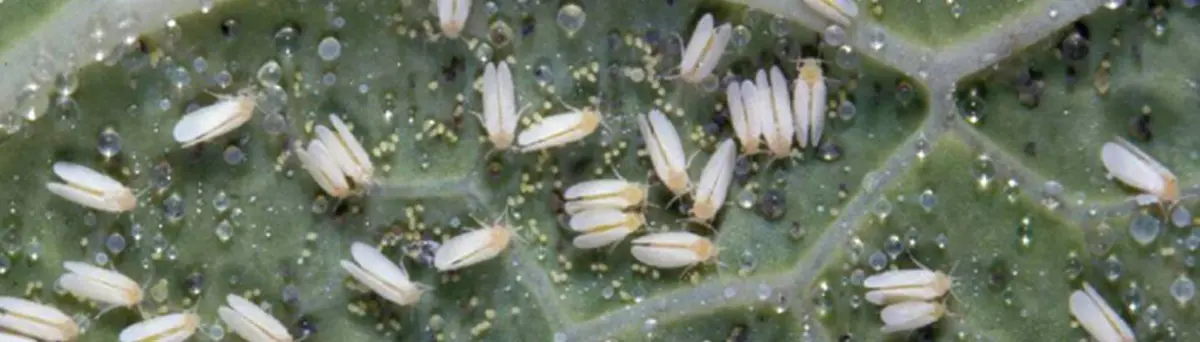
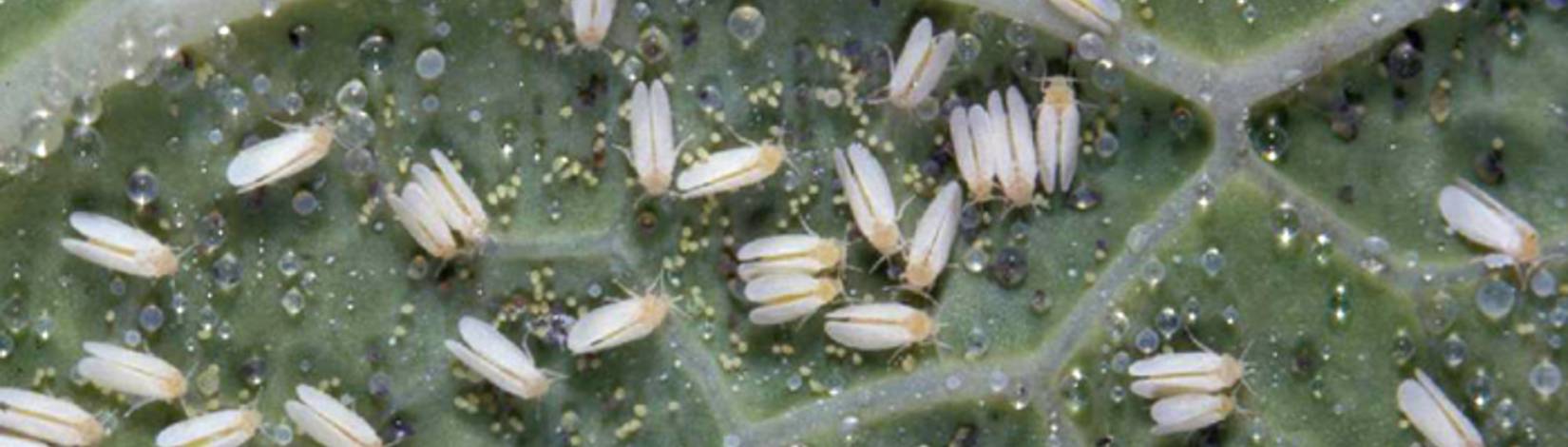
To the casual observer walking through a vegetable patch, these minute insects may look little more than harmless specks, rising in dense, ghostly clouds whenever a plant is brushed. However, beneath their diminutive exterior lies a biological powerhouse capable of wreaking economic havoc on small and large-scale agricultural operations alike. These pests do not merely represent a localized nuisance; they pose a multi-faceted threat to regional food security and farm profitability. Whiteflies inflict direct damage by piercing plant tissue and draining essential sap, but their more insidious danger lies in their vectoring capabilities. They act as flying conduits for devastating plant viruses—such as the Tomato Yellow Leaf Curl Virus (TYLCV) and various cucurbit-infecting pathogens—that can wipe out entire fields of tomatoes, peppers, and squash right on the precipice of harvest.
As global climate shifts and regional weather patterns continue to fluctuate, managing these populations has become increasingly complex. According to insights from agricultural specialists like Dr. Derrick R. Conover of UF/IFAS Extension in Columbia County and Dr. Xavier Martini, Assistant Professor of Entomology at the University of Florida, understanding the mechanics of whitefly population spikes is essential for survival. This comprehensive report explores the unique factors driving fall whitefly surges in North Florida, analyzes the physiological and ecological mechanisms of crop destruction, details research-backed defense strategies for regional farmers, and outlines an integrated pest management (IPM) framework to safeguard future yields.
Detailed Chronology: The Seasonal Lifecycle and Autumn Surge of Bemisia tabaci
To understand why whiteflies present such an acute danger during the autumn months, one must first examine the biological timeline of the predominant pest species in the region: Bemisia tabaci.
Summer Foundations and the Reproduction Engine
Whitefly populations do not appear overnight; rather, they build incrementally. Throughout the hot Florida summer, Bemisia tabaci takes advantage of abundant host crops, ranging from field-scale cotton production to early-season vegetable plantings. Summer temperatures act as a biological accelerator for these insects. As thermal units accumulate, the metabolic rate and reproductive cycle of the whitefly quicken. Eggs hatch into mobile, flattened crawlers (nymphs), which settle down to feed, molt through several instars, and rapidly transition into reproductive adults.
The Fall Explosion
By the time late summer transitions into early fall, generations of whiteflies have compounded. While heavy summer downpours can occasionally wash off or temporarily suppress surface populations, rainfall plays a secondary role compared to ambient temperature. North Florida’s warm autumn days create an ideal thermal window for rapid population expansion.
Furthermore, as large commercial farms harvest their primary summer crops—such as extensive cotton acreage—millions of displaced whiteflies are forced to seek new feeding grounds. This triggers a widespread migration pattern. Swarms disperse from harvested fields and settle onto neighboring, smaller-scale vegetable farms that may still have active, succulent crops of tomatoes, peppers, and cucurbits (cucumbers, squash, melons).
This migration creates a catastrophic compounding effect for small farmers. Just as their crops are maturing and nearing market readiness, they face an influx of hungry, virus-carrying adult whiteflies migrating from miles away.
Supporting Context & Metrics: The Dual Threat of Direct Damage and Plant Pathology
The economic devastation caused by whiteflies can be divided into two primary categories: direct physical damage and indirect pathological devastation.
Whiteflies possess piercing-sucking mouthparts. By inserting these stylets into the phloem of host plants, they extract large quantities of plant sap.
Nutrient Depletion: This constant draining deprives the plant of essential sugars and nutrients, leading to stunted growth, leaf chlorosis (yellowing), premature leaf drop, and overall plant decline.
Sooty Mold Proliferation: As they feed, whiteflies excrete a sticky, sugar-rich substance known as honeydew. This honeydew coats the leaves and fruit of the crop, serving as an ideal growth medium for black sooty mold. Not only does this mold block vital sunlight, reducing photosynthetic capacity, but it also physically blemishes the fruit, resulting in immediate market rejection by packing houses and grocery distributors.
2. Pathogenic Transmission (Plant Viruses)
While a heavily sooted or sap-depleted plant is damaging enough, the viral pathogens transmitted by whiteflies represent an existential threat to farm viability.
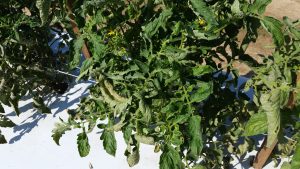
Tomato Yellow Leaf Curl Virus (TYLCV): Transmitted primarily by the silverleaf whitefly (Bemisia tabaci), TYLCV causes severe stunting, upward curling of leaf margins, yellowing between leaf veins, and dramatic flower drop. Plants infected early in their lifecycle produce virtually zero marketable fruit.
Cucurbit Viruses: Various strains affecting squash, cucumbers, and melons lead to severe mosaic patterns, fruit distortion, and stunted vine growth.
Fall represents the apex of risk because historical epidemiological data indicates that virus incidence peaks precisely when whitefly populations reach their annual zenith.
Research-Backed Protection Strategies for Fall Crops
To combat this seasonal onslaught, agricultural researchers at the University of Florida Institute of Food and Agricultural Sciences (UF/IFAS) have evaluated multiple control methodologies. The table below outlines the efficacy and best practices for managing fall whitefly populations:
Strategy
Effectiveness in Fall
Notes / Best Practices
Reflective Mulch & Row Covers
High
Repels incoming adults during early crop establishment; significantly reduces early-season virus incidence.
Limonene-Scented Kaolin Sprays
High (in dry years)
Operates best under low rainfall conditions; acts as a physical barrier and repellent, reducing virus transmission and boosting marketable yield.
Biological Control (Predators & Fungi)
Moderate to High
Most effective when integrated into a broader IPM program; preserves native predatory insects and entomopathogenic fungi.
Synthetic Insecticides
High (Short-term knockdown)
Must be rotated carefully across chemical classes to prevent the rapid development of genetic resistance in whitefly populations.
Area-Wide / Landscape Management
High
Requires community-level coordination among neighboring farms to eliminate weed hosts and synchronize planting/harvesting schedules.
Official Statements and Expert Insights
Managing a pest as resilient and mobile as the whitefly requires bridging the gap between academic research and on-the-ground farming practices. Experts from UF/IFAS have emphasized that traditional, single-tactic approaches are no longer viable in modern North Florida agriculture.
"Whiteflies are a biological reality that North Florida growers must factor into every seasonal planting plan, but an infestation does not have to spell disaster for your fall crops," explains Dr. Derrick R. Conover of UF/IFAS Extension in Columbia County. "The key lies in shifting away from reactive scrambling and moving toward early, layered defensive protocols."
Dr. Conover notes that small farmers are often disproportionately impacted because their diversified acreage sits downstream—ecologically speaking—from massive field crops. When neighboring cotton or early vegetable fields are plowed under or harvested, small-scale tomato and pepper plots become the green oasis that attracts flying hordes.
Dr. Xavier Martini, UF Assistant Professor of Entomology, expands on the physiological and behavioral mechanics of the pest, highlighting innovative deterrents developed through ongoing university trials.
"We are seeing tremendous promise in alternative, organic-adjacent management tools, such as limonene-scented kaolin clay formulations," Dr. Martini states. "Kaolin particle film physically alters the optical and tactile cues whiteflies use to locate host plants. When infused with natural limonene scents, it creates a sensory confusion barrier that dramatically reduces feeding and, consequently, the transmission of debilitating viruses like TYLCV."
Both specialists stress that reliance on any single chemical spray will inevitably lead to failure. Whiteflies possess an exceptional capacity to develop resistance to synthetic insecticides. Therefore, integrated pest management (IPM)—combining physical barriers, biological controls, and judicious chemical rotations—remains the gold standard for sustainable production.
Future Outlook: Building Long-Term Agricultural Resilience in the Suwannee Valley
Looking ahead, the agricultural landscape of North Florida must adapt to tightening environmental regulations, shifting climatic norms, and the continuous evolution of resistant pest strains. The future of whitefly management in the Suwannee Valley depends on a paradigm shift toward collaborative, landscape-level agricultural stewardship.
1. The Imperative of Area-Wide Coordination
Individual farm defenses, no matter how sophisticated, can be overwhelmed if a neighboring property maintains unmanaged weed hosts or abandoned crop residue that serves as an uninterrupted breeding ground. Future agricultural extension initiatives will increasingly focus on community-level synchronization. By coordinating planting dates, enforcing timely post-harvest destruction of crop residues (such as prompt disk-harrowing of spent tomato or squash fields), and jointly managing weed borders, regional farmers can starve out successive generations of whiteflies before the autumn migration wave begins.
2. Advancements in Biopesticides and Resistant Cultivars
Plant breeders are making steady strides in developing commercial vegetable cultivars with heightened genetic tolerance or resistance to whitefly-vectored viruses like TYLCV. While completely whitefly-resistant varieties remain elusive, varieties that tolerate viral infection without catastrophic yield loss will become standard staples for fall production. Simultaneously, the biopesticide market is expanding. Formulations utilizing entomopathogenic fungi—such as Beauveria bassiana—alongside insecticidal soaps and refined botanical oils, offer targeted mortality against nymphs and crawlers without devastating populations of beneficial predatory insects like lady beetles, lacewings, and minute pirate bugs.
3. Precision Agriculture and Early Warning Systems
The integration of digital agriculture tools will also shape the future of pest control. High-resolution multispectral imaging, drone-mounted crop scouting, and sticky-trap sensor networks can alert growers to localized population spikes days before visual symptoms appear on the crop. Early detection allows for targeted, spot-treatment applications rather than blanket field sprays, preserving beneficial insect habitats and reducing input costs for small farmers operating on tight profit margins.
Conclusion
Whiteflies may be tiny, but their impact on North Florida agriculture is monumental. By acknowledging the unique ecological pressures of the autumn season—the thermal acceleration, the post-harvest migrations, and the peak vectoring windows—growers can transition from a defensive posture to a strategic offense. Through the deployment of reflective mulches, innovative kaolin barriers, conservation of beneficial predators, and community-wide landscape management, Suwannee Valley farmers can protect their livelihoods and ensure a bountiful, high-quality fall harvest for years to come.



0 Comments