

Executive Overview
As the scorching summer sun recedes and the crisp arrival of autumn sweeps across North Florida, agricultural landscapes undergo a profound shift. For the uninitiated, the months following the final harvest signal a time when fields enter a period of prolonged dormancy—a time to rest the soil after months of relentless production. However, modern agronomic science and local agricultural extension experts agree on a vital paradigm shift: while fields may rest, the soil should never go to sleep.
In regions like Columbia County and throughout the wider North Florida ecosystem, sandy soils and intense seasonal weather patterns subject farmland to severe environmental stressors. Left bare, these precious acres face the relentless threat of nutrient leaching, topsoil erosion from winter rains, and the aggressive encroachment of stubborn winter weeds. To counteract these vulnerabilities, agriculturalists, homesteaders, and pasture managers are increasingly turning to a time-tested, cost-effective strategy: fall cover cropping.
Planting cover crops during the autumn transition is not merely a cosmetic choice for green pastures; it is a foundational management practice designed to protect fields from erosion, naturally boost soil fertility, and build robust soil biology through the freezing and cooling winter months. Whether managing sprawling commercial vegetable plots, expansive livestock pasturelands, or backyard garden beds, deploying the right cover crop sets the stage for remarkable agricultural success in the upcoming year.
Authored by Dr. Derrick R. Conover of the UF/IFAS Extension in Columbia County, recent guidance highlights five exceptional cover crops tailored specifically to the unique climatic and soil conditions of North Florida. By understanding the distinct attributes of crimson clover, cereal rye, oats, Austrian winter peas, and tillage radishes, land managers can transform vulnerable winter fields into biological powerhouses.
Detailed Chronology: The Seasonal Lifecycle of Winter Cover Management
Implementing a successful cover cropping regimen requires careful timing and a synchronized approach to the agricultural calendar. Rather than a haphazard scattering of seeds, winter cover management follows a precise chronology that maximizes biomass accumulation while ensuring seamless transition back to cash crops come spring.
Phase 1: Late Summer to Early Fall Assessment (September – October)
The journey of successful winter soil management begins well before the first seed touches the ground. As the primary growing season winds down, land managers must evaluate their fields’ post-harvest conditions. This phase involves critical decision-making regarding crop selection, seed sourcing, and soil testing.
According to UF/IFAS recommendations, getting a comprehensive soil test during this window is invaluable. A soil test determines baseline nutrient levels, pH, and specific requirements—particularly important if the manager intends to plant complex multi-species mixes, such as a legume and brassica combination. Concurrently, producers clear residual crop debris, minimize excessive tillage to preserve existing soil aggregates, and prepare seedbeds to ensure optimal seed-to-soil contact.
Phase 2: Planting and Establishment (October – November)
Timing is everything in North Florida agriculture. Planting must occur early enough in the fall to allow seedlings to establish robust root systems and sufficient canopy cover before cooler temperatures arrive and slow growth rates.
- Fast-Establishing Species: Grains like oats and certain grasses are planted early to provide immediate ground coverage and rapid temporary forage.
- Legumes and Grains: Species like crimson clover and Austrian winter peas are established to begin the delicate process of cold-hardiness conditioning, often paired strategically with small grains to optimize both weed suppression and nitrogen capture.
Phase 3: Winter Overwintering and Biological Activity (December – February)
During the dead of winter—mild though it may be in North Florida compared to northern latitudes—underground and surface biological activities continue unabated. While top growth may slow, root systems delve deep into the soil profile.
- Deep-rooting brassicas, commonly referred to as "tillage radishes," actively fracture compacted subsoil layers (hardpans).
- Legume root nodules establish symbiotic relationships with soil bacteria, pulling atmospheric nitrogen and converting it into plant-available forms.
- Dense grass matrices, such as cereal rye, create an impenetrable barrier against wind and rain erosion, effectively locking nutrients in place rather than letting them wash away into local watersheds.
Phase 4: Spring Termination and Biomass Incorporation (March – April)
As spring approaches, the cover crop reaches its peak utility. To prevent the cover crops from setting seed and becoming weeds themselves, and to make way for the upcoming cash crop, termination must be executed precisely.
- Timing: For legumes like crimson clover, termination is typically executed via mowing or rolling at the "early bloom" stage—just as flowers emerge but before viable seeds are produced. This timing maximizes the nitrogen contribution and overall biomass.
- Incorporation: Once terminated, the green manure is allowed to break down, releasing stored nutrients back into the soil matrix, improving soil structure, and providing an optimal, fertile seedbed for spring planting.
Supporting Context & Metrics: The Top Five Cover Crops for North Florida
Selecting the appropriate cover crop depends entirely on the specific goals of the land manager—whether that goal is nitrogen fixation, breaking up hardpan soil, suppressing aggressive weeds, or producing high-quality early spring forage. Dr. Derrick R. Conover and the UF/IFAS Extension have highlighted five standout choices tailored to the sandy, dynamic soils of Columbia County and North Florida.
+--------------------------+---------------------------------+-------------------------------------------------+
| Cover Crop               | Primary Function / Benefits     | Key Management Note                             |
+--------------------------+---------------------------------+-------------------------------------------------+
| Crimson Clover           | Nitrogen fixation, pollinators, | Mow/roll at early bloom before seed set         |
| (Trifolium incarnatum)   | spring biomass                  |                                                 |
+--------------------------+---------------------------------+-------------------------------------------------+
| Rye                      | Erosion control, weed           | Hardy in sandy soils; excellent in mixes        |
| (Secale cereale)         | suppression                     |                                                 |
+--------------------------+---------------------------------+-------------------------------------------------+
| Oats                     | Temporary forage, rapid organic | Less freeze-tolerant than rye; plant early      |
| (Avena sativa)           | matter                          |                                                 |
+--------------------------+---------------------------------+-------------------------------------------------+
| Austrian Winter Pea      | Nitrogen fixation (up to 100    | Produces abundant viney growth; pairs well with |
| (Pisum sativum)          | lbs/acre), early biomass        | small grains                                    |
+--------------------------+---------------------------------+-------------------------------------------------+
| Radish                   | Soil compaction remediation,    | Deep taproots break hardpans; leaves channels   |
| (Raphanus sativus)       | nutrient scavenging             | for air and water                               |
+--------------------------+---------------------------------+-------------------------------------------------+
1. Crimson Clover (Trifolium incarnatum)
As one of the most popular cool-season legumes utilized in North Florida, crimson clover serves multiple ecological and agronomic functions. Scientifically recognized for its ability to fix atmospheric nitrogen, crimson clover drastically reduces the need for synthetic nitrogen fertilizers for subsequent spring crops.
Beyond its subterranean benefits, crimson clover puts on a stunning visual display in early spring with its vibrant crimson-red flowers. These blossoms act as an invaluable, early-season nectar and pollen source for honeybees and native pollinators, supporting local biodiversity.
- Primary Attributes: Nitrogen fixation, pollinator support, and spring biomass.
- Termination Guidelines: Mow or roll the crop at early bloom before seed set occurs to ensure it does not become a persistent volunteer weed.
2. Rye (Secale cereale)
When it comes to sheer hardiness in sandy soils and cooler temperatures, cereal rye stands virtually unmatched. Rye is a rugged grass that produces a dense, vigorous vegetative growth capable of completely shading out persistent winter weeds while shielding vulnerable topsoil from wind and water erosion.
Rye is exceptionally versatile and serves as an ideal companion plant when mixed with cool-season legumes like crimson clover or Austrian winter peas, creating a balanced matrix of carbon and nitrogen.
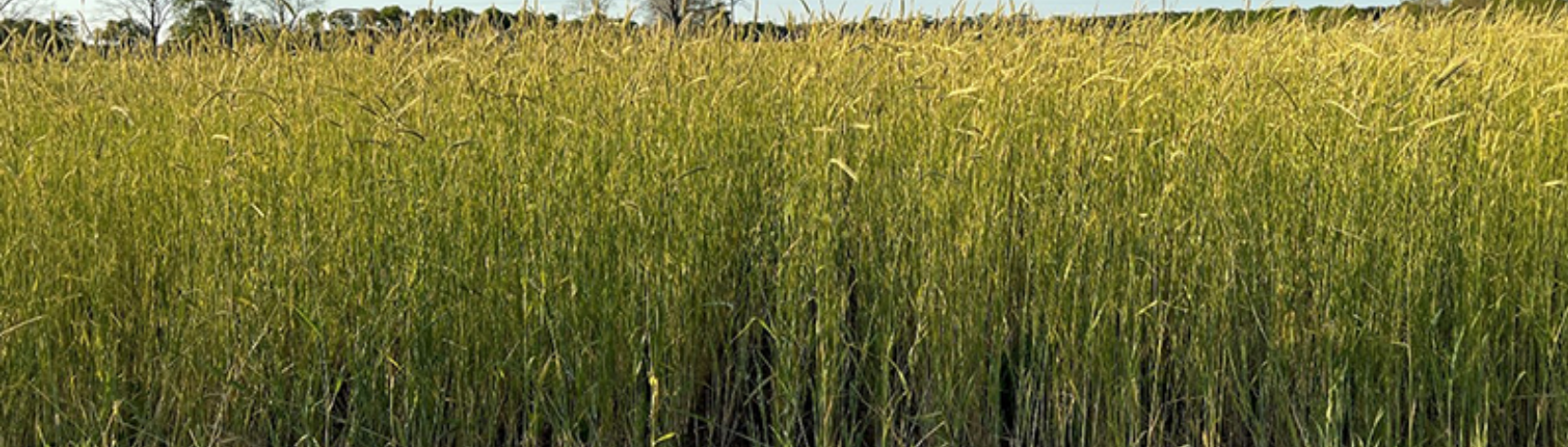
- Primary Attributes: Superior erosion control and aggressive weed suppression.
- Management Note: Its robust growth requires timely spring termination to prevent the fibrous stems from becoming overly difficult to manage prior to tilling or planting.
3. Oats (Avena sativa)
For agriculturalists seeking rapid ground coverage and temporary livestock forage, oats provide a phenomenal solution. Oats exhibit explosive growth habits during the fall months, making them exceptionally well-suited for early soil coverage.
However, unlike cereal rye, oats possess lower freeze tolerance and do not handle severe winter freezes as effectively. Consequently, they are best suited for early autumn planting in North Florida’s specific climate zone.
- Primary Attributes: Excellent for grazing, livestock forage, and rapid organic matter accumulation.
- Management Note: Plant early in the fall to maximize biomass before the coldest winter temperatures arrive.
4. Austrian Winter Pea (Pisum sativum subsp. arvense)
The Austrian winter pea is another heavyweight champion of biological nitrogen fixation. Producing abundant, sprawling viney growth during the cooler months, this legume pairs exceptionally well when planted in a polyculture with small grains.
When incorporated into the soil profile in the spring, Austrian winter peas can generate an impressive output of up to 100 pounds of available nitrogen per acre, serving as a natural fertilizer powerhouse that cuts input costs.
- Primary Attributes: Massive nitrogen fixation and high-protein early-spring biomass.
- Management Note: Manage the heavy vine growth carefully during spring termination to ensure smooth integration into the topsoil.
5. Radish (Raphanus sativus var. longipinnatus)
Often colloquially referred to as "tillage radish" or daikon radish, this specialized brassica is an invaluable tool for remediation of degraded agricultural soils. The radish sends thick, aggressive taproots deep into the earth, capable of breaking through compacted subsurface hardpans and dramatically improving water infiltration rates.
As winter transitions to spring and these deep roots naturally decompose, they leave behind an intricate network of vertical channels. These channels facilitate deep air and water movement while smoothing the path for the delicate roots of the following season’s cash crops.
- Primary Attributes: Alleviating soil compaction and scavenging residual nutrients to prevent leaching.
- Management Note: Radishes die back with hard freezes, releasing scavenged nutrients rapidly, making them ideal for catching mobile nutrients like nitrogen before they leach out of sandy profiles.
Official Statements and Expert Guidance
The transition from leaving fields bare to embracing systematic cover cropping is championed by leading agricultural authorities throughout the state of Florida. Dr. Derrick R. Conover, speaking through the channels of the UF/IFAS Extension in Columbia County, emphasizes that soil health is the bedrock of agricultural profitability and resilience.
"Cover crops aren’t just for large-scale commercial operations; they represent one of the most cost-effective, high-return tools available for improving soil health on any scale," notes Dr. Conover. "Planting this fall can set the stage for better natural fertility, significantly reduced weed pressure, and vastly more resilient crops in the upcoming year."
Experts underscore that successful cover crop integration does not require a one-size-fits-all approach. Instead, land managers are encouraged to diagnose their specific soil limitations—such as compaction, low organic matter, or nitrogen deficiencies—and select targeted species or multi-species seed blends.
To assist local growers, the University of Florida’s Institute of Food and Agricultural Sciences (IFAS) provides comprehensive digital resources and localized guidance. Growers seeking detailed documentation, technical guides, and research updates can access the official UF/IFAS Cover Crops Portal at https://sfyl.ifas.ufl.edu/agriculture/cover-crops/.
Furthermore, for personalized assistance regarding seed sourcing, customized cover crop management plans, or precise soil sampling protocols, local producers are strongly encouraged to connect directly with the experts. The UF/IFAS Extension Columbia County Office remains fully operational and accessible to the public at (386) 752-5384.
Future Outlook: Building Resilience for 2026 and Beyond
As agricultural weather patterns grow increasingly unpredictable and input costs—such as synthetic fertilizers, herbicides, and fuel—continue to fluctuate, the long-term viability of modern farming relies heavily on regenerative soil management. The decisions made by North Florida growers during the fall planting window will echo directly through the harvest yields of 2026 and beyond.
Investing time and resources into cover crops is an investment in natural capital. By systematically enhancing soil organic matter, fostering diverse underground microbial communities, breaking up hardpan layers, and locking vital nutrients into the soil profile rather than losing them to leaching, growers insulate their operations against environmental and economic shocks.
Whether managing a few raised beds in a backyard vegetable plot or overseeing hundreds of acres of pastureland in Columbia County, the mandate for North Florida agriculturalists is clear. Embrace the autumn transition not as a period of agricultural inactivity, but as an active, strategic opportunity. By planting the right cover crops today, land managers ensure that their soils remain alive, fertile, and fiercely productive for generations to come.

0 Comments