

By Dr. Derrick R. Conover, UF/IFAS Extension, Columbia County
Published: October 22, 2025
Executive Overview
As the scorching days of the North Florida summer finally give way to the crisp, cooler transitions of autumn, fields across Columbia County and the surrounding region undergo a profound shift. For many agriculturalists and home gardeners, the conclusion of the primary growing season signals a time to let the earth rest. However, modern agronomic science and local extension expertise emphasize that putting fields "to sleep" entirely over the winter months is a missed opportunity—and potentially detrimental to long-term soil productivity.
Soil is a living, breathing ecosystem. When left bare through the fall and winter, vulnerable acreage is routinely exposed to the harsh elements of wind and rain, leading to nutrient leaching, topsoil erosion, and the proliferation of opportunistic winter weeds. To counteract these challenges, agricultural experts are strongly advocating for the implementation of fall cover crops. Serving as a simple, cost-effective, and environmentally sustainable management strategy, cover crops protect agricultural investments while actively building soil health, enhancing natural fertility, and preparing land for a bountiful harvest in 2026.
Whether managing sprawling multi-acre pasturelands, commercial vegetable operations, or modest backyard garden plots, the strategic deployment of specific cover crops tailored to North Florida’s unique sandy soils can pay massive dividends. From natural nitrogen fixation and deep-root compaction remediation to weed suppression and pollinator support, this comprehensive guide explores the top five cover crops recommended for Columbia County, how to select the right variety for your specific operation, and the vital steps required to maximize your yield potential next season.
Detailed Chronology & Seasonal Management Strategy
Understanding the operational timeline of cover cropping is essential for maximizing their benefits. Integrating cover crops requires careful planning that aligns with the natural seasonal shifts of North Florida’s agricultural calendar.
The Summer-to-Fall Transition: Assessment and Preparation
As the final summer harvests are pulled from the ground, producers must immediately begin evaluating field conditions. Rather than allowing land to sit idle, the window between late September and November serves as the critical establishment period for cool-season cover crops.
During this initial phase, growers should conduct comprehensive soil testing. Assessing baseline nutrient levels and pH helps determine whether specific amendments—such as inoculants for legumes or balancing agents for mixed plantings—are required. Soil testing ensures that when cover crops like crimson clover or Austrian winter peas are introduced, they possess the chemical environment necessary to maximize atmospheric nitrogen fixation.
Establishment and Winter Development (November – February)
Once seeds are drilled or broadcasted into the soil, the North Florida winter takes over. Unlike northern climates characterized by deep, permanent snowpacks, North Florida experiences milder winters with intermittent cold snaps, occasional heavy rainfall, and prevalent sandy soils that drain quickly.
During these months, varieties such as cereal rye, oats, and tillage radishes establish robust root systems and dense above-ground biomass. While the above-ground growth protects the topsoil from erosive winter downpours and outcompetes dormant weed seeds, the below-ground root structures work tirelessly to cycle remaining nutrients, prevent leaching into local water tables, and break up stubborn hardpans.
Spring Termination and Incorporation (March – April)
The final stage of the cover crop lifecycle is termination—a critical management window that requires precise timing. To prevent cover crops from going to seed and becoming weeds themselves, growers must terminate the growth at the optimal physiological stage, typically through mowing, rolling, or chemical/mechanical incorporation.
For instance, legumes like crimson clover are ideally terminated at early bloom to maximize their nitrogen contribution before the material decomposes and releases vital nutrients into the soil profile just in time for spring planting. Once incorporated, the decaying plant matter transforms into rich organic matter, setting the stage for high-performing spring and summer crops.
Supporting Context & Metrics: The Top Five Cover Crops for North Florida
Selecting the right cover crop depends entirely on your specific agronomic goals—whether that involves breaking up compacted earth, generating high volumes of organic matter, or pulling atmospheric nitrogen down into the soil. Below are the five top-performing cover crops evaluated by the University of Florida’s Institute of Food and Agricultural Sciences (UF/IFAS) for Columbia County and the greater North Florida region.
1. Crimson Clover (Trifolium incarnatum)
- Primary Benefits: Nitrogen fixation, pollinator support, and spring biomass production.
- Agronomic Profile: Crimson clover stands out as one of the most popular and reliable cool-season legumes suited for North Florida. As a legume, it forms a symbiotic relationship with soil bacteria to fix atmospheric nitrogen, significantly reducing the need for synthetic nitrogen fertilizers for subsequent spring crops. Beyond its soil-enriching properties, crimson clover puts on a stunning visual display in early spring with its vibrant crimson flowers, which serve as a critical, high-quality nectar source for honeybees and native pollinators emerging after the winter lull.
- Termination Guidelines: Growers should mow or roll crimson clover at the early bloom stage before the plants have a chance to set seed.
2. Cereal Rye (Secale cereale)
- Primary Benefits: Exceptional erosion control and aggressive weed suppression.
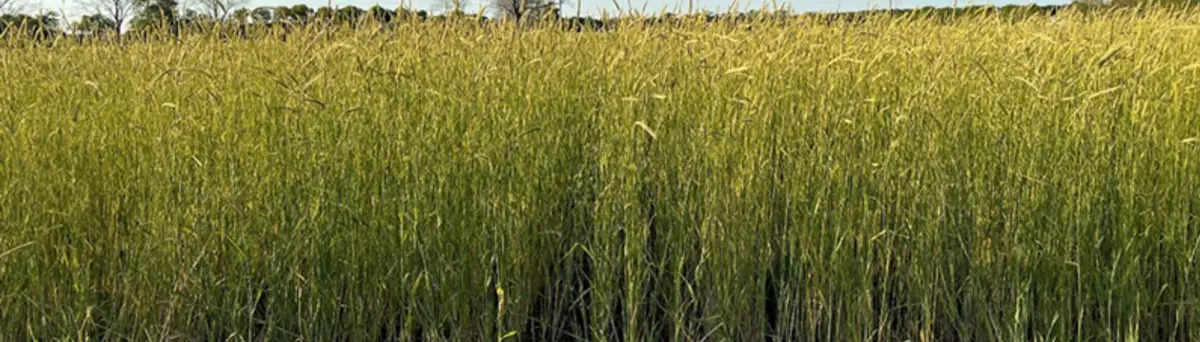
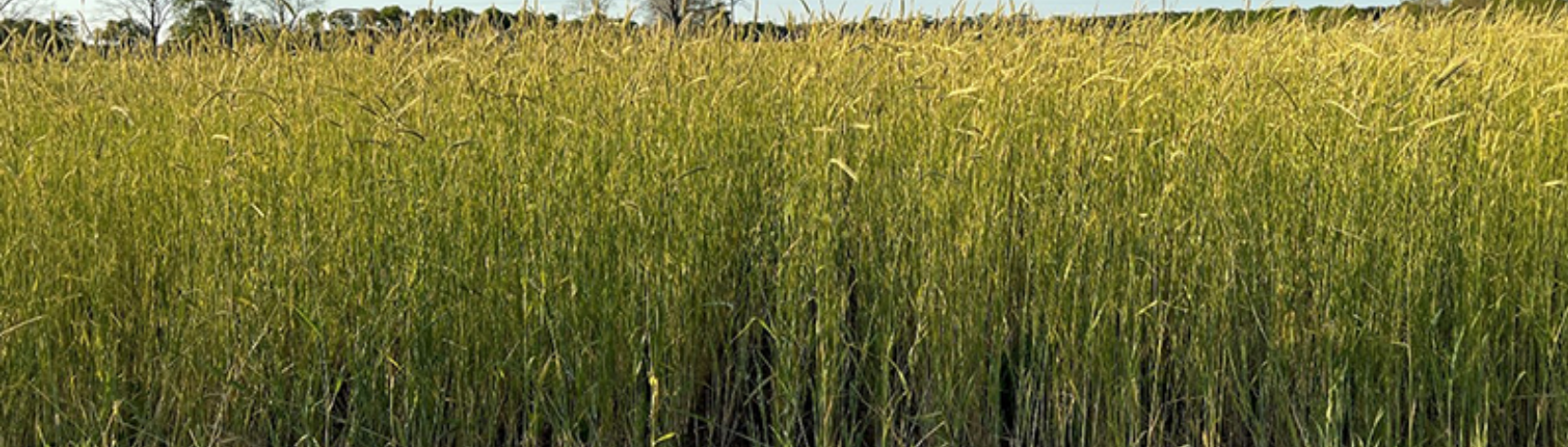
- Agronomic Profile: Cereal rye is an exceptionally hardy grass that thrives even in the poorest sandy soils and tolerates dropping temperatures with ease. It produces dense, rapid top-growth that acts as a living shield, protecting vulnerable soils from winter erosion while completely shading out winter weed species. Because of its vigorous growth habit, cereal rye is also frequently utilized as the grass component in mixed-species cover crop plantings, pairing exceptionally well with legumes like clover or vetch.
- Management Note: Cereal rye can become woody and difficult to manage if allowed to mature past the boot stage, making timely termination crucial.
3. Oats (Avena sativa)
- Primary Benefits: Rapid fall growth, temporary forage for livestock, and organic matter accumulation.
- Agronomic Profile: Oats germinate and establish quickly during the early fall, making them an ideal choice for producers seeking immediate, temporary soil coverage and rapid forage generation. While oats do not possess the freezing tolerance of cereal rye, our milder North Florida winters make them well-suited for early autumn planting. They break down easily in the spring, releasing organic matter smoothly into the soil profile.
- Management Note: Because oats are more susceptible to hard freezes than rye, planting them early ensures they achieve sufficient biomass before any unexpected winter temperature drops.
4. Austrian Winter Pea (Pisum sativum subsp. arvense)
- Primary Benefits: Heavy nitrogen fixation and abundant early-spring biomass.
- Agronomic Profile: Austrian winter peas are vigorous, vine-producing legumes that pair exceptionally well with small grains like rye or oats. When managed properly and incorporated into the soil in the spring, these peas can supply an impressive up to 100 pounds of nitrogen per acre, offering a massive economic and environmental offset against commercial fertilizer costs. Their sprawling vine growth also provides exceptional physical coverage of the soil surface.
- Management Note: The dense, tangled vines require appropriate equipment or methods for smooth incorporation during spring land preparation.
5. Radish — "Tillage Radish" (Raphanus sativus var. longipinnatus)
- Primary Benefits: Remediation of soil compaction and deep nutrient scavenging.
- Agronomic Profile: Often referred to in agricultural circles as the "tillage radish," this specialized brassica sends a thick, aggressive taproot deep into the soil profile. This natural bio-drill breaks up restrictive hardpans and vastly improves water infiltration rates. As the roots naturally decompose over the winter and early spring, they leave behind vertical channels that allow air, water, and the roots of subsequent cash crops to penetrate deeper into the earth. Furthermore, they scavenge residual nutrients from deep in the soil profile, preventing them from leaching away.
- Management Note: Tillage radishes decompose rapidly, releasing a distinct odor during breakdown, but their underground work leaves the soil structure remarkably friable and ready for planting.
Official Statements and Expert Insights
Agricultural specialists emphasize that cover crops are no longer experimental luxuries; they are fundamental tools for modern, sustainable farm management.
Dr. Derrick R. Conover of the UF/IFAS Extension in Columbia County highlights the scalable nature of these practices:
"Cover crops aren’t just for large-scale row-crop operations; they represent one of the most cost-effective, versatile tools available for improving soil health on any scale. Whether you are managing a few backyard raised beds or hundreds of acres of pastureland, planting this fall sets the stage for enhanced fertility, suppressed weed pressure, and more resilient crops in the upcoming 2026 season."
Extension experts also stress the importance of regional context. Recommendations tailored to northern states or even Central Florida often fail in the unique sandy terrain of North Florida. Utilizing locally vetted cultivars ensures high germination rates, proper disease resistance, and synchronized timing with local weather patterns.
Future Outlook: Setting the Stage for 2026 and Beyond
Looking toward the agricultural horizon of 2026, input costs, environmental stewardship, and weather volatility remain top-of-mind for growers across the region. By integrating cover crops this fall, producers are taking a proactive stance against these variables.
Improved soil organic matter translates directly into enhanced water retention—a critical defense mechanism during dry spring spells. Furthermore, biological nitrogen fixation helps insulate farm operations against fluctuating global fertilizer prices.
For growers ready to take the next step, local resources are readily available. Before planting complex mixes—such as combining a legume with a brassica—producers are encouraged to conduct thorough soil sampling to accurately gauge nutrient requirements.
Contact and Local Resources
For further academic reading, regional trial data, and technical guides, visit the official UF/IFAS Extension Agriculture Cover Crops Portal.
To learn more about specific cover crop management strategies, reliable local seed sources, or assistance with soil sampling and testing, contact the UF/IFAS Extension Columbia County Office directly at (386) 752-5384.
Article Metadata & Information
- Author: Dr. Derrick R. Conover, UF/IFAS Extension, Columbia County
- Categories: Agriculture, Crops, Farm Management
- Tags: Agriculture, SV Ag Update, Vegetables
- Engagement: Published via UF/IFAS Extension Columbia County Blogs.

0 Comments