

Executive Overview
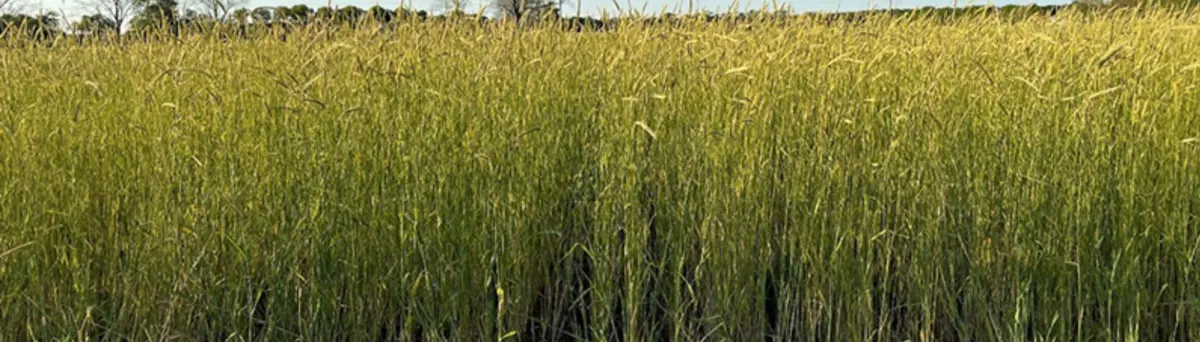
As the scorching days of summer fade and autumn settles across North Florida, agricultural fields frequently enter a period of perceived dormancy. After months of intensive harvesting, growing, and weathering subtropical elements, the impulse for many farmers and home gardeners is simply to let the soil rest. However, according to agricultural experts, leaving fields bare through the winter months is a missed opportunity that can quietly degrade land productivity.
To safeguard agricultural investments and prepare for a bountiful upcoming season, local agriculturalists are increasingly turning to a time-tested yet modernized agronomic practice: planting fall cover crops. Whether managing sprawling commercial pasturelands or compact backyard vegetable plots, establishing cover crops provides a vital living shield for the earth. This practice acts as a bulwark against nutrient leaching and soil erosion, enhances natural fertility, suppresses persistent winter weeds, and dramatically boosts overall soil biology.
In regions like Columbia County and throughout the broader North Florida ecosystem, selecting the right cover crop can mean the difference between struggling against compacted, nutrient-deficient soils in the spring and harvesting a thriving, resilient crop. To assist local producers and hobbyists alike, Dr. Derrick R. Conover of the UF/IFAS Extension Columbia County Office has compiled a definitive guide highlighting five exceptional cover crops tailored specifically to North Florida’s unique environmental conditions. By understanding the distinct benefits of legumes, grasses, brassicas, and small grains, growers can lay the groundwork for long-term ecological and financial sustainability.
Detailed Chronology & Seasonal Management
Integrating cover crops successfully requires a deliberate, chronologically phased approach. Timing is everything in agriculture, and North Florida’s mild winters create a unique window of opportunity for cool-season vegetation.
Phase 1: Late Summer Assessment and Soil Testing (September)
Before a single seed hits the ground, successful farm management begins with rigorous diagnostics. Growers are advised to conduct comprehensive soil testing—especially if they intend to plant a complex legume and brassica mix. Soil testing clarifies existing nutrient levels, pH balances, and potential deficiencies, ensuring that the chosen cover crops have the optimal chemical environment to establish strong root systems.
Phase 2: Early Fall Seeding and Establishment (October)
As autumn officially arrives and temperatures begin to moderate, fields are prepared following the final summer harvest. Seeds are broadcast or drilled into the soil while residual warmth allows for rapid germination. Fast-growing species like oats and rye establish quick canopies, locking in remaining moisture and shielding the fragile topsoil from intense autumn downpours.
Phase 3: Winter Growth, Nutrient Scavenging, and Erosion Control (November through February)
Throughout the cooler winter months, the cover crops go to work beneath the surface. Deep-taproot brassicas break through hardpan layers, while cool-season grasses and legumes accumulate biomass. Nitrogen-fixing plants pull inert nitrogen from the atmosphere and convert it into bio-available forms, storing it safely in the soil profile rather than letting it wash away into local watersheds.
Phase 4: Spring Termination and Biomass Incorporation (Late March to Early April)
As spring approaches, the critical management phase of "termination" takes place. Depending on the species, cover crops must be managed at the correct physiological stage—typically at early bloom before seed sets—using methods such as mowing, rolling, or chemical/mechanical incorporation. This releases the accumulated green manure and nutrients back into the soil, creating a rich, organic seedbed perfectly primed for spring planting.
Supporting Context & Metrics: The Top 5 Cover Crops for North Florida
Selecting the appropriate cover crop depends heavily on specific land-use goals, whether that involves livestock grazing, nitrogen accumulation, or breaking up compacted earth. Dr. Conover highlights five standout species proven to excel in North Florida’s sandy, subtropical soils:
+---------------------------+-----------------------------------+------------------------------------------+
| Cover Crop Species        | Primary Agronomic Benefit         | Ideal Management / Termination Strategy  |
+---------------------------+-----------------------------------+------------------------------------------+
| Crimson Clover            | Nitrogen fixation, pollinators    | Mow/roll at early bloom before seed set  |
| Rye (Secale cereale)      | Erosion control, weed suppression | Terminate before heavy stem elongation   |
| Oats (Avena sativa)       | Forage/grazing, organic matter    | Early planting due to freeze sensitivity |
| Austrian Winter Pea       | High nitrogen biomass (up to 100lbs/ac)| Incorporate in early spring         |
| Tillage Radish            | Soil compaction, deep aeration    | Natural winter kill / decomposition      |
+---------------------------+-----------------------------------+------------------------------------------+
1. Crimson Clover (Trifolium incarnatum)
Crimson clover stands out as one of the premier cool-season legumes adaptable to North Florida. Renowned for its rapid growth and striking aesthetic, it fixes atmospheric nitrogen, directly reducing the synthetic fertilizer requirements of subsequent spring crops. Furthermore, its brilliant crimson flowers bloom in early spring, offering an essential, high-quality nectar source for honeybees and native pollinators during a critical ecological transition period.
- Termination: Best managed by mowing or rolling at early bloom before seeds set.
2. Rye (Secale cereale)
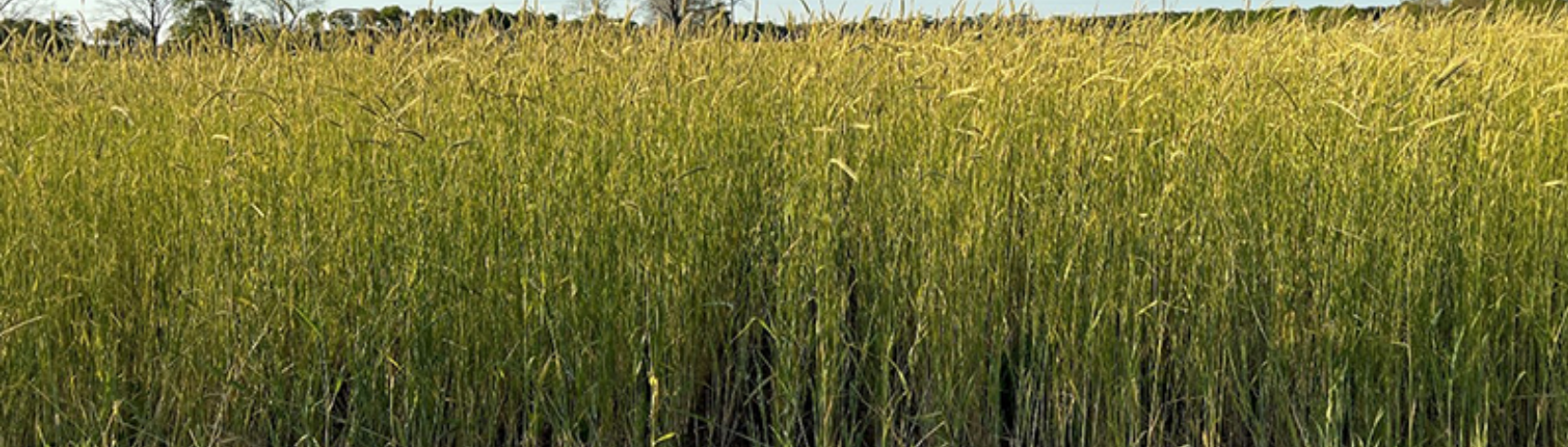
For sheer hardiness, cereal rye is difficult to surpass. It thrives remarkably well in sandy soils and handles fluctuating winter temperatures with ease. Rye produces an aggressively dense growth habit that shields vulnerable acreage from wind and water erosion while effectively shading out competitive winter weeds. It also serves as an ideal companion plant when mixed with legumes like clover or vetch.
3. Oats (Avena sativa)
Oats are prized for their rapid autumn germination, making them an outstanding choice for temporary forage, livestock grazing, and immediate soil coverage. Because oats do not tolerate freezing temperatures as resiliently as rye, they must be planted early in the North Florida fall season to maximize their utility before any hard frosts occur.
4. Austrian Winter Pea (Pisum sativum subsp. arvense)
Austrian winter peas excel when paired strategically with small grains. They generate abundant, viney biomass across the soil surface and can accumulate up to an impressive 100 pounds of nitrogen per acre when properly incorporated into the soil during the spring turnover. This natural fertility boost significantly cuts operational overhead for growers aiming to minimize chemical inputs.
5. Radish (Raphanus sativus var. longipinnatus)
Often referred to in agricultural circles as the "tillage radish," this specialized brassica sends aggressive, deep taproots straight down into the earth. These roots act as biological drill bits, breaking up dense hardpans and dramatically improving water infiltration. As the roots naturally decompose over the winter and early spring, they leave behind an intricate network of channels for air and water movement, clearing the path for the delicate roots of next season’s primary cash crops.
Official Statements and Expert Guidance
Implementing sustainable agronomic practices requires reliable, science-based guidance. According to agricultural authorities at the University of Florida’s Institute of Food and Agricultural Sciences (UF/IFAS), cover crops remain vastly underutilized tools for localized farm and garden optimization.
Dr. Derrick R. Conover emphasizes that cover management is not reserved exclusively for industrial-scale monoculture operations. Instead, it is one of the most cost-effective, scalable interventions available for safeguarding soil health across plots of any dimension.
"Planting this fall can set the stage for better fertility, fewer weeds, and more resilient crops in the years ahead," Dr. Conover notes. He strongly encourages local growers to utilize formal soil testing protocols to fine-tune nutrient adjustments, particularly when experimenting with complex legume and brassica polyculture mixes.
Local agricultural stakeholders seeking tailored advice on seed sourcing, comprehensive cover crop management, or precision soil sampling are encouraged to reach out directly to the UF/IFAS Extension Columbia County Office at (386) 752-5384 or visit the official online portal at UF/IFAS Extension Cover Crops Resource Hub.
Future Outlook: Building Long-Term Agricultural Resilience
As regional weather patterns grow increasingly erratic and input costs fluctuate, the future of North Florida agriculture hinges on building inherent soil resilience. Transitioning away from bare, chemically dependent winter fallow periods toward biologically active, living-root systems represents a fundamental shift in farm management philosophy.
Looking ahead to 2026 and beyond, growers who adopt robust cover cropping strategies this autumn will likely observe measurable improvements in soil organic matter, moisture retention, and weed suppression. By harnessing natural processes—such as nitrogen fixation via crimson clover and Austrian winter peas, weed suppression via cereal rye, and natural sub-soiling via tillage radishes—North Florida agriculturalists are proving that the healthiest soils are never truly asleep. They are simply resting, recharging, and preparing for the next generation of abundant growth.

0 Comments