

By Derrick Conover
Published: November 21, 2025 | Last Updated: November 21, 2025
Categories: Agriculture, Crops, Horticulture
Executive Overview
In the evolving landscape of North Florida agriculture, agricultural diversification has transitioned from a localized strategy into a structural necessity for small- and medium-scale producers. Among the various specialty crops gaining traction across the region, blueberries have decisively emerged as one of the most promising and lucrative options. Thanks to a unique convergence of favorable environmental factors—including mild winters, naturally acidic soils, and robust local consumer markets—Columbia County is exceptionally well-positioned to support profitable blueberry production.
Whether an agricultural entrepreneur is looking to establish a modest one-acre homestead plot or an expansive commercial operation, the region provides a solid foundation. This comprehensive guide breaks down the precise agronomic conditions that make blueberries thrive in North Florida, offering actionable insights into variety selection, precise row spacing, modern irrigation techniques, and long-term farm management. By pairing smart planning with expert guidance, growers can transform underutilized acreage into a high-yield, resilient agricultural asset.
Detailed Chronology & Strategic Planning for New Growers
Establishing a successful blueberry operation requires a methodical approach, moving through careful preparation stages long before the first plant touches the soil. For producers in Columbia County, navigating this developmental timeline is crucial to ensuring long-term crop vitality and maximizing return on investment.
Phase 1: Soil Testing and Site Preparation (Months 1–6 Prior to Planting)
Before purchasing a single plant, prospective growers must conduct rigorous soil testing. Blueberries are famous for their specific subterranean preferences, demanding well-drained, organic-rich, and highly acidic earth.
- Target pH Levels: The ideal soil pH for blueberries ranges strictly between 4.5 and 5.5.
- Site Modification: While much of Columbia County naturally features the sandy, acidic profiles that blueberries favor, local growers often need to incorporate elemental sulfur or organic matter (such as peat moss or pine bark) well in advance of planting to hit the optimal acidity window.
- Drainage Management: Standing water is fatal to blueberry root systems. Raised beds are frequently constructed to improve aeration and drainage, safeguarding plants against root rot and seasonal heavy rainfall.
Phase 2: Variety Selection and Infrastructure Investment (Months 6–3 Prior to Planting)
Once the soil chemistry is optimized, growers must make critical decisions regarding genetics and irrigation infrastructure. Choosing the right cultivar dictates the harvest window, market pricing potential, and labor demands.
- Genetics Selection: Producers must evaluate whether to plant early-season Southern Highbush varieties—which command premium market prices but require intensive management—or resilient Rabbiteye varieties, which offer a more forgiving learning curve for low-input growers.
- Irrigation Setup: Given the region’s historical weather unpredictability, installing a microjet or drip irrigation system is not optional; it is a foundational requirement. Designing this system prior to planting ensures uniform water distribution and opens the door for efficient fertigation (delivering fertilizers directly through the irrigation water).
Phase 3: Planting and Establishment (Months 1–3 Prior to Planting)
The physical installation of the plants typically occurs during the late fall or winter months when plants are dormant, allowing root systems to establish before the stress of summer heat and spring fruit development.
- Plant Density: Depending on the chosen system, a single acre can comfortably support anywhere from 600 to 1,500 blueberry plants.
- Mulching: A heavy layer of organic mulch, such as pine straw or aged pine bark, is applied immediately after planting to retain soil moisture, suppress competitive weeds, and continuously buffer soil acidity.
Supporting Context & Agronomic Metrics
To understand why Columbia County represents a strategic hub for blueberry production, one must examine the specific environmental and economic metrics driving the industry forward.
Climate and Chill Hours
Berry development and winter dormancy rely heavily on accumulated "chill hours" (temperatures sustained between 32°F and 45°F). Columbia County generally receives between 300 and 500 chill hours annually. This specific microclimate range is ideal:
- It provides the exact chilling threshold required by low-chill Southern Highbush cultivars to break dormancy uniformly.
- It remains comfortably within the ideal range for robust Rabbiteye varieties.
- It minimizes the risk of late spring frost damage to early blooms, ensuring more consistent year-to-year yields.
Economic Viability and Direct-to-Consumer Markets
Beyond agronomics, the economic landscape heavily favors local fruit production. Proximity to vibrant outlets—ranging from the Lake City Farmers Market to thriving regional U-pick operations—creates immediate pathways for direct-to-consumer sales. Blueberries are a recognized, highly valued staple crop among consumers, providing significantly more reliable profit margins than lesser-known specialty fruits. For beginning growers, starting with a manageable one-acre plot minimizes initial financial exposure while allowing them to scale operations dynamically as market demand dictates.
Comprehensive Variety Guide: Southern Highbush vs. Rabbiteye
Choosing the correct blueberry variety is arguably the most consequential decision a grower will make. Below is an exhaustive breakdown of the primary choices available to Columbia County producers.
1. Southern Highbush Blueberries
- Best For: Early-season fruit production and capturing peak market prices before national competitors flood the supply chain.
- Recommended Cultivars: ‘Emerald’, ‘Jewel’, ‘Meadowlark’, and ‘Suziblue’.
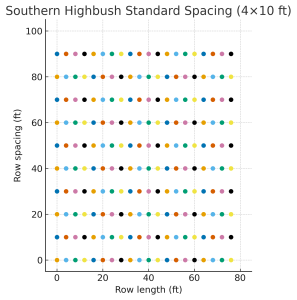
- Standard Spacing Map & Layout: Standard Southern Highbush setups generally utilize a plant spacing of 4 feet by 10 feet or 4 feet by 11 feet, allowing for comfortable machinery operation and adequate canopy light interception.
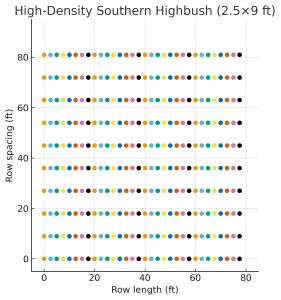
- High-Density Southern Highbush Systems: For intensive production on well-managed, heavily irrigated acreage, growers can utilize high-density layouts spaced at 2.5 feet by 9 feet. This aggressive density maximizes early, high-volume yields, though it demands rigorous, uncompromising management of weed control, fertility, and irrigation schedules.
2. Rabbiteye Blueberries
- Best For: Low-input growers, organic operations, or peripheral sites lacking complex irrigation infrastructure.
- Recommended Cultivars: ‘Climax’, ‘Brightwell’, and ‘Powderblue’.
- Agronomic Profile: Rabbiteyes are famously vigorous, larger plants that exhibit superior natural resistance to many common pests and diseases. While they can survive on natural rainfall once fully established, supplemental irrigation remains highly recommended to optimize fruit size and prevent mid-summer drought stress.
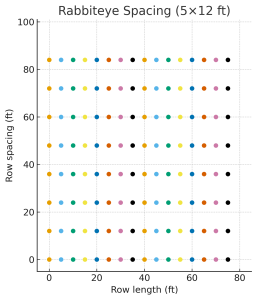
- Spacing Requirements: Due to their larger mature size, Rabbiteye varieties require wider spacing—typically 5 feet to 6 feet within rows, with rows spaced 10 feet to 12 feet apart to prevent overcrowding and maintain sunlight penetration.
Irrigation Considerations & Water Management
Water management sits at the absolute center of successful berry farming in North Florida. Columbia County experiences distinct seasonal shifts, often punctuated by unpredictable dry springs that can devastate fruit set and sizing if left unmanaged.
[Water Source] ---> [Main Filtration Unit] ---> [Fertigation Injector] ---> [Drip/Microjet Lines] ---> [Targeted Root Zone]Microjet vs. Drip Systems
- Drip Irrigation: Highly efficient, delivering slow, precise water droplets directly to the root zone. It minimizes weed growth in row middles and optimizes water use efficiency.
- Microjet Systems: Provide a wider wetting pattern, which can be advantageous during the initial establishment years of the orchard, encouraging broader root development.
The Role of Fertigation
The integration of drip irrigation with fertigation transforms crop management. By dissolving water-soluble fertilizers directly into the irrigation stream, growers can feed their plants exact, micro-doses of nutrients precisely when demand peaks—such as during the post-harvest vegetative flush or early fruit expansion phases. This targeted approach prevents nutrient leaching, protects local groundwater, and drastically reduces fertilizer waste.
Future Outlook & Long-Term Sustainability
As agricultural markets shift toward hyper-local food systems and transparent sourcing, the outlook for Columbia County blueberry producers remains exceptionally bright. The combination of favorable environmental parameters—sandy acidic soils, reliable chill hours, and enthusiastic regional consumers—creates an ecosystem where small- and medium-scale farmers can genuinely thrive.
Whether integrating blueberries into an existing diversified farm or launching a brand-new horticultural enterprise, success ultimately relies on three pillars:
- Thoughtful Planning: Rigorous pre-plant soil testing and infrastructure design.
- Precise Variety Selection: Aligning cultivars with labor availability, market windows, and irrigation capabilities.
- Proactive Management: Maintaining optimal soil pH, diligent weed suppression, and disciplined water management.
With these foundational elements securely in place, blueberries represent a reliable, high-value crop capable of generating sustainable agricultural revenue for decades to come.
Did you find this post helpful? Use the engagement buttons below to share your feedback with our agricultural extension team.

0 Comments