

By Agricultural News Desk
Published: October 14, 2025
Categories: Agriculture | Crops | Pests & Disease
Executive Overview
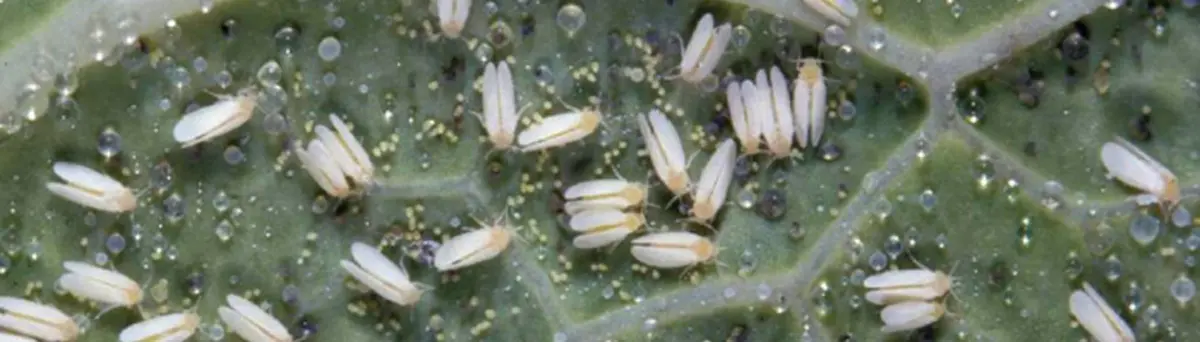
For growers across the Suwannee Valley and greater North Florida, the late summer and autumn seasons bring a familiar, unwelcome spectacle. A casual brush against a tomato, pepper, or cucurbit plant sends up billows of tiny, ghost-white insects, signaling the arrival of a persistent agricultural adversary: the whitefly (Bemisia tabaci). While these pests are diminutive in size, their cumulative impact on regional agriculture is monumental. They are far more than a mere seasonal nuisance; they represent a multi-faceted threat capable of decimating crop yields, compromising produce marketability, and transmitting devastating plant viruses right on the threshold of harvest.
As temperatures remain persistently warm through the fall months—a climatic reality largely unaffected by seasonal rainfall variations—whitefly populations explode. This seasonal surge creates unique challenges for small-scale commercial producers who lack the sprawling infrastructural buffers of industrial mega-farms. To combat this microscopic threat, agricultural experts from the University of Florida’s Institute of Food and Agricultural Sciences (UF/IFAS), including Dr. Derrick R. Conover and Dr. Xavier Martini, are championing an integrated, research-backed defense strategy. By deploying a layered approach that combines cultural modifications, organic and synthetic repellents, biological controls, and landscape-level coordination, North Florida farmers can protect their livelihoods and secure their autumnal harvests.
Detailed Chronology: The Fall Whitefly Lifecycle and Threat Timeline
Understanding the threat posed by Bemisia tabaci requires examining the seasonal chronology that dictates its population dynamics in North Florida.
The Summer Buildup
Agricultural cycles in the region create an interconnected web of host plants. Throughout the high-heat months of summer, whitefly populations thrive on expansive field crops, such as cotton. During this period, the pests multiply rapidly, unchecked by the moderate rainfall typical of the Floridian summer. Because temperature is the primary driver of their metabolic and reproductive rates—rather than precipitation—warm autumns act as an incubator, exponentially accelerating population growth.
The Autumn Migration
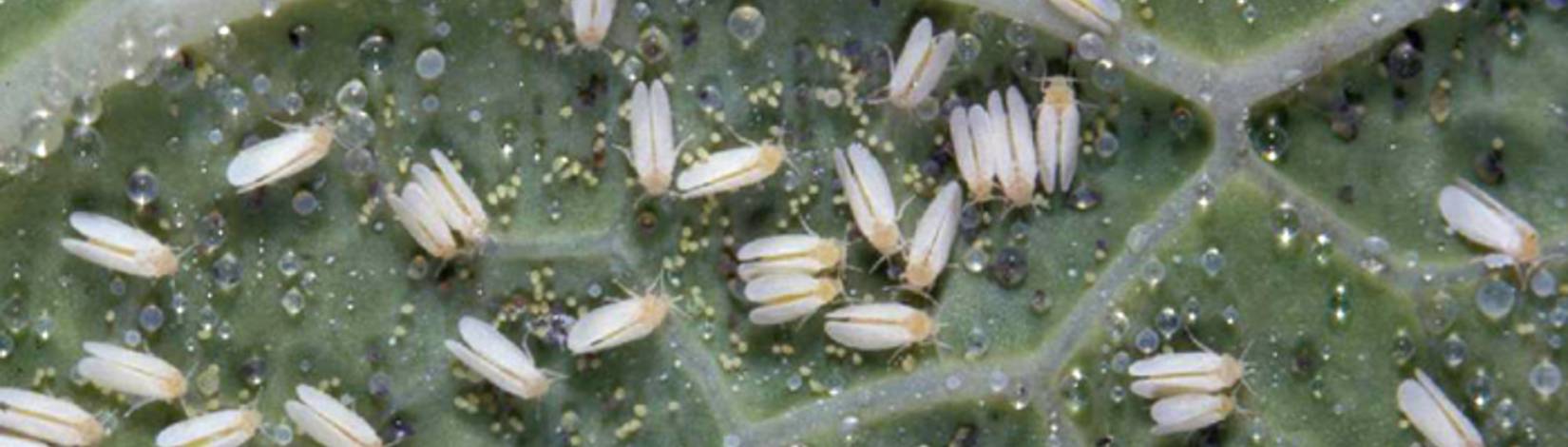
As large-scale commercial operations harvest their primary summer cash crops, a critical window of vulnerability opens for smaller regional farms. Deprived of their original hosts, massive waves of displaced whiteflies migrate outward. They flood neighboring, smaller-scale agricultural operations, seeking fresh host plants like fall tomatoes, peppers, and cucurbits (squash, cucumbers, and melons). This inter-crop migration typically peaks in late September and October, coinciding precisely with the maturation phase of fall vegetable crops.
The Pathological Peak
Once established on secondary hosts, the whiteflies inflict damage through two distinct mechanisms. First, their persistent sap-sucking behavior physically drains the host plants, stunting their growth, reducing fruit set, and degrading overall vigor. Second, and far more destructively, these insects act as efficient vectors for debilitating phytopathogens. Viral incidence—most notably the Tomato Yellow Leaf Curl Virus (TYLCV) and various destructive cucurbit-infecting viruses—peaks simultaneously with the highest points of the whitefly population curve. For a small farmer, an unchecked migration event during this autumn window can transform a promising harvest into a total loss in a matter of weeks.
Supporting Context & Metrics: Research-Backed Protection Strategies
Managing Bemisia tabaci in a low-margin, high-stakes environment demands precision. UF/IFAS research highlights several key methodologies, summarized below, that offer high efficacy when deployed as part of an Integrated Pest Management (IPM) framework.
Research-Backed Protection Strategies for Fall Crops
| Strategy | Effectiveness in Fall | Notes / Best Practices |
|---|---|---|
| Reflective mulch & row covers | High | Significantly reduces whitefly landing rates and delays initial virus incidence during early crop development. |
| Limonene-scented kaolin sprays | High (dry years) | Maximizes efficacy during low-rainfall periods; physically deters pests, reduces virus transmission, and boosts net yields. |
| Biological control (predators & fungi) | Moderate-High | Functions best within an IPM framework; preserves naturally occurring beneficial insects and microbial agents. |
| Synthetic insecticides | High (short-term) | Requires strict product rotation to mitigate the rapid development of chemical resistance. |
| Area-wide / landscape management | High | Demands cooperative regional coordination among neighboring farms to suppress mass reinfestations. |
Cultural Controls and Physical Barriers
The first line of defense begins before the first seed is planted. Implementing cultural practices such as reflective silver plastic mulches can disorient incoming whiteflies by reflecting ultraviolet light, effectively masking the crop canopy. Fine-mesh row covers provide physical exclusion during the highly vulnerable seedling phase, drastically curtailing early-season virus transmission. Furthermore, timely destruction and removal of post-harvest crop residue eliminates lingering breeding grounds, preventing resident populations from transitioning to new plantings.
Repellents and Biopesticides
When physical barriers are no longer feasible, chemical and organic repellents play a vital role. Recent trials evaluating limonene-scented kaolin clay formulations show exceptional promise, particularly during dry autumn stretches. The kaolin coats the foliage in a powdery mineral film that deters feeding and oviposition, while the limonene scent adds an olfactory deterrent. Because these applications rely on physical and mechanical modes of action, they pose a lower risk of triggering the rapid chemical resistance often associated with conventional neurotoxic insecticides.
Biological Approaches and Beneficial Conservation
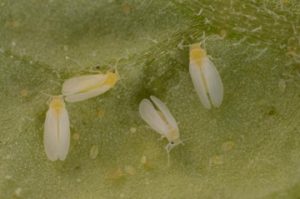
Preserving the natural enemies of whiteflies—such as predatory beetles, lacewings, predatory mites, and entomopathogenic fungi—forms the cornerstone of biological management. While biological controls rarely eradicate an infestation entirely on their own, they suppress population growth curves when integrated with selective, softer chemistry that spares beneficial populations.
Official Statements and Expert Insights
Addressing growers in the Suwannee Valley, local and state extension specialists emphasize that reactive measures are bound to fail against an organism as adaptable as the whitefly.
"Whiteflies are an undeniable fact of life for North Florida growers, but they do not have to spell absolute disaster for your fall cropping systems," notes Dr. Derrick R. Conover of the UF/IFAS Extension in Columbia County. Dr. Conover stresses that the transition between large-scale regional harvests and small farm production creates a high-pressure bottleneck. "When massive commercial fields are cleared, those pest populations have nowhere to go but our smaller diversified farms. Anticipation and proactive defense are non-negotiable."
Expanding on the physiological and behavioral mechanics of the pest, Dr. Xavier Martini, UF Assistant Professor of Entomology, points to the importance of disrupting host recognition. "Because Bemisia tabaci relies heavily on visual cues and environmental sensing to locate preferred hosts, tools like reflective mulches and scented kaolin particle films change the sensory landscape of the field," Dr. Martini explains. "By confusing their search patterns and safeguarding the predatory insects that naturally prey on whitefly nymphs and eggs, growers can significantly blunt the impact of the autumn migration."
Future Outlook: Building Resilient Regional Agriculture
Looking ahead, managing whitefly pressures in North Florida will require a paradigm shift toward collaborative, landscape-scale agriculture. As shifting climatic patterns yield longer, warmer autumns, pest windows are expected to widen, testing the limits of traditional single-farm management protocols.
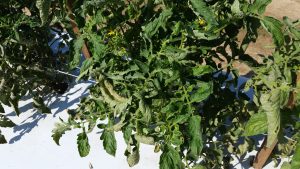
The future of whitefly mitigation lies in regional connectivity. Extension entomologists emphasize that individual farm hygiene is only as strong as the weakest link in the local agricultural community. Coordinated planting dates, synchronized destruction of crop residue across county lines, and community-wide adoption of area-wide management plans will be critical in reducing the baseline population of Bemisia tabaci.
By embracing an integrated approach—melding the physical protection of reflective materials, the innovation of organic biopesticides, the conservation of natural predators, and the discipline of chemical rotation—North Florida’s agricultural community can weather the autumn whitefly surge. Ultimately, vigilance, research-based adaptation, and cooperative regional stewardship will ensure that the Suwannee Valley remains a resilient and thriving hub for vegetable production for generations to come.

0 Comments