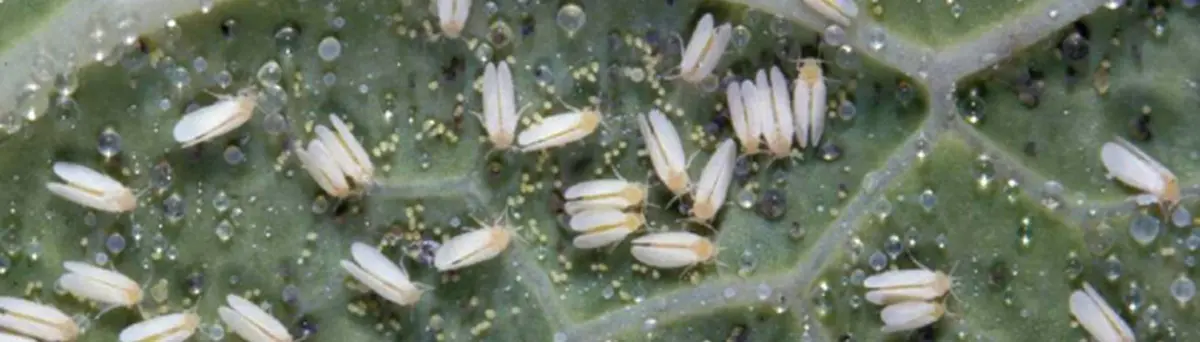
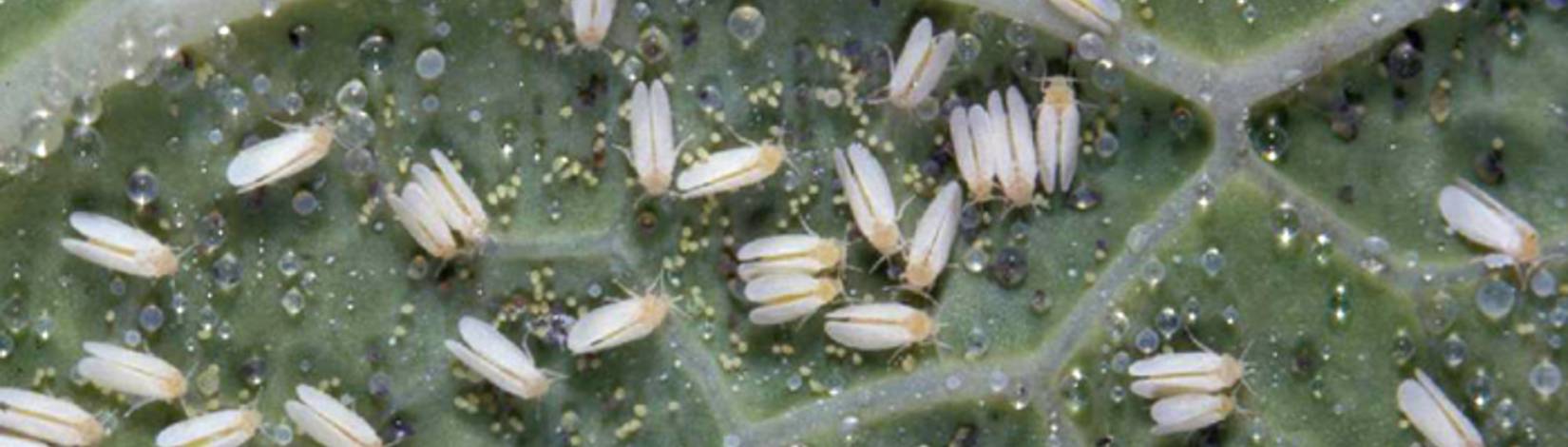
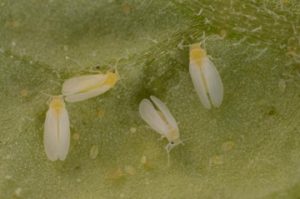
Across the fertile expanse of the Suwannee Valley and throughout North Florida, a nearly invisible agricultural crisis unfolds with predictable regularity every late summer and autumn. When agricultural workers, local agronomists, and small-scale vegetable producers brush past their crops during these months, dense, swirling clouds of tiny white insects erupt into the air. While their delicate appearance might suggest a minor annoyance, these pests—predominantly the silverleaf whitefly (Bemisia tabaci)—represent one of the single most destructive threats to regional vegetable production.
The stakes for local agriculture are extraordinarily high. Whiteflies do not merely feed on plants by piercing tissue and draining vital sap; they act as biological vectors for devastating plant pathogens, most notably the Tomato Yellow Leaf Curl Virus (TYLCV) and various aggressive cucurbit-infecting viruses. When these microscopic pathogens take hold, the impact on crop yields, marketable quality, and farm revenue can be catastrophic.
For the small-scale and diversified farmers who form the backbone of the Suwannee Valley’s agricultural identity, managing whitefly populations is a race against time. Fall in North Florida presents a dangerous convergence of environmental factors: persistently warm temperatures accelerate the insects’ reproductive cycles, while shifting regional host landscapes send migrating swarms of pests straight from harvested commercial fields directly into boutique and smallholder vegetable plots.
To combat this seasonal onslaught, agricultural experts—including Dr. Derrick R. Conover of UF/IFAS Extension in Columbia County and Dr. Xavier Martini, Assistant Professor of Entomology at the University of Florida—have championed a comprehensive, research-backed framework. By integrating advanced cultural tactics, selective organic and synthetic repellents, biological controls, and area-wide landscape coordination, growers can successfully insulate their fall harvest from total devastation. This report explores the mechanics of the North Florida whitefly threat, details the seasonal variables that amplify it, and outlines the precise, multi-layered Integrated Pest Management (IPM) strategies required to safeguard the region’s agricultural livelihood.
Detailed Chronology: The Seasonal Lifecycle and Migration of Bemisia tabaci
To understand why autumn poses such an acute threat to North Florida agriculture, one must trace the seasonal lifecycle and behavioral migration patterns of Bemisia tabaci. Unlike many agricultural pests whose population curves rise and fall predictably with heavy downpours, whiteflies operate under a different set of biological rules.
The Summer Buildup
The whitefly challenge begins well before the first hint of autumn. As summer temperatures peak across the Florida peninsula, Bemisia tabaci populations begin to expand exponentially. High ambient temperatures act as a metabolic accelerator for the species, dramatically shortening the duration of each generational cycle from egg to nymph to reproductive adult. During this mid-summer phase, whiteflies colonize a vast array of primary and secondary host crops, ranging from large-scale commercial cotton fields to early-season cucurbit plantings.
The Late-Summer Migratory Surge
The turning point arrives in late summer and early autumn. As large commercial agricultural operations conclude their harvest cycles and clear their fields, thousands of acres of primary host crops disappear overnight. Deprived of their immediate food sources, immense populations of displaced adult whiteflies take flight en masse.
Driven by wind currents and an innate biological imperative to find new hosts, these massive swarms migrate across the agrarian landscape. Unfortunately for smaller, diversified vegetable producers in the Suwannee Valley, these boutique farms often remain lush, green, and heavily laden with vulnerable crops—such as tomatoes, peppers, and squash—just as the commercial migrations peak. The result is a sudden, overwhelming influx of pests into smaller farming operations that may lack the massive infrastructure of industrial-scale enterprises.
Fall Environmental Pressures
Once established in a fall crop, whiteflies encounter microclimates uniquely suited to their survival. In contrast to heavy summer rains—which can physically wash some insects off foliage, though often with limited long-term suppression of the overall population—North Florida’s fall season frequently features stable, warm days and reduced precipitation. These drier, warm conditions minimize natural fungal pathogen mortality among whitefly populations, allowing both adults and immobile nymphs to feed undisturbed on the undersides of leaves, rapidly multiplying right up to the doorstep of the harvest window.
Supporting Context & Metrics: The Science of Damage and Protection Strategies
The threat posed by whiteflies is twofold: direct physiological damage caused by feeding and indirect pathological devastation driven by virus transmission. Quantifying these impacts requires a look at the scientific data underpinning modern pest management protocols in North Florida.
Direct vs. Indirect Crop Damage
Direct Feeding Damage: Adult and nymph whiteflies possess piercing-sucking mouthparts. They insert these stylets into the phloem of the host plant to ingest sap. As populations reach high densities, this continuous extraction strips the plant of essential sugars, amino acids, and water. The physiological stress stunts plant growth, causes premature leaf drop, and severely diminishes overall crop yields. Furthermore, whiteflies excrete a sugary, sticky substance known as honeydew. This residue coats the foliage and fruit, fostering the growth of black sooty mold. Not only does this mold interfere with photosynthesis, but it also ruins the visual market quality of the produce, rendering it unmarketable to commercial buyers and consumers alike.
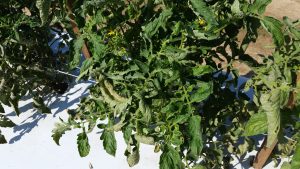
Pathogen Transmission (The Greater Threat): While sap-sucking can significantly reduce a harvest, the transmission of plant-pathogenic viruses represents an existential threat to specific crop families. Bemisia tabaci is a hyper-efficient vector for geminiviruses, most notably Tomato Yellow Leaf Curl Virus (TYLCV), as well as a complex of devastating cucurbit-infecting viruses. When a whitefly feeds on an infected weed or crop residue and subsequently moves to a healthy plant, it injects the virus into the vascular system. Infections occurring early in the crop cycle can halt fruit production entirely, resulting in near-total crop loss for susceptible varieties of tomatoes, peppers, and squash.
Research-Backed Protection Strategies for Fall Crops
To combat these dual threats, agricultural researchers at the University of Florida and the Institute of Food and Agricultural Sciences (UF/IFAS) have evaluated multiple control modalities. The findings are summarized below:
Strategy
Effectiveness in Fall
Notes / Best Practices
Reflective Mulch & Row Covers
High
Effectively repels incoming adults from landing on young plants; significantly reduces early-season virus incidence.
Limonene-Scented Kaolin Sprays
High (in dry years)
Performs exceptionally well during dry autumn periods; physically deters feeding, reduces virus transmission, and boosts overall yield.
Biological Control (Predators & Fungi)
Moderate to High
Functions best as a core component of an Integrated Pest Management (IPM) program; preserves native beneficial insect populations.
Synthetic Insecticides
High (Short-Term)
Provides immediate knockdown; requires strict product rotation and judicious use to prevent rapid insecticide resistance.
Area-Wide & Landscape Management
High
Relies on community-wide coordination among neighboring farms to eliminate weed hosts and stagger planting schedules, drastically reducing reinfestation pressure.
Official Statements and Expert Insights
Addressing the regional scope of the whitefly challenge, agricultural extension leaders emphasize that individual farm-level vigilance, while necessary, is insufficient without a broader structural approach to pest management.
"Whiteflies may be tiny, but they represent an outsized threat to the economic viability of our fall vegetable growers in the Suwannee Valley," notes Dr. Derrick R. Conover of UF/IFAS Extension in Columbia County. "When you walk through a field in September or October and see those white clouds erupting, you are witnessing an insect population operating at peak reproductive capacity. Without a proactive strategy that addresses both the physical feeding and the vectoring of devastating viruses like TYLCV, farmers risk losing their entire season’s margin right before harvest."
Echoing the need for scientific innovation and integrated field tactics, Dr. Xavier Martini, UF Assistant Professor of Entomology, highlights the physiological mechanisms that make modern deterrents so effective under specific climatic conditions.
"Our recent trials indicate that managing whiteflies in North Florida requires moving beyond a reliance on any single control method," states Dr. Martini. "For instance, utilizing limonene-scented kaolin particle films during dry fall windows creates an unfavorable sensory and physical barrier that disorients the pests, substantially lowering virus transmission rates. When combined with cultural modifications and the careful preservation of beneficial predatory insects, growers gain a resilient defense system against an otherwise relentless pest."
Future Outlook: Building Resilient Farming Systems in the Suwannee Valley
Looking ahead, the long-term sustainability of small- and medium-scale vegetable production in North Florida hinges upon the widespread adoption of Integrated Pest Management (IPM) paradigms. As shifting climate patterns continue to influence seasonal temperatures and lengthen frost-free periods, pest pressures are unlikely to diminish on their own.
The Shift Toward Area-Wide Management
Future efforts must increasingly pivot toward cooperative, landscape-level coordination. Because whiteflies are prolific flyers capable of traversing significant distances between disparate farm properties, an isolated organic farm employing rigorous exclusion techniques can still experience heavy reinfestation if neighboring properties maintain unmanaged weed hosts or abandoned crop residue. Extension services across North Florida are increasingly advocating for community-wide sanitation days, synchronized planting and harvest windows, and coordinated destruction of post-harvest crop debris. By treating the entire Suwannee Valley agricultural ecosystem as an interconnected unit, the agricultural community can suppress baseline pest reservoirs before the autumn migratory push begins.
Embracing Next-Generation Biopesticides and Resistant Varieties
Concurrently, ongoing plant breeding and entomological research continue to unlock new frontiers in crop resilience. Breeders are working to introduce robust genetic resistance to TYLCV and associated cucurbit viruses into commercial lines of tomatoes and peppers, giving farmers an internal biological shield. Simultaneously, the refinement of biopesticides—including insect-killing fungi (Beauveria bassiana) and advanced botanical extracts—offers growers powerful tools that suppress whitefly populations without disrupting the delicate populations of beneficial predatory insects and parasitoid wasps that naturally regulate farm ecosystems.
Conclusion
Whiteflies will inevitably remain an annual fixture of agriculture in North Florida. However, as local extension research clearly demonstrates, their presence does not need to translate into agricultural disaster. By embracing a proactive, multi-pronged defensive posture—integrating reflective mulches, botanical and mineral repellents, biological controls, and regional landscape cooperation—growers can successfully outmaneuver these tiny, mighty pests and secure a bountiful, profitable fall harvest.



0 Comments