

By Jay Capasso (UF/IFAS Extension), Jason Mallard (UGA Cooperative Extension), and Phillip Edwards (UGA Cooperative Extension)
Published: December 4, 2024 | Updated: September 9, 2025
Executive Overview
Water is arguably the single most critical input in modern agricultural production, serving as the lifeblood that dictates whether a crop thrives or merely survives. Yet, in an era marked by increasing climatic unpredictability, tightening regulatory constraints, and rising energy costs, agricultural water management has transitioned from a routine operational task into a high-stakes, precision-driven science. For growers across the Southeastern United States—particularly within the vital agricultural hubs of Florida and Georgia—maximizing crop yield is inextricably linked to optimizing how water is deployed across a field.
To achieve true optimization, agricultural producers must look past raw water volumes and master two foundational metrics: Distribution Uniformity (DU) and Irrigation Efficiency. While these terms are frequently used interchangeably in casual agricultural discourse, they represent two distinct facets of irrigation performance. Distribution Uniformity measures how evenly water is spread across a field by an overhead system, whereas Irrigation Efficiency gauges how effectively the applied water is utilized by the crop to meet its physiological needs.
Understanding and mastering both concepts can mean the difference between a high-margin harvest and significant financial losses driven by wasted water, nutrient leaching, energy inefficiencies, and uneven crop growth. Fortunately, growers are not navigating these challenges alone. Extension services, mobile irrigation laboratories, and regional conservation programs across Florida and Georgia offer cutting-edge evaluations and financial assistance. This comprehensive guide breaks down the mechanics of DU and efficiency, investigates the hidden variables that disrupt system performance, and outlines actionable strategies—including the strategic placement of soil moisture sensors—to elevate farm productivity and resource sustainability.
Detailed Chronology: The Evolution of Modern Agricultural Irrigation Evaluation
The journey toward precision irrigation did not happen overnight. For decades, agricultural water management relied heavily on macro-level estimates: growers knew roughly how much water their pumps could pull and roughly how long they needed to run them to keep crops alive. However, the convergence of rising operational costs, environmental stewardship mandates, and advanced agricultural engineering has transformed irrigation into a micro-managed science.
The Shift from Volume to Uniformity
In the early days of mechanized center pivot and linear move irrigation systems, the primary focus was volume. If a field looked dry, systems were turned on for longer periods. As energy prices fluctuated and aquifers faced increasing seasonal stress, researchers and extension agents realized that brute-force watering led to massive inefficiencies. Water applied in excess in one corner of a field did not compensate for underwatered patches in another; instead, it resulted in nutrient leaching, root asphyxiation, and wasted energy.
During the late 20th and early 21st centuries, agricultural engineers popularized the "catch can" test—a systematic methodology designed to evaluate spatial water application. This diagnostic shift allowed agronomists to map out water distribution patterns visually and mathematically, laying the groundwork for modern Distribution Uniformity standards.
The Rise of Mobile Irrigation Labs (MILs)
Recognizing that individual growers lacked the specialized equipment and time to conduct rigorous distribution audits, university extension offices and state departments of agriculture stepped in. In Florida, the establishment of Mobile Irrigation Labs (MILs) marked a major turning point. These specialized units began traveling directly to farms to conduct on-site evaluations of center pivots and linear systems.
Similarly, in Georgia, the University of Georgia (UGA) Cooperative Extension established robust protocols for system evaluations. Over the years, these programs evolved from simple hardware checks into comprehensive audits that incorporate pressure profiling, nozzle wear analysis, and integration with modern decision-support tools like soil moisture monitoring networks.
Modern Integration: Sensors, Cost-Shares, and Best Management Practices (BMPs)
Today, irrigation evaluation is deeply intertwined with broader state and federal agricultural policies. Enrollment in programs such as the Florida Department of Agriculture and Consumer Services (FDACS) Best Management Practices (BMP) program links modern irrigation evaluations with access to agricultural cost-share opportunities. In Georgia, parallel programs administered through the USDA Natural Resources Conservation Service (NRCS) provide financial bridges for growers seeking to upgrade worn-out, inefficient systems. The contemporary focus is no longer just on spotting a broken sprinkler head; it is about holistic farm water governance that leverages real-time data, soil sensors, and professional audits to protect both profitability and natural resources.
Supporting Context & Metrics: Deconstructing DU and Irrigation Efficiency
To effectively manage an irrigation system, a grower must understand the mathematical and physical realities governing water movement through the air, soil, and plant tissue.
+-----------------------------------------------------------------+
|                    THE DUAL PILLARS OF IRRIGATION               |
|                                                                 |
|  1. DISTRIBUTION UNIFORMITY (DU)                                |
|     * Focus: Spatial evenness across the field.                 |
|     * Target: Up to 90% for modern pivots and linears.          |
|     * Measurement: The "Catch Can" methodology.                 |
|                                                                 |
|  2. IRRIGATION EFFICIENCY                                       |
|     * Focus: Beneficial use versus total applied water.         |
|     * Equation: Beneficial Use / Total Applied.                 |
|     * Primary Target: Crop Evapotranspiration (ET).             |
+-----------------------------------------------------------------+
What is Distribution Uniformity (DU)?
Distribution Uniformity measures the spatial consistency of water application across a given field. A high DU indicates that nearly every section of the crop canopy is receiving an equal share of moisture. For modern center pivot and linear overhead irrigation systems, achieving a DU of 90% is an attainable and highly desirable benchmark. When a system operates at a 90% DU, 90% of the field receives water in a uniform, predictable manner, drastically reducing localized water stress and waste.
The Catch Can Method: How DU is Calculated
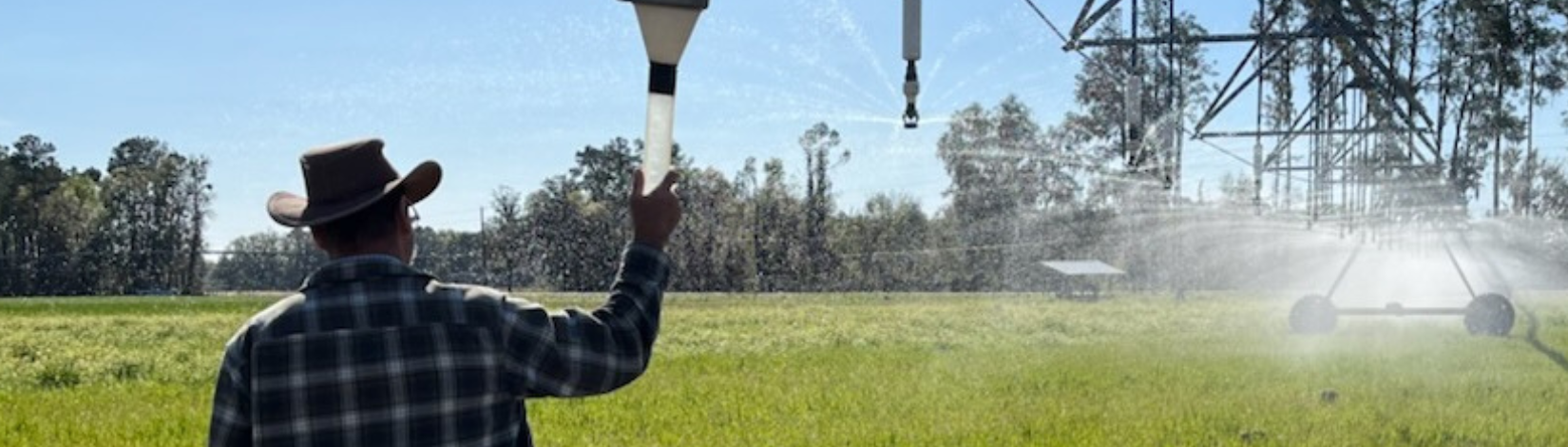
The industry-standard technique for evaluating DU is the catch can method. This empirical test involves placing a series of calibrated catch cans in a grid pattern across the span of the irrigation system’s path. Once the system completes a pass, the depth of water collected in each can is meticulously measured.
The mathematical calculation for DU relies on isolating the lowest-performing zones:
$$textDU = left( fractextAverage depth of water in the lowest 25% of catch canstextTotal average depth of water applied across all catch cans right) times 100$$
If this calculation yields a low percentage, it signals to the grower that significant disparities exist within the field—some areas are drowning while others are parched.
The Multifaceted Benefits of Maintaining Good DU
Maintaining an optimal Distribution Uniformity yields compounding operational advantages:
- Maximized Crop Uniformity: Crops mature at the same rate, simplifying harvest scheduling and maximizing quality grading.
- Optimized Chemigation and Fertigation: When liquid fertilizers are injected into an irrigation system, uniform water distribution translates directly into uniform nutrient delivery. This prevents hot spots of nitrogen burn and deficiency zones, optimizing plant uptake and minimizing environmental leaching.
- Resource and Energy Conservation: Eliminating the need to over-water dry zones to compensate for poor uniformity reduces total pumping hours, saving direct electrical or fuel expenses.
Anatomy of Inefficiency: Factors That Impact DU
Numerous mechanical, environmental, and operational variables can degrade a system’s distribution uniformity:
- Flow Rate Variability and Pressure Differences: Friction losses within pipes, changes in field elevation, and fluctuating pump pressures alter the volume of water pushed through individual nozzles.
- Pressure Regulator Malfunctions: Pressure regulators are designed to maintain constant output pressure despite elevation changes or system fluctuations. When they fail, sprinklers deliver erratic spray patterns, accelerating system wear and driving up energy costs. Stable pressure is the bedrock of uniform irrigation.
- Nozzle Wear and Clogging: Over time, abrasive water minerals and sediment enlarge nozzle orifices, while biological growth or debris causes partial clogs. Both conditions distort spray patterns and ruin uniformity.
- Improper Spacing, Design, and End Gun Alignment: Poor initial engineering or misaligned end guns that spray water over areas already covered by overhead sprinklers create overlapping wet zones.
- Environmental Interferences: Strong winds can blow fine droplets off target, while tall crop canopies can physically block water from reaching the lower root zones.
- Operational Practices and Edge Effects: System startup and shutdown phases often dump water unevenly. Furthermore, "edge effects"—where sprinklers overlap at field boundaries—frequently skew application uniformity.
Irrigation Efficiency: How Does it Differ from DU?
While Distribution Uniformity looks strictly at spatial evenness, Irrigation Efficiency evaluates the proportion of applied water that is actually put to beneficial use by the crop.
The universal efficiency equation is expressed as:
$$textEfficiency = fractextWater Beneficially UsedtextTotal Water Applied$$
In the Southeastern United States, "beneficial use" almost exclusively translates to meeting crop Evapotranspiration (ET)—the combined loss of water through soil evaporation and plant transpiration required to sustain healthy growth. Unlike arid western regions where irrigation water is frequently used for leaching accumulated salts from the root zone, Southeastern growers rarely face severe soil salinity challenges. On rare occasions, beneficial use may include targeted climate control (such as freeze protection) or germinating weed seeds intentionally prior to mechanical or chemical eradication.
Because efficiency depends on how much water successfully reaches the active root zone, it can be notoriously difficult to estimate through surface observations alone. This is where advanced monitoring tools become indispensable.
Official Statements & Expert Perspectives
Agricultural extension specialists across the southeastern states emphasize that irrigation management is no longer a matter of intuition, but of rigorous measurement.
"Achieving a distribution uniformity of 90 percent is not an unrealistic dream; it is an attainable operational standard for well-maintained center pivots and linear systems," notes Jay Capasso of the UF/IFAS Extension. "However, growers cannot fix what they do not measure. Utilizing free evaluations from mobile irrigation labs allows producers to pinpoint mechanical flaws before they translate into lost yields and wasted capital."
Collaboration between university research units and state departments of agriculture has streamlined the path from problem identification to remediation. Jason Mallard and Phillip Edwards of the UGA Cooperative Extension highlight the regional scope of these initiatives:
"Whether a grower is operating in the sandy soils of the Suwannee Valley or the diverse terrain of Georgia, the underlying principles of water management remain identical. System audits reveal hidden pressure losses and worn components that quietly drain farm profitability. By pairing these audits with cost-share upgrade programs, we empower growers to modernize their infrastructure without shouldering the entire financial burden alone."
Future Outlook: Technology, Soil Sensors, and Regional Resources
As agriculture faces the dual pressures of feeding a growing global population and preserving finite water resources, the future of irrigation lies in hyper-local precision.
The Critical Role of Soil Moisture Sensors
Soil moisture sensors serve as the ultimate reality check for irrigation efficiency. By measuring volumetric water content at various depths within the soil profile, these sensors tell growers precisely when root zones are approaching depletion and when irrigation water has successfully penetrated without plunging past the root zone into the water table.
However, researchers issue a vital caution regarding sensor placement: sensors placed in areas with poor Distribution Uniformity will yield misleading data. If a soil moisture sensor happens to sit in an underwatered pocket caused by a clogged nozzle or pressure drop, the grower may be tricked into running the entire irrigation system longer than necessary, exacerbating over-application in other parts of the field. Therefore, sensor deployment must be preceded by a thorough DU assessment to ensure sensors reside in representative, average-performing zones.
Accessing Professional Resources in Florida and Georgia
Growers seeking to optimize their irrigation infrastructure have access to robust institutional support across state lines:
- In Florida: The Mobile Irrigation Lab (MIL) network provides expert evaluations of center pivot and linear move systems. These evaluations quantify DU and overall efficiency, supplying growers with actionable remediation reports. Growers enrolled in the FDACS Best Management Practices (BMP) program may qualify for agricultural cost-share opportunities designed to offset the costs of upgrading faulty system components, retrofitting pressure regulators, or replacing worn nozzles. More information can be accessed via the FDACS Mobile Irrigation Labs portal.
- In Georgia: The UGA Cooperative Extension provides comprehensive on-farm evaluations of irrigation systems. Producers looking to modernize aging infrastructure can tap into financial and technical assistance through local USDA Natural Resources Conservation Service (NRCS) programs.
Conclusion
Optimizing irrigation distribution uniformity and efficiency is a continuous commitment that pays rich dividends. By bridging the gap between mechanical system maintenance, advanced soil moisture tracking, and professional extension evaluations, agricultural producers can safeguard their crop yields, protect regional water supplies, and secure long-term economic viability in an increasingly competitive marketplace.

0 Comments