

By Derrick Conover
Published: March 18, 2026
Category: Agriculture / Crops
Executive Overview
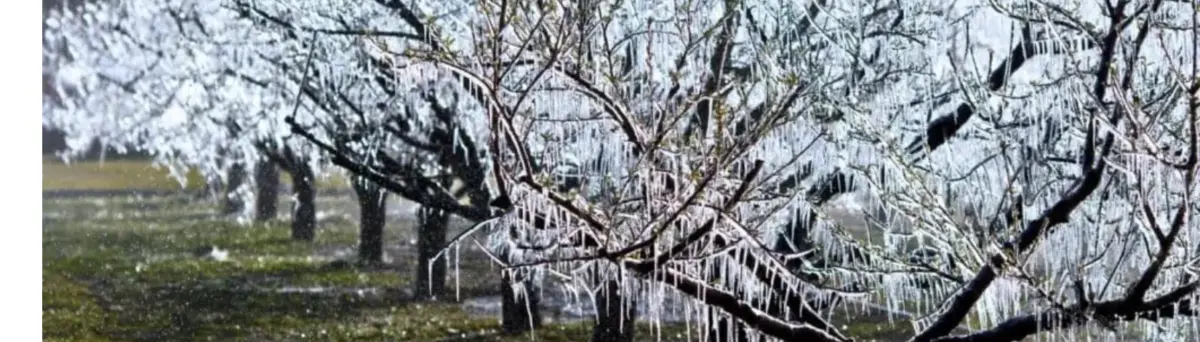
Agricultural producers across Columbia County and the broader North Florida region are navigating a precarious start to the spring production cycle following a sharp, late-season cold front. Arriving precisely when local orchards and fields are undergoing critical biological transitions, the unseasonable temperature drop has created a high-risk operational environment.
As perennial fruit trees break winter dormancy and the planting or emergence of spring row crops swings into full gear, even fleeting exposures to sub-optimal temperatures carry disproportionate consequences. The convergence of freezing air, delicate phenological stages, and an underlying regional drought has generated a compound stress scenario. For regional farmers, this tight window of vulnerability dictates that a single night of frost can compromise months of labor, capital investment, and overall annual yield potential.
This report provides an in-depth examination of the physiological threats facing Columbia County agriculture, analyzing how shifting weather patterns, soil moisture deficits, and pollinator dynamics intersect to challenge the local farm economy. Furthermore, it outlines strategic management pathways for mitigating loss and sustaining crop viability through an increasingly volatile spring.
Detailed Chronology: The Anatomy of a Late-Season Weather Event
The arrival of the cold front this week represents a textbook example of high-stakes marginal weather. While historical climatology indicates that the frequency of hard freezes diminishes significantly by mid-March, late-season polar air intrusions continue to pose severe localized threats.
The Onset and Phenological Vulnerability
The timing of this temperature swing could hardly be more delicate. During the heart of winter, deciduous fruit trees—such as peaches, plums, and blueberries—enter a state of endodormancy, allowing them to withstand severe sub-freezing conditions with negligible cellular damage. However, the accumulation of winter chill units, followed by gradual warming trends, signals the trees to break dormancy.
As buds swell and transition into full bloom, internal water content increases, and the protective biochemical concentrations within the plant tissues decline. Consequently, cold tolerance drops off a precipitous cliff. When a cold front sweeps through during this exact physiological transition, open blossoms and newly emerged reproductive tissues are exposed.
Even a brief, light frost—temperatures hovering just below 32°F for a matter of hours—can rupture cell walls within the pistils and stamens. In many instances, the agricultural impact is insidious: blossoms may appear deceptively normal in the immediate aftermath of a frost event, only to wither and abort days later as the injured reproductive tissues fail to fertilize.
Compounding Factors: The Pollination Disruption
Beyond direct thermal injury, the cold weather exerts a secondary, systemic toll on fruit set through pollination disruption. The flowering window for crops like blueberries and peaches is notoriously narrow. Successful fruit production relies heavily on the synchronization of bloom and optimal foraging conditions for managed honeybees and native pollinators.
Under the cool, cloudy, and often windy conditions that accompany late-season cold fronts, pollinator activity plummets. Honeybees and bumblebees drastically reduce foraging flights when ambient temperatures drop below 55°F or when wind speeds exceed thresholds that challenge their flight stability. Consequently, even flowers that escape direct frost injury frequently suffer from poor pollination rates, culminating in misshapen fruit, partial fruit set, or total economic loss for the block.
Supporting Context & Metrics: Fruit Trees vs. Row Crops
While orchards contend with the fragility of blossoms and pollination kinetics, North Florida row crop producers face an entirely different array of physiological hazards. The operational challenges span germination dynamics, seedling vulnerability, and long-term plant vigor.
The Row Crop Dilemma: Germination and Soil Thermal Dynamics
Spring-planted commodities foundational to the North Florida agricultural landscape—including watermelons, sweet corn, and various warm-season vegetables—are exceptionally sensitive to cold soil and air temperatures. Germination is not a passive event; it is an active biochemical process driven by soil temperature thresholds.
When cold fronts depress soil temperatures below optimal thresholds for extended periods, seed germination stalls, becomes erratic, or fails entirely. For high-value crops like watermelons, field uniformity is the cornerstone of efficient harvesting, packing, and marketing. Uneven germination results in staggered maturity groups, complicating weed control, fertilizer applications, and mechanical or manual harvest schedules.
Furthermore, cold, saturated soils create a breeding ground for soil-borne pathogens. Pathogenic fungi such as Pythium, Rhizoctonia, and Fusarium thrive in cool, damp environments where host seedling growth is sluggish. This dynamic drastically escalates the incidence of "damping-off" and early-season stand loss.

For young seedlings and tender transplants already established in the field, frost serves as an immediate physical threat:
- Leaf Burn and Necrosis: Ice crystal formation within leaf tissue lacerates cellular membranes, causing rapid tissue collapse, water-soaking, and subsequent browning or blackening of foliage.
- Stem Injury: Girdling of tender stems at or just above the soil line can sever vascular transport, leading to sudden plant collapse.
- Transplant Shock Proliferation: Mechanically transplanted crops (such as peppers, tomatoes, and cucurbits) rely heavily on rapid root regeneration to recover from the shock of being moved. Cold soil temperatures paralyze root growth, leaving transplants in a prolonged state of shock and highly vulnerable to opportunistic secondary pests.
Physiological Fallout in Perennial Systems
For perennial tree crops, the stress of a late-season freeze extends far beyond immediate blossom drop. Cold events induce systemic physiological deceleration. Leaf-out is delayed, bloom periods are artificially extended, and overall metabolic activity slows down.
An extended bloom period introduces a compound risk: it exposes lingering, late-emerging flowers to subsequent, secondary frost events. Moreover, every freeze event forces the tree to expend precious carbohydrate reserves to repair damaged tissues and initiate secondary growth flushes. This depletion of internal energy stores compromises not only the immediate season’s yield potential but can also stunt bud development for the following year’s crop cycle.
Official Statements and Environmental Amplifiers: The Drought Multiplier
To contextualize the severity of the recent cold front, agricultural extension specialists emphasize the critical role of concurrent environmental conditions—specifically, the ongoing regional drought impacting North Florida.
The Science of Soil Moisture and Frost Severity
At first glance, meteorological drought and freezing temperatures appear to be independent meteorological phenomena. However, at the intersection of plant physiology and microclimate physics, they are deeply intertwined.
Dry soils act as poor thermal regulators. Under normal conditions with adequate soil moisture, moist earth absorbs significant thermal energy from solar radiation throughout the day and slowly releases that heat back into the microclimate of the lower canopy during the night. This natural buffering effect can elevate ambient temperatures immediately surrounding low-growing crops and tree trunks by several critical degrees, often preventing the formation of a damaging surface frost.
In contrast, dry soils possess a drastically lower heat capacity. They warm up rapidly during peak daylight hours but bleed off that heat almost immediately after sunset. Consequently, dry fields experience much sharper, more severe near-ground temperature drops compared to adjacent, well-watered plots.
Extension reports highlight that two adjacent fields experiencing the exact same macro-level air temperature can sustain radically different levels of frost injury based solely on soil moisture status. In drought years, this dynamic transforms dry soils into an active risk multiplier.
Practical Mitigation and Soil Management
For North Florida growers navigating this dual threat, managing soil moisture has become an urgent operational priority. Where irrigation infrastructure permits, pre-irrigation—applying water to fields and orchards prior to a forecasted freeze event—serves as a vital defensive measure.
Moistening the soil profile enhances thermal conductivity and heat storage capacity, dampening the severity of the nocturnal temperature plunge. Additionally, well-hydrated plant tissues maintain higher internal turgor pressure and cellular stability, conferring a baseline level of biological resilience against cold stress.
Future Outlook: Vigilance and Adaptive Management
As global weather patterns exhibit increasing variability and transitional seasons become more erratic, agricultural producers in Columbia County must adapt their long-term risk management frameworks. Late-season cold fronts occurring against the backdrop of sustained drought are unlikely to be isolated anomalies; rather, they represent the shifting baseline of modern regional farming.
Recommendations for Growers
Agricultural extension advisors emphasize several core strategies for producers moving forward through the remainder of the spring season:
- Hyper-Local Forecasting: Relying on macro-level regional forecasts is no longer sufficient. Growers must monitor micro-climate sensors and local weather stations that track near-ground soil and air temperature differentials.
- Proactive Irrigation Scheduling: Integrating soil moisture monitoring with frost forecasting to ensure fields are adequately pre-watered ahead of anticipated cold snaps, maximizing thermal soil buffering.
- Staggered Planting and Varietal Selection: For row crop producers, considering staggered planting dates or incorporating cold-tolerant rootstocks and varietal lines can help hedge against total crop loss during erratic spring weather.
- Post-Event Monitoring and Pest Management: Following a cold event, scouting must be intensified. Weakened, frost-damaged plant tissue serves as an open invitation for secondary fungal pathogens and opportunistic insect pests. Timely, targeted interventions can salvage damaged stands before minor setbacks cascade into total crop failures.
Ultimately, navigating the tight window between winter dormancy and spring production requires a blend of traditional agronomic vigilance and modern climate resilience strategies. As Columbia County farmers assess the toll of this latest cold front, careful, data-driven management will remain the defining factor between a resilient harvest and a challenging agricultural season.

0 Comments