

By Derrick Conover
Published: March 18, 2026
Category: Agriculture / Crops
Executive Overview
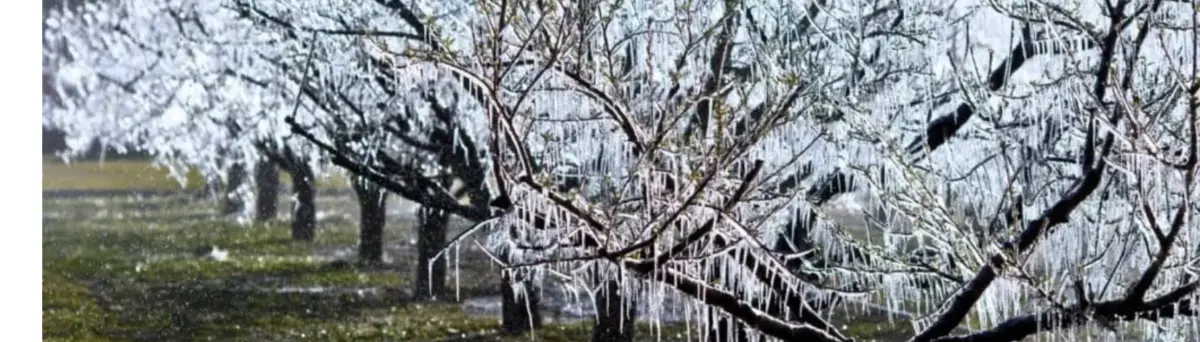
Agricultural producers across Columbia County and the broader North Florida region are grappling with a high-stakes convergence of environmental stress factors following what local farming communities hope will be the final cold front of the season. Arriving at a critically sensitive juncture in the annual production cycle—just as perennial fruit trees break dormancy and spring row crops are actively planted or emerging—this latest temperature plunge has introduced severe vulnerability across local farms.
Even brief intervals of sub-optimal or freezing temperatures during this narrow window carry disproportionate consequences for crop performance, physiological development, and ultimate yield potential. Compounding the immediate threats of frost and cold air drainage is a lingering, persistent drought across the region. While agriculturalists often analyze cold snaps and water deficits as isolated climatic events, their physiological and microclimatic interactions create a compounding threat matrix.
Dry soils lack the thermal mass necessary to buffer nocturnal temperature drops, accelerating near-ground frost formation and intensifying the vulnerability of young plants. For North Florida growers, navigating this intersection of late-season cold stress and severe drought requires vigilant monitoring, strategic irrigation management, and immediate proactive intervention to safeguard regional harvest volumes and farm economic viability.
Detailed Chronology and Physiological Impact: Fruit Trees and Row Crops
The timing of this week’s cold front could hardly have been more precarious. To understand the gravity of the meteorological event, agricultural specialists must evaluate how distinct plant families process thermal stress at varying stages of development.
Fruit Tree Vulnerability: From Dormancy to Bloom
During the dead of winter, deciduous fruit trees—including regional staples like peaches and blueberries—exhibit a high degree of cold tolerance. Dormant tissue can withstand deep freezes with negligible internal damage due to physiological adaptations that protect cellular structures. However, as ambient temperatures warm during late winter, trees break dormancy, driving moisture and nutrients into expanding buds and initiating the bloom cycle.
As this transition occurs, cold tolerance plummets rapidly. Once blossoms open, reproductive tissues become acutely sensitive to thermal drops. Even a light frost can cause ice nucleation within open flowers, destroying pistils, stamens, or ovaries. In many cases, the damage is insidious: blossoms may appear deceptively normal in the immediate aftermath of a frost event, only to wither and fail to set fruit days later.
Furthermore, the meteorological conditions accompanying late-season fronts introduce secondary obstacles to fruit production. Cool, cloudy, and windy weather severely depresses pollinator activity. Managed honeybees and native pollinators alike become significantly less active when temperatures drop and skies overcast, sharply limiting successful pollination during an already compressed flowering window.
Beyond immediate reproductive injury, extended exposure to cold stress alters overall tree physiology:
- Delayed Phenology: Leaf-out is retarded, bloom periods are artificially extended, and initial fruit development slows.
- Compounded Risks: A protracted bloom period exposes successive waves of flowers to multiple, compounding frost events.
- Resource Depletion: Repeated physiological stress forces trees to burn vital carbohydrate reserves just to maintain basic cellular repair, diminishing current-season yields and undercutting tree vigor for the following year’s production cycle.
Row Crop Challenges: Germination, Establishment, and Transplant Shock
While perennial fruit trees contend with reproductive failure and physiological exhaustion, spring-planted row crops in North Florida face an entirely different array of hazards. Warm-season staples—such as watermelon, sweet corn, and diverse commercial vegetables—rely on optimal soil and air temperatures for successful germination and early vegetative vigor.
When cold fronts sweep through, chilling both soil and air, the germination process stalls or occurs unevenly across a field. In crops like watermelon, where uniform maturity is essential for efficient, single-pass harvesting and market timing, variable emergence destroys field uniformity and lowers marketable yields.
Moreover, cold and wet soil conditions create an ideal microclimate for soil-borne pathogens:
- Seedling Diseases: Prolonged exposure to cold, damp earth favors fungal pathogens responsible for damping-and-root rot, causing early plant mortality before emergence is complete.
- Direct Foliar and Stem Injury: For emerged seedlings and fresh transplants, frost causes direct tissue necrosis, leaf burn, stem splitting, and total plant collapse depending on the duration of the freeze.
- Transplant Shock Prolongation: Transplanted vegetable crops suffer immensely under cold conditions. Low temperatures impede root regeneration and extension, locking plants in an extended state of transplant shock. This physiological lag leaves young plants vulnerable to opportunistic secondary pests and diseases that readily exploit compromised, weakened tissues.
Supporting Context & Metrics: The Drought-Frost Amplification Effect
To fully grasp the severity of this week’s agricultural stress event, one must analyze the role of regional drought conditions. Florida’s ongoing precipitation deficits have significantly amplified the destructive potential of late-season cold snaps.

Although frost and drought are frequently cataloged as distinct environmental concerns, their mechanical and physiological impacts are tightly coupled at the field level. When drought and freezing temperatures coincide—a phenomenon observed with increasing frequency in recent North Florida production seasons—the cumulative stress far exceeds the linear sum of each factor acting independently.
The Soil Thermal Dynamic: Why Dry Earth Means Harder Frosts
From a microclimatic perspective, soil moisture dictates how fields retain and release thermal energy:
- Moist Soils as Thermal Buffers: Soils with adequate moisture absorb substantial solar radiation during daylight hours, storing thermal energy and releasing it slowly upward into the canopy layer after sunset. This nocturnal heat radiation provides a natural thermal blanket, frequently mitigating or preventing light frost formation in low-lying crop zones.
- Dry Soils and Rapid Radiational Cooling: Conversely, dry soils possess a drastically lower heat capacity. They absorb less solar energy and lose accumulated heat rapidly after sunset. Consequently, dry fields experience much colder near-ground microclimates than moist fields, even under identical ambient air temperatures recorded by standard meteorological stations.
For North Florida agriculturalists, this means that soil moisture status must be factored directly into frost risk assessments. Two adjacent farms experiencing the exact same forecasted air temperature can suffer vastly different degrees of crop damage based solely on soil moisture content.
Where operational resources permit, pre-emptive irrigation prior to a forecasted cold front can serve as a vital defensive strategy. Maintaining adequate soil moisture not only enhances general plant cellular resilience against drought stress but physically moderates field-level temperatures through the thermodynamics of soil heat retention and latent heat release.
Official Statements and Industry Insights
Agricultural extension agents and regional farming authorities emphasize that adaptability and proactive management are the cornerstones of modern survival in North Florida’s shifting climate paradigm.
Industry specialists point out that the predictability of seasonal transitions is diminishing. Historically, growers could rely on historical frost dates with a reasonable margin of safety. However, contemporary weather patterns feature erratic, highly volatile temperature swings that defy traditional planting calendars.
Local producers are being urged to integrate real-time soil temperature monitoring alongside traditional air temperature forecasts. Relying solely on standard weather reports can lead to catastrophic miscalculations if a farm’s specific soil profile is dry and prone to severe nocturnal heat loss.
Furthermore, agricultural extension offices stress the importance of post-frost assessment protocols. Growers are advised not to prematurely discard seemingly damaged crops or prune cold-damaged tree wood too quickly. Allowing plants time to express true damage thresholds prevents growers from making compounding management errors, such as over-fertilizing stressed root systems or prematurely ripping up uneven row crop stands that might still recover with proper care.
Future Outlook: Adaptability and Resilience in North Florida Farming
As agricultural communities in Columbia County and the wider North Florida region look toward the remainder of the season and future production cycles, the imperative for strategic resilience has never been clearer.
The compounding pressures of erratic late-season freezes and persistent regional drought underscore the vulnerabilities inherent in traditional production timelines. Moving forward, farm management strategies must adapt to an environment where climate variability is the baseline norm rather than the exception.
Key focus areas for future resilience include:
- Advanced Irrigation Infrastructure: Investing in precision irrigation systems that allow for rapid, uniform pre-irrigation to manage soil thermal properties ahead of frost events.
- Diversified Varietal Selection: Researching and planting crop varieties that exhibit enhanced cold tolerance during transitional phenological stages, or exploring shorter-season cultivars that offer greater planting flexibility.
- Microclimate Management: Utilizing wind machines, protective row covers, and strategic field layout designs to minimize cold air pooling in low-lying topography.
- Vigilant Risk Management: Maintaining continuous engagement with agricultural extension networks, closely monitoring hyper-local weather telemetry, and enforcing strict scouting protocols for secondary pest and disease incursions following weather anomalies.
Ultimately, while growers cannot control the vagaries of the weather, disciplined execution during critical transitional windows can spell the difference between catastrophic crop failure and a profitable, resilient harvest season. As this week’s cold front recedes, Columbia County producers remain resilient, applying hard-earned field insights to protect their livelihoods and secure the agricultural future of North Florida.

0 Comments