

By Derrick Conover | Published: March 18, 2026
Executive Overview
Columbia County’s agricultural sector is navigating a precarious meteorological landscape this spring following what local producers hope will be the final cold front of the season. Hitting at a uniquely vulnerable juncture in the agricultural calendar, these sharp temperature swings have converged with an ongoing regional drought to create a high-stakes scenario for North Florida growers.
As fruit trees break dormancy and spring row crops are actively planted or emerging, even brief periods of sub-optimal temperatures can disrupt delicate biological cycles. The timing could hardly be worse. Perennial specialty crops like peaches and blueberries are currently transitioning from winter dormancy into bud break and full bloom—a phase where natural cold tolerances plummet. Simultaneously, warm-season row crops such as watermelons, sweet corn, and assorted vegetables are struggling against cold, dry soils that hinder uniform germination and stunt early root establishment.
Compounding these thermal shocks is a persistent statewide drought. Far from being an isolated secondary issue, the lack of soil moisture actively amplifies the severity of late-season frost events. Dry soils lack the thermal mass required to store daytime heat and radiate it back toward the surface overnight, leaving fields vulnerable to aggressive, ground-level temperature drops.
For regional agricultural stakeholders, this compounding stress threatens not only immediate crop performance and market yield potential but also long-term plant vigor. Navigating this critical period demands heightened vigilance, real-time weather monitoring, and proactive farm management strategies to safeguard regional food production and economic stability.
Detailed Chronology: The Anatomy of a Late-Season Weather Shock
To understand the current crisis facing Columbia County farmers, one must trace the physiological sequence triggered by these unseasonal weather anomalies. The vulnerability of local agriculture is defined by a narrow window of transition—a time when biological clocks inside plants signal the resumption of active growth, stripping away the natural physiological defenses developed during winter.
The Fruit Tree Vulnerability Window
During the dead of winter, deciduous fruit crops possess remarkable resilience. Dormant trees can withstand freezing temperatures with virtually zero structural or reproductive damage due to concentrated cellular solutes and low metabolic activity. However, as lengthening spring days and warming trends prompt trees to push buds and enter the bloom phase, this cold tolerance rapidly disintegrates.
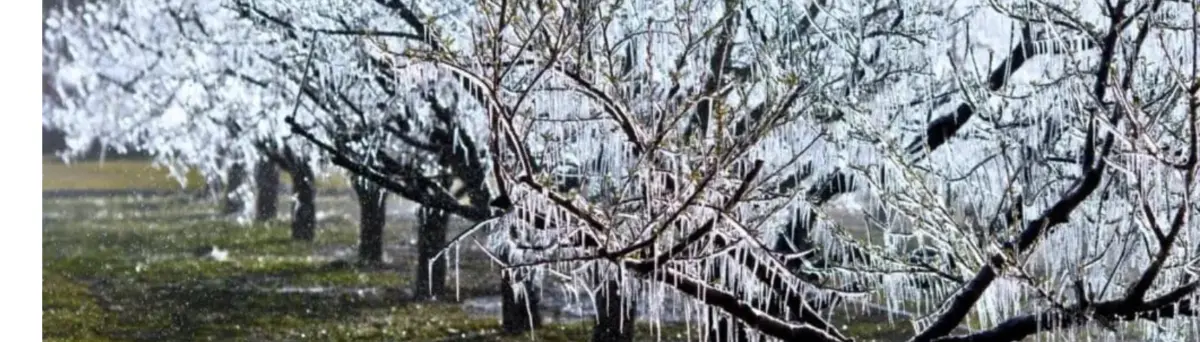
- The Transition to Bloom: Crops like peaches and blueberries are exceptionally sensitive during this phase. Once floral tissues open, even a light, fleeting frost can destroy reproductive organs—pistils and stamens—rendering fertilization impossible.
- Invisible Injury: A primary frustration for orchard managers is the delayed visibility of frost damage. Blossoms may appear structurally normal immediately following a cold snap, masking the destruction. Days later, however, growers discover that the flowers have failed to set fruit, resulting in devastating yield drops or complete crop failures.
- The Pollination Bottleneck: Cool weather events rarely arrive in isolation; they are typically accompanied by overcast skies and brisk winds. These conditions suppress pollinator activity. Honeybees and native pollinators become largely inactive under cool, cloudy, or windy parameters, drastically shortening an already brief flowering window.
Beyond immediate reproductive failure, cold stress induces systemic physiological slowdowns. Delayed leaf extension, prolonged and erratic bloom periods, and sluggish fruit development are hallmarks of late-season cold exposure.
Ironically, an extended bloom period increases overall exposure risk, forcing flowers into contact with subsequent frost events. Over time, this cumulative stress drains the tree’s carbohydrate reserves and diminishes overall vitality, creating a negative feedback loop that depresses not only the current season’s harvest but also the following year’s production capacity.
The Row Crop Dilemma: Germination and Establishment
While orchards deal with reproductive shock, North Florida row crops—including watermelons, sweet corn, and tender vegetables—face an entirely different set of obstacles during germination and early vegetative development.
- Cold Soil Stagnation: Spring-planted crops rely on specific thermal minimums for uniform seed germination and root vigor. When soils remain cold, the germination process stalls. This results in uneven emergence, destroying the crop uniformity essential for efficient commercial harvesting and market timing.
- Pathogen Pressure: Cold, wet conditions create an ideal environment for soil-borne pathogens. Seedling diseases such as Pythium and Rhizoctonia thrive in cool, damp soils, spiking the incidence of damping-off and causing severe early-season plant mortality.
- Transplant Shock: For crops established via transplants rather than direct seeding, cold air and soil temperatures exacerbate transplant shock. Root establishment slows to a crawl, leaving young plants vulnerable to opportunistic pests and secondary infections that easily exploit weakened plant tissues.
Supporting Context & Metrics: The Physics of Drought-Amplified Frost
Perhaps the most critical factor compounding this season’s vulnerability is the persistence of regional drought conditions. In agricultural meteorology, drought and frost are frequently analyzed as distinct, unrelated hazards. At the physiological and microclimatic levels, however, they are deeply intertwined.
Soil Moisture as a Thermal Buffer
The physical properties of soil play a massive role in microclimate temperature regulation during clear, cold nights:

- Moist Soils: Water has a high specific heat capacity. Moist soils absorb significant thermal energy from solar radiation throughout the day and release that stored heat slowly into the lower atmosphere after sunset. This radiative buffer often prevents ground-level air temperatures from plunging to damaging freezing thresholds.
- Dry Soils: Drought-stricken, dry soils possess a markedly lower heat capacity. They warm up rapidly under sunlight but lose heat just as quickly after dark. Without stored moisture to radiate warmth, dry fields experience accelerated cooling at the surface.
Consequently, two adjacent farming operations experiencing the exact same ambient air temperature can suffer wildly disparate outcomes based solely on soil moisture. A well-irrigated field maintains a microclimate buffer, whereas a bone-dry field experiences sharper, more damaging ground-level frost.
Physiological Stress Multiplication
Inside the plant, drought-induced water stress and cold stress share overlapping molecular pathways. Drought triggers cellular dehydration and increases the concentration of reactive oxygen species (ROS) within plant tissues. When a sudden cold snap hits a drought-stressed plant, the sudden drop in temperature causes cellular membrane rigidification and ice crystal formation in extracellular spaces.
A plant already weakened by water deficit lacks the turgor pressure and metabolic flexibility required to repair membrane damage or synthesize cryoprotectant proteins effectively. The result is a compounding injury profile where the combined biological toll far exceeds the sum of the individual stressors.
Official Statements and Industry Perspectives
Agricultural extension agents and regional crop advisors have stressed the importance of proactive risk management as North Florida continues to navigate volatile spring weather patterns.
"These temperature swings hit us at the absolute worst possible time in the production cycle," notes regional extension literature. "When fruit trees are breaking dormancy and row crops are struggling to establish uniform stands, even a brief excursion into freezing territory can alter the economics of an entire growing season."
Agronomists emphasize that growers cannot rely solely on historical weather norms. The increasing volatility of seasonal transitions demands a shift in operational planning.
"Growers should view existing drought conditions not merely as a water-availability problem, but as an active multiplier for frost risk," agricultural specialists advise. "Where water resources permit, pre-irrigating fields prior to a forecasted cold event remains one of the most effective mechanical defenses available. It stabilizes soil thermal properties and supports baseline plant resilience."
Furthermore, industry groups recommend strict adherence to updated weather models and localized soil temperature telemetry rather than relying on generalized county-level forecasts, which often fail to capture microclimatic variations dictated by topography and soil type.
Future Outlook: Building Resilience in a Changing Climate
As North Florida agriculturalists look toward the remainder of the spring season and prepare for future production cycles, the events of this year highlight the urgent need for long-endurance climate resilience strategies.
Short-Term Tactical Adjustments
For the immediate future, producers must remain on high alert. Key tactical adjustments include:
- Staggered Planting Schedules: Rather than committing entire acreages to a single early-season planting window, splitting plantings across multiple dates can hedge against total crop loss from sudden weather anomalies.
- Microclimate Monitoring: Investing in in-field meteorological sensors provides real-time data on ground-level temperatures and soil metrics, enabling precise deployment of protective measures such as wind machines, row covers, or overhead irrigation.
- Nutrient and Health Management: Maintaining optimal plant nutrition—particularly balanced potassium and calcium levels—enhances cell wall integrity, helping crops better tolerate both drought and thermal shock.
Long-Term Strategic Adaptations
Looking ahead, the growing frequency of erratic weather patterns underscores the importance of long-term structural investments in Florida agriculture:
- Varietal Selection: Breeding and selecting crop varieties with higher chilling-requirement thresholds or greater cold tolerance during early bloom stages will become paramount for orchard profitability.
- Water Infrastructure: Upgrading irrigation systems to ensure rapid, uniform water delivery is essential. Effective water management serves a dual purpose: mitigating drought stress while providing frost protection capabilities during critical freeze events.
- Soil Health Initiatives: Implementing cover crops, reducing tillage, and increasing organic matter content can significantly improve soil structure and water-holding capacity, buffering fields against both extreme dryness and rapid temperature swings.
Ultimately, while growers cannot control the vagaries of spring weather, meticulous planning, informed soil management, and a proactive approach to risk mitigation can mean the difference between economic distress and a successful harvest.

0 Comments