

By Derrick Conover | Published: March 18, 2026
Executive Overview
Agricultural producers across Columbia County and the broader North Florida region are grappling with a high-stakes convergence of climatic pressures this spring. Following what local extension experts hope will be the final cold front of the season, regional growers find themselves navigating a precariously narrow window of vulnerability. This latest temperature swing arrived precisely during the most sensitive phase of the annual production cycle—a time when perennial fruit trees are breaking dormancy and emerging from winter rest, and spring row crops are actively being planted or pushing through the soil.
In modern agriculture, timing is everything. When unseasonal cold snaps coincide with the delicate physiological transitions of budding and germination, even brief sub-optimal temperatures can cascade into significant economic losses, reduced crop yields, and compromised fruit quality. For Columbia County’s diverse agricultural sector—spanning high-value specialty fruit crops like peaches and blueberries, as well as essential row crops like watermelons and sweet corn—the stakes could not be higher.
Compounding the immediate threat of frost and freezing temperatures is a persistent backdrop of regional drought. While agriculturalists often evaluate frost and drought as distinct environmental hazards, their physiological and microclimatic impacts are deeply intertwined. Dry soils possess a severely diminished heat capacity compared to moist soils, meaning they lose heat rapidly after sunset and create colder near-ground microclimates that exponentially heighten frost risks. As North Florida producers work to safeguard their fields against these compounded stressors, vigilant management, close monitoring of weather models, and proactive mitigation strategies have become absolute necessities for economic survival this season.
Detailed Chronology and Physiological Impact: Fruit Trees Under Siege
The arrival of mid-March cold fronts places perennial fruit production on a razor’s edge. Understanding why these temperature drops are so devastating requires an examination of plant physiology across different seasonal phases.
The Transition from Dormancy to Bloom
During the dead of winter, deciduous fruit crops enter a state of physiological rest known as dormancy. In this protected state, crops such as peaches, plums, and blueberries exhibit remarkable resilience, tolerating freezing temperatures with little to no internal cellular damage. Hardened bark, dormant buds, and low metabolic activity act as natural buffers against winter extremes.
However, as daylight hours lengthen and ambient temperatures climb, internal biological signals trigger the termination of dormancy. Trees begin to mobilize nutrients, push out new buds, and enter the blooming phase. Crucially, as this transition accelerates, the cold tolerance of the plant declines precipitously.
Once blossoms fully open, their reproductive tissues—including the pistils, stamens, and developing ovaries—become acutely vulnerable to thermal shock. Even a light, transient frost that drops ambient temperatures slightly below freezing can rupture cell walls within these delicate structures. The consequences are often insidious:
- Delayed Symptom Expression: Injury is rarely visible immediately following a frost event. Blossoms may appear outwardly normal for several days, giving growers a false sense of security before the flowers ultimately wither, fail to fertilize, and drop from the tree.
- Reproductive Failure: In severe frost scenarios, total crop loss can occur within a matter of hours, wiping out an entire season of labor and investment before fruit set can even begin.
The Pollination Puzzle
Beyond direct tissue damage, late-season cold events introduce secondary biological hurdles, most notably the disruption of pollinator activity. Successful fruit set in crops like blueberries and peaches relies heavily on the synchronized emergence of blossoms and the active foraging of managed honeybees and native pollinators.
Unfortunately, pollinators are notoriously sensitive to adverse weather conditions. Insects drastically reduce their flight activity and foraging behavior when ambient temperatures drop, or when conditions turn cloudy, windy, or damp. A cold front that stalls out during peak bloom can severely curtail the window of opportunity for effective pollination, resulting in poorly formed fruit, reduced fruit size, and drastically lower marketable yields, even if the blossoms themselves escape direct frost necrosis.
Long-Term Physiological Strains
The ramifications of a late-season cold snap extend far beyond immediate blossom loss. Cold stress induces systemic physiological slowdowns throughout the tree. Observers frequently note:
- Delayed Leaf-Out: The structural development of canopy foliage is pushed backward, reducing the tree’s photosynthetic capacity at a time when energy demands are spiking.
- Extended Bloom Periods: Rather than flushing uniformly, trees subjected to fluctuating temperatures may experience staggered, prolonged blooming cycles. Paradoxically, this increases the crop’s risk profile by dragging out the window of exposure to subsequent, late-season cold fronts.
- Depleted Carbohydrate Reserves: Repeated cellular repair and thermal stress force the tree to expend valuable stored energy reserves. This metabolic drain not only compromises the current season’s yield potential but can also diminish overall tree vigor, stunting growth and lowering productivity potential for the following year’s harvest.
Row Crops and Early-Season Vulnerability
While fruit orchards contend with the physiological shocks of blooming perennials, North Florida row crop producers face an entirely different—yet equally formidable—set of operational challenges. Spring-planted staples such as watermelons, sweet corn, and various warm-season vegetables rely on precise thermal thresholds for successful establishment.

Cold Soils and Germination Failures
Germination and early root development are heavily dictated by soil temperatures. When sudden cold fronts sweep through Columbia County, they chill the upper soil profiles, triggering a cascade of negative effects:
- Erratic Emergence: Cool soils delay germination significantly, and because soil temperatures and moisture profiles vary naturally across a field, emergence becomes uneven. In high-value uniformity-dependent crops like watermelons—where harvest timing and fruit sizing dictate market value—this variability severely undercuts operational efficiency and packout percentages.
- Pathogen Activation: Cold, saturated soils create ideal microhabitats for soil-borne fungal pathogens. Pathogens such as Pythium, Rhizoctonia, and Fusarium thrive in damp, chilly environments while slowing down the metabolic defenses of young seedlings. This dramatically escalates the incidence of damping-off, root rot, and early-season plant mortality.
Direct Damage to Emerged Seedlings and Transplants
For crops that have already broken the soil surface or been established via field transplants, frost represents an acute physical threat. Young plant tissues possess thin cuticles and high water content, making them exceptionally susceptible to:
- Leaf Burn and Necrosis: Ice crystal formation within leaf tissue punctures cell membranes, leading to rapid tissue collapse, water-soaking, and eventual browning or blackening of the foliage.
- Stem Injury and Mortality: Severe freezes can girdle tender herbaceous stems near the soil line, causing structural collapse and plant death.
- Prolonged Transplant Shock: Transplanted vegetables already experience a natural adjustment period as roots re-establish contact with native soils. When sub-optimal cold temperatures hit immediately post-transplant, root growth stalls completely. This extended lag phase leaves vulnerable plants stranded in a weakened state, making them prime targets for opportunistic pests and secondary infections that exploit compromised plant defenses.
The Compounding Threat: How Drought Amplifies Cold Damage
To fully appreciate the severity of recent agricultural hurdles in North Florida, one must analyze the concurrent drought conditions plaguing the region. While meteorological tracking often separates drought stress from frost events, their interaction at the microclimatic and physiological levels creates a compounding crisis for local producers.
The Physics of Soil Heat Capacities
From a field-level management perspective, soil moisture acts as a critical thermal buffer.
- The Role of Moist Soils: Water possesses a remarkably high specific heat capacity. Soils with adequate moisture absorb substantial thermal energy from solar radiation throughout the day and release that heat slowly upward into the crop canopy during the night. This natural radiative buffering can elevate near-ground ambient temperatures by several critical degrees, often preventing air temperatures from crossing the freezing threshold at the plant canopy level.
- The Danger of Dry Soils: Conversely, dry soils have a dramatically lower heat capacity. They absorb less solar energy during daylight hours and cool down rapidly once the sun sets. Without moisture to store and radiate heat, dry agricultural fields experience accelerated radiative cooling, leading to significantly colder near-ground temperatures—a phenomenon known commonly as a "radiation frost."
Consequently, two separate fields experiencing identical regional air temperatures can endure drastically different outcomes based solely on soil moisture status. A dry field is markedly more prone to severe frost injury than a well-watered adjacent parcel.
Physiological Stacking of Stressors
Beyond microclimatic temperature modification, drought conditions prime plants for heightened physiological damage when cold weather arrives. Drought-stressed plants typically exhibit:
- Impaired Cellular Osmoregulation: Chronic water deficits reduce cell turgor pressure and disrupt normal solute concentrations within plant vacuoles. Without optimal internal water balance, plant cells are far more susceptible to mechanical rupture when ice crystals form in extracellular spaces.
- Reduced Natural Resilience: Plants already fighting off drought stress possess depleted vigor, lower baseline carbohydrate synthesis, and compromised immune responses. When a freeze is layered on top of ongoing drought, the plant lacks the metabolic machinery required to bounce back, turning what might have been a minor setback into catastrophic crop failure.
For North Florida growers, these dynamics underscore the necessity of viewing dry soil conditions as a primary risk multiplier. Where water allocations and irrigation infrastructure permit, pre-irrigating fields prior to a forecasted cold front can provide an indispensable layer of dual-action protection: bolstering plant cellular hydration while simultaneously elevating field microclimate temperatures through radiant soil heat release.
Official Insights and Extension Guidance
As local agricultural extension agents work on the ground with affected farm operations, agricultural leadership emphasizes the importance of proactive risk management. Derrick Conover and regional agronomic specialists point out that while growers cannot control weather anomalies, the margin between success and catastrophic loss frequently hinges on preparedness and timely tactical adjustments.
According to agricultural extension communications, managing modern weather volatility requires a three-pronged approach:
- Dynamic Planting Schedules: Growers are advised to avoid rushing early planting windows when long-term weather models hint at lingering cold fronts or persistent atmospheric instability. Staggering planting dates can also spread risk, ensuring that an entire farm’s output is not locked into a single vulnerable developmental phase.
- Aggressive Monitoring Protocols: Producers must maintain real-time tracking of localized weather forecasts, soil temperature sensors, and canopy-level microclimate data. Relying solely on regional general forecasts can lead to miscalculations, as micro-topography, elevation, and soil type cause significant localized variations in frost severity.
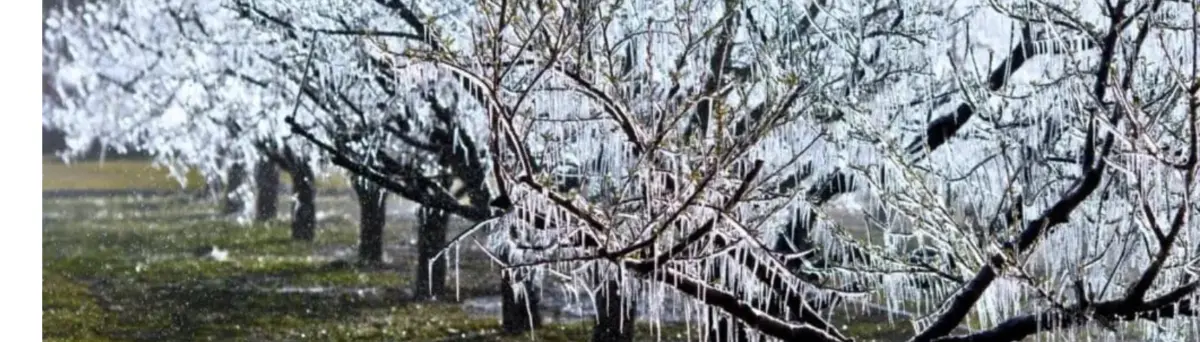
- Proactive Mitigation Implementation: Where economically and logistically feasible, deploying protective infrastructure—such as overhead irrigation systems for freeze protection, row covers for high-value vegetable crops, and strategic wind machines—can mitigate the worst impacts of late-season cold events. Furthermore, maintaining proper soil moisture profiles ahead of predicted temperature drops remains one of the most cost-effective defensive measures available against radiation frosts.
Future Outlook: Building Long-Term Agricultural Resilience
Looking forward, Columbia County’s agricultural community faces an increasingly unpredictable climatic landscape. As late-season cold fronts collide with persistent regional drought patterns, local producers are forced to adapt standard operational calendars and management philosophies.
The events of this season serve as a stark reminder of the fragile interface between agriculture and atmospheric science. Moving forward, regional research institutions, extension offices, and local producers will need to double down on resilience-building strategies. This includes investing in improved irrigation efficiency to combat drought and manage soil thermal properties, adopting drought-tolerant and cold-hardier cultivar selections as they become available through agricultural breeding programs, and refining microclimate monitoring networks across North Florida.
Ultimately, navigating these volatile seasonal transitions requires eternal vigilance. As growers evaluate their fields in the wake of this week’s cold snap, the meticulous implementation of protective measures, combined with a deep understanding of plant physiology and soil physics, will determine which farm operations successfully bridge the gap between a challenging season and a profitable harvest.

0 Comments