

By Derrick Conover
Published: March 18, 2026
Executive Overview
Agricultural producers across Columbia County and the broader North Florida region are grappling with a high-stakes convergence of environmental stressors. Following what local agricultural specialists hope to be the final cold front of the season, regional farms find themselves navigating a precarious window in the annual production cycle. This latest temperature swing has arrived precisely as perennial fruit trees break winter dormancy and producers accelerate the planting and emergence of vital spring row crops.
The timing could hardly be more challenging. When unseasonal cold weather intersects with this biological transition phase, even brief dips in temperature can trigger cascading negative impacts on crop performance, physiological development, and ultimate yield potential. Compounding the threat of frost and freezing temperatures, North Florida remains locked in persistent drought conditions. This lack of soil and atmospheric moisture acts as a dangerous force multiplier, intensifying the physical toll of cold weather on both emerging seedlings and established orchards.
For commercial growers, navigating this volatile intersection of drought and freeze requires vigilant monitoring, strategic irrigation management, and a comprehensive understanding of plant physiology. This report examines the direct and indirect impacts of the recent cold snap, analyzes the synergistic threat posed by ongoing drought conditions, and outlines critical mitigation strategies for agricultural producers across the region.
Detailed Chronology: The Anatomy of a Late-Season Weather Event
The vulnerability of agricultural systems to late-season cold fronts is dictated less by the absolute temperature than by the precise timing of the weather event relative to the phenological stage of the crop. As winter yields to spring, the internal clocks of plants trigger physiological transformations that, while necessary for growth, strip away their natural cold hardiness.
Fruit Tree Production and the Vulnerability of Bloom
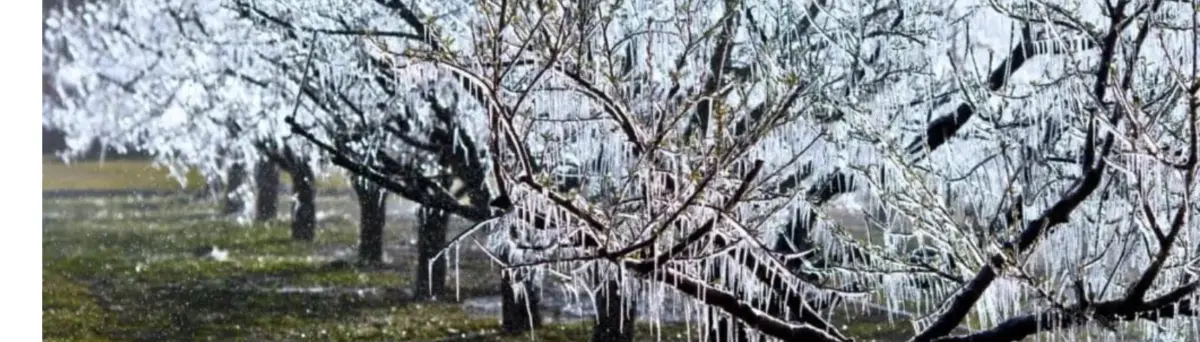
During the depths of winter dormancy, perennial fruit crops such as peaches, blueberries, and blackberries can withstand sub-freezing temperatures with little to no structural or tissue damage. Low metabolic activity and protective biochemical adaptations shield them from harm. However, as ambient temperatures warm and daylight hours lengthen, these trees begin to push buds and enter the bloom phase.
As metabolic activity accelerates, cold tolerance declines precipitously. Once flowers are open, reproductive tissues become acutely sensitive to frost.
- Immediate vs. Delayed Injury: The damage inflicted by a light frost during peak bloom is not always immediately apparent. Blossoms may appear intact and normal in the immediate aftermath of a cold event, only to fail in developing into fruit days later due to compromised reproductive structures. In severe frost scenarios, growers face complete crop failure.
- Pollination Disruptions: Beyond direct tissue damage, the physical environment during a cold snap severely inhibits pollination. Major pollinators—including honeybees and native species—exhibit sharply reduced activity under cool, cloudy, or windy conditions. Because the window for successful flower pollination is already remarkably narrow, a multi-day cold front can permanently close the opportunity for fruit set, even if the blossoms themselves survive the low temperatures.
Physiological Sluggishness and Cumulative Stress
The repercussions of a late-season cold event extend well beyond immediate tissue death or pollination failure. When temperatures plunge during the active growth phase, overall tree physiology experiences a pronounced slowdown.
- Delayed Development: Growers frequently observe delayed leaf-out, extended bloom periods, and sluggish fruit development following a late-season cold shock. Paradoxically, an extended bloom period can expose the crop to compounded risks by stretching the vulnerability window over multiple, successive minor frost events.
- Depleted Reserves: Repeated exposure to temperature stress drains a tree’s vital carbohydrate reserves. Beyond depressing the current season’s yield potential, this chronic stress weakens tree vigor, directly threatening productivity and survival in subsequent production cycles.
Row Crops: Germination, Establishment, and Early Growth
While perennial fruit growers monitor blossoms, North Florida row crop producers face an entirely different—yet equally critical—set of challenges. Spring-planted commodities across the region, including watermelons, sweet corn, and various tender vegetables, rely heavily on warm soil and ambient temperatures during germination and early vegetative development.
When cold fronts sweep through, dropping soil temperatures below optimal thresholds, the germination process stalls.

- Uneven Stands: Cool, damp soils cause uneven germination. In high-value crops like watermelons—where field uniformity is paramount for efficient harvest scheduling, fertigation, and pest management—staggered emergence compromises entire production blocks.
- Pathogen Pressures: Cold, wet soil conditions provide an ideal environment for soil-borne pathogens. Pathogens responsible for damping-off and early-season seedling blights thrive under these stresses, leading to significant plant population losses before the crop ever establishes a viable canopy.
- Transplant Shock: For crops established via transplants rather than direct seeding, cold weather exacerbates transplant shock. Root system establishment slows to a crawl, leaving young plants structurally vulnerable. This prolonged stagnation in growth makes young plants easy targets for opportunistic pests and secondary diseases that exploit weakened plant tissues.
Supporting Context & Metrics: The Drought-Frost Multiplier
While freezing temperatures and frost are formidable adversaries on their own, their destructive capacity is dramatically amplified when paired with ongoing drought conditions. Throughout recent seasons, North Florida agricultural operations have had to manage moisture deficits alongside volatile spring weather, creating a synergistic disaster for vulnerable crops.
The Microclimatic Physics of Dry Soils
To understand why drought worsens cold damage, one must examine the physical properties of the soil-atmosphere interface.
- The Buffering Capacity of Moist Soil: Under normal conditions with adequate soil moisture, the earth acts as a thermal battery. Moist soil absorbs and retains substantial heat energy from solar radiation during daylight hours. After sunset, it radiates this stored thermal energy slowly upward into the immediate microclimate surrounding the crop canopy. This continuous release of heat provides a natural buffer, often preventing air temperatures immediately around the plant from dropping to critical frost thresholds.
- The Vulnerability of Dry Soil: Conversely, dry soils possess a drastically lower heat capacity. They fail to absorb and store comparable amounts of thermal energy during the day and cool down rapidly immediately following sunset.
The practical consequence of this physics is stark: two adjacent fields experiencing the exact same macro-level air temperature can sustain radically different levels of frost injury based solely on soil moisture. A dry field will experience significantly colder near-ground temperatures, vastly increasing the frequency and severity of frost formation. For North Florida growers, persistent drought must be categorized not merely as a water-deficit issue, but as a primary risk multiplier for cold-weather crop damage.
Official Statements and Industry Guidance
Agricultural extension specialists and industry leaders emphasize that proactive management is the single most effective defense against the combined threats of late-season freezes and drought.
"When drought conditions and cold snaps collide, growers cannot afford to view these weather challenges in isolation," notes field research summaries from University of Florida Institute of Food and Agricultural Sciences (IFAS) extension personnel. "The physiological compounding of water stress and thermal shock requires an integrated management approach. Maintaining adequate soil moisture prior to a forecasted cold event isn’t just about keeping the plant hydrated; it is a critical thermodynamic strategy to moderate field-level microclimates and protect delicate tissue."
Agronomists urge producers to utilize this transitional period to review risk-management protocols. Key recommendations from regional agricultural advisors include:
- Enhanced Monitoring: Upgrading real-time weather monitoring equipment at the field level to track ground-level temperatures rather than relying solely on regional forecasts.
- Pre-Event Irrigation: Where water rights and infrastructure permit, thoroughly wetting the soil prior to a forecasted freeze to maximize latent heat storage and radiation.
- Strategic Planting Delays: Exercising caution with early planting dates for sensitive warm-season row crops until sustained soil temperature stabilization is confirmed.
Future Outlook: Resilience in an Era of Weather Volatility
As agricultural producers look toward the remainder of the season and plan for future production cycles, the overarching takeaway is the necessity of heightened vigilance and operational flexibility. Weather patterns across the Southeastern United States continue to exhibit increased volatility, characterized by erratic temperature swings that defy traditional historical averages.
For Columbia County and North Florida agriculture, long-term economic viability will depend heavily on adopting climate-resilient practices. This includes investing in modern irrigation infrastructure capable of dual-purpose deployment (drought mitigation and freeze protection), diversifying crop varieties for enhanced thermal tolerance, and utilizing advanced decision-support tools that integrate soil moisture metrics with microclimate weather forecasting.
By respecting the complex interplay between water deficits and thermal stress—and by implementing rigorous, timely protective measures—growers can safeguard their operations, protect capital investments, and successfully navigate the delicate transition from winter dormancy to a productive harvest season.

0 Comments