

By Jay Capasso (UF/IFAS Extension), Jason Mallard (UGA Cooperative Extension), and Phillip Edwards (UGA Cooperative Extension)
Published: December 4, 2024 | Last Updated: September 9, 2025
Executive Overview
Water is arguably the single most critical input for maximizing crop yield, protecting agricultural investments, and securing regional food supplies. However, as shifting climatic patterns and increasing regulatory scrutiny place unprecedented demands on agricultural water resources, the traditional paradigm of simply "turning on the pivot" is no longer sustainable. Modern farming requires a precise, scientific understanding of how water moves through an irrigation system and how effectively it is utilized by the crop.
To truly optimize agricultural water use, growers must master two foundational, yet frequently misunderstood, metrics: Distribution Uniformity (DU) and Irrigation Efficiency. While these terms are often used interchangeably in casual agricultural conversations, they measure entirely different aspects of system performance. Distribution uniformity evaluates how evenly water is spread across a field, whereas irrigation efficiency measures what percentage of that applied water is actually put to beneficial use by the crop root zone.
This article provides an authoritative breakdown of these concepts, explores the mechanical and environmental variables that compromise system performance, details the role of emerging technologies like soil moisture sensors, and highlights the invaluable free resources available to agricultural producers through the University of Florida’s Institute of Food and Agricultural Sciences (UF/IFAS) Extension, the University of Georgia (UGA) Cooperative Extension, mobile irrigation labs, and regional conservation agencies.
Detailed Chronology & Operational Framework
Understanding how irrigation performance degrades over time requires looking at the lifecycle of a modern overhead irrigation system—specifically center pivot and linear move systems, which dominate commercial farming landscapes across the Southeastern United States.
Phase 1: Installation and Baseline Calibration
When a center pivot or linear irrigation system is first engineered and installed, it is calibrated to achieve optimal Distribution Uniformity (DU)—frequently targeting an elite 90% benchmark. At this pristine stage, pressure regulators are factory-fresh, nozzles are unblemished by mineral buildup or wear, and the topographical mapping of the field is accurately matched to pump capacities. During this honeymoon phase, water is delivered evenly across 90% of the field, minimizing localized drought stress and eliminating areas of excessive saturation.
Phase 2: Operational Wear and Tear
As seasons progress, mechanical systems inevitably experience wear. Friction losses accumulate, pressure fluctuations develop along the pipeline, and nozzles begin to warp or enlarge under continuous high-pressure water flow. Furthermore, mineral scaling (such as calcium or iron deposits from groundwater sources) begins to clog specific sprinkler heads. Without proactive maintenance, DU begins a slow, stealthy decline. A grower might notice patchy crop maturity or irregular canopy heights, often misdiagnosing these symptoms as soil variability or pest pressures when the root cause is actually failing distribution uniformity.
Phase 3: Diagnostic Intervention and Assessment
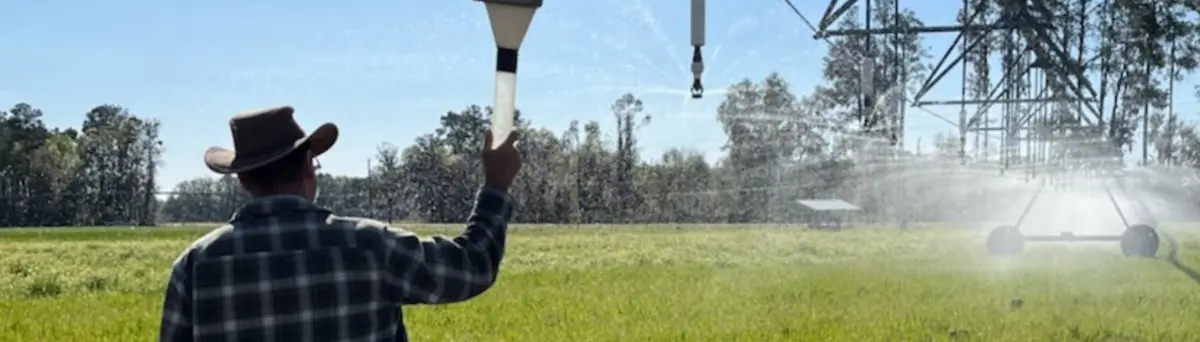
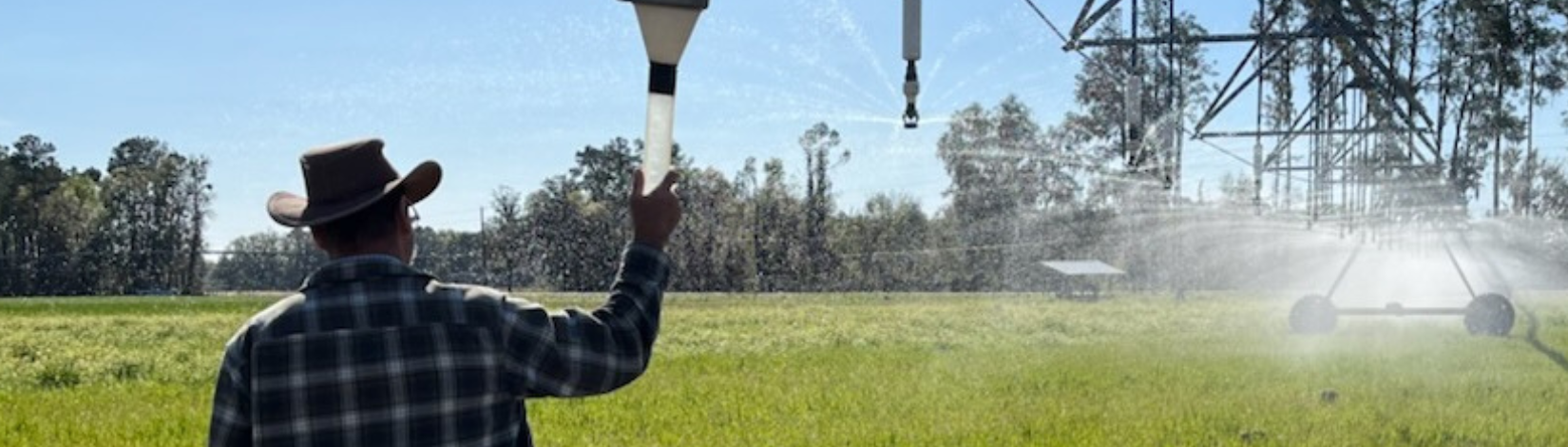
When operational inefficiencies impact yield, growers must intervene. In regions like the Suwannee Valley and throughout Florida and Georgia, this phase involves engaging specialized regional services—such as mobile irrigation labs or UGA Cooperative Extension agents—to conduct comprehensive audits. Using standardized evaluations like the "catch can method," technicians quantify the exact spatial distribution of water across the field.
Phase 4: Remediation and Technological Integration
The final operational phase involves targeted upgrades, maintenance overhauls, and the integration of precision tools like soil moisture sensors. By identifying failing regulators, misaligned end guns, or worn nozzles, growers can restore their system’s hydraulic integrity. Simultaneously, positioning soil moisture sensors outside of compromised distribution zones ensures that irrigation scheduling decisions are based on accurate, field-representative data rather than skewed anomalies caused by poor DU.
Supporting Context & Metrics: DU vs. Irrigation Efficiency
To manage water effectively, agricultural producers must draw a sharp distinction between Distribution Uniformity and Irrigation Efficiency. Each metric targets a distinct mechanical and biological process.
Decoding Distribution Uniformity (DU)
Distribution uniformity measures the spatial consistency of water application across a management zone or field. Achieving a DU rating of 90% is an attainable, gold-standard goal for modern center pivot and linear overhead systems. A 90% DU means that 90 percent of the field receives water in a uniform, predictable manner, drastically reducing water waste and eliminating the spatial extremes of over-irrigation and under-irrigation.
The industry-standard method for calculating DU is the catch can method. Field technicians place a grid of collection containers (cans) at uniform intervals across the span of the irrigation path. Once the system completes a pass, the depth of water collected in each can is measured and recorded. The mathematical formula evaluates the average depth of the lowest 25% of measurements and divides it by the total average depth of water applied across all catch cans:
$$textDU = left( fractextAverage Catch Depth of Lowest 25%textTotal Average Catch Depth right) times 100$$
Why Good DU is Essential for Chemical Applications
Distribution uniformity becomes exponentially more critical when growers utilize fertigation or chemigation—the practice of injecting liquid fertilizers, micronutrients, or crop protection chemicals directly through the irrigation system. If water distribution is erratic, chemical distribution will mirror those irregularities. A poor DU results in severe nutrient hotspots and nutrient deserts, leading to highly variable crop growth, uneven canopy development, and localized yield suppression.
Unpacking Irrigation Efficiency
While DU evaluates where water goes across space, Irrigation Efficiency evaluates how much of the applied water is successfully consumed and utilized by the target crop. The foundational equation is:
$$textIrrigation Efficiency = fractextWater Beneficially UsedtextTotal Water Applied$$
For agricultural operations throughout the humid Southeast, "beneficial use" almost exclusively translates to meeting crop evapotranspiration (ET) requirements—the combined loss of water through soil evaporation and plant transpiration necessary to sustain optimal physiological growth.
In contrast to arid western agricultural regions, where irrigation water is frequently required to leach harmful salts out of the root zone, Southeastern growers rarely face severe soil salinity challenges. Consequently, leaching is viewed as an inefficient loss of water and nutrients rather than a beneficial use. Other secondary beneficial uses, though minimal compared to ET, include specialized climate control (such as frost protection) or intentional weed seed germination followed by timely mechanical or chemical eradication.
Factors That Impact DU and System Performance
A myriad of mechanical, environmental, and operational variables conspire to degrade both DU and overall irrigation efficiency. Recognizing these disruptive factors is the first step toward effective mitigation:
- Flow Rate Variability: Caused by underlying pressure differences, friction losses along extended pipelines, or dramatic changes in field elevation. As water travels uphill or downhill, gravitational forces alter operating pressures at the sprinkler nozzle.
- Pressure Regulator Malfunctions: Pressure regulators are designed to maintain constant downstream pressure regardless of fluctuations in supply pressure. When regulators fail, sprinklers receive inconsistent flow, distorting spray patterns, accelerating mechanical wear, and inflating pumping energy costs.
- Nozzle Wear and Clogging: Sediment, sand, and mineral precipitates in well water gradually erode or plug nozzle orifices. Worn nozzles discharge excessive volumes of water in distorted streams, while clogged nozzles create dry streaks in the field.
- Improper Sprinkler Spacing and Design: Engineering errors during initial system design—such as incorrect spacing between drop tubes or improper nozzle selection for specific crop canopies—permanently handicap distribution uniformity.
- End Gun Misalignment: End guns cover large peripheral areas outside the main structural span of a center pivot. If misaligned, their spray patterns overlap excessively with areas already saturated by internal overhead sprinklers, causing severe over-application zones.
- Environmental Disruptions: High ambient winds distort overhead sprinkler trajectories, causing excessive drift and localized dry patches. Additionally, dense crop canopies can intercept and block water droplets before they reach the soil surface.
- Operational Practices: Abrupt system startups and shutdowns can cause pressure surges and uneven water application pulses. Furthermore, uncoordinated pipe diameter transitions can create hydraulic bottlenecks.
- Edge Effects: The perimeter of any irrigated field experiences inherent application irregularities due to the overlapping patterns of boundary sprinklers transitioning from full-circle to partial-circle sweeps.
The Critical Role of Soil Moisture Sensors
Soil moisture sensors are indispensable diagnostic instruments for evaluating irrigation scheduling and system performance. However, their utility is intimately tied to the concepts of DU and efficiency.
To secure accurate, actionable data, agricultural producers must exercise extreme care when selecting sensor placement sites. Placing soil moisture sensors in locations with poor distribution uniformity invalidates the integrity of the data. For instance, if a sensor is accidentally installed in a low-DU zone that receives chronically under-applied water, the telemetry will indicate premature soil moisture depletion. This false signal will trick the grower into running irrigation cycles too frequently or for too long, inadvertently waterlogging the rest of the field.
Conversely, sensors placed in areas of over-application will reflect artificially high moisture levels, masking genuine drought stress occurring elsewhere in the crop canopy. Therefore, agronomic best practices dictate that soil moisture sensors must be installed in statistically representative areas of the field—ideally verified through a professional mobile irrigation lab audit—to ensure that automated irrigation scheduling accurately mirrors true crop water needs.
Official Statements and Regional Support Resources
Farmers in Florida and Georgia do not have to navigate the complexities of irrigation management alone. State extension services and regional agencies offer robust, hands-on assistance programs designed to evaluate, audit, and upgrade agricultural irrigation infrastructure.
Florida Resources: Mobile Irrigation Labs and BMPs
In Florida, growers have direct access to specialized Mobile Irrigation Labs (MILs). These traveling technical units travel directly to agricultural operations to evaluate the physical performance of center pivot and linear move systems, generating comprehensive reports on distribution uniformity and system efficiency.
According to UF/IFAS Extension specialists, these professional evaluations provide the empirical data necessary for growers to pinpoint mechanical failures. Furthermore, producers enrolled in the Florida Department of Agriculture and Consumer Services (FDACS) Best Management Practices (BMP) program may qualify for agricultural cost-share opportunities. These financial assistance programs help offset the capital expenses required to upgrade worn nozzles, replace failing pressure regulators, or overhaul outdated distribution manifolds.
(For detailed scheduling and local contact information regarding Florida’s mobile labs, growers can visit the official FDACS Mobile Irrigation Labs Portal.)
Georgia Resources: UGA Cooperative Extension and NRCS Support
Across the state line in Georgia, the UGA Cooperative Extension plays an equally vital role, providing expert agricultural engineering support and conducting rigorous on-farm evaluations of center pivot and linear move systems. UGA Extension agents work hand-in-hand with producers to analyze application rates, pressure profiles, and overall irrigation scheduling strategies.
For Georgia agriculturalists looking to modernize their infrastructure following an extension audit, financial and technical assistance is readily available through the United States Department of Agriculture’s Natural Resources Conservation Service (USDA-NRCS) environmental quality and conservation programs.
Future Outlook and Strategic Recommendations
As regional water tables face mounting pressures from population growth and shifting climatic extremes, the future of Southeastern agriculture will increasingly depend on hyper-efficient water management. Moving beyond intuitive guessing to data-driven precision irrigation is no longer an optional luxury—it is an economic and environmental necessity.
To future-proof operations and maximize return on investment, agricultural producers should adopt the following strategic roadmap:
- Schedule Regular Audits: Partner with UF/IFAS Extension, UGA Cooperative Extension, or local Mobile Irrigation Labs to conduct periodic DU evaluations on every center pivot and linear move system.
- Audit Sensor Placement: Review existing soil moisture sensor networks. Ensure sensors are not located in outlier zones plagued by poor distribution uniformity or edge effects.
- Proactively Maintain Hardware: Implement a routine off-season maintenance schedule to inspect pressure regulators, clear mineral-clogged nozzles, and check end gun alignments.
- Leverage Cost-Share Programs: Take advantage of FDACS BMP enrollment in Florida or USDA-NRCS initiatives in Georgia to offset the financial investment of upgrading irrigation technology.
- Track Efficiency Metrics: Continuously correlate applied water totals against crop evapotranspiration (ET) data to ensure every drop of pumped groundwater directly supports beneficial crop growth.
By embracing these evidence-based practices, growers can simultaneously conserve vital natural resources, reduce pumping and energy expenditures, and achieve peak crop yields.

0 Comments