

By Jay Capasso
Published: August 20, 2024 | Updated: September 9, 2025
Executive Overview
Water policy in North Florida is undergoing a critical transformation. The Florida Department of Environmental Protection (FDEP), working in close collaboration with the Suwannee River and St. Johns River Water Management Districts, is advancing a comprehensive regulatory framework centered on the establishment of new Minimum Flows and Levels (MFLs) for the Santa Fe and Ichetucknee Rivers and their associated priority springs.
At its core, an MFL is the legally defined threshold below which further water withdrawals will cause significant harm to the ecology or water resources of a given area. While these ecological thresholds are designed to protect and restore iconic North Florida waterways, the implications of the proposed rule extend far beyond environmental conservation. The policy stands to significantly alter water use permitting, impose strict conservation standards, and require mitigation strategies for a broad cross-section of water users—with particularly acute impacts on agricultural producers throughout the region.
The regulatory footprint of this proposed rule covers the entire North Florida Regional Water Supply Partnership area. This sprawling jurisdiction spans fifteen counties: Alachua, Baker, Bradford, Clay, Columbia, Duval, Flagler, Gilchrist, Hamilton, Nassau, Putnam, St. Johns, Suwannee, and Union. Within these boundaries, agricultural operations, industrial entities, and public utilities alike must prepare for a more rigorous permitting landscape.
Although the rule is moving through the developmental pipeline with an anticipated finalization target aligned with the 2026 Florida legislative session, stakeholders are facing an immediate and critical window for engagement. Regulatory agencies opened a public comment period, underscoring the urgency for affected parties to understand the math, the mandates, and the long-term operational adjustments required under the proposed framework.
Detailed Chronology and Regulatory Framework
The path toward updated MFLs for the Lower Santa Fe and Ichetucknee Rivers is rooted in decades of hydrological monitoring, scientific assessment, and evolving state water policy mandates. Understanding the timeline and the mechanics of the rulemaking process is essential for permittees navigating the upcoming regulatory shifts.
The Legislative and Administrative Timeline
- Initial Assessments & Monitoring: For years, water management districts have tracked declining flows at key gages along the Santa Fe and Ichetucknee river systems, prompting the scientific baseline studies that underpin the current MFL recommendations.
- Rule Proposal and Stakeholder Engagement: FDEP, alongside the Suwannee River and St. Johns River Water Management Districts, formally advanced the proposed MFL rule framework, introducing strict compliance obligations tied to consumptive use permits (CUPs).
- Public Comment Window: Stakeholders, agricultural groups, and industry representatives were given a formal opportunity to submit feedback, with the public comment period closing on October 31, 2024.
- Legislative Horizon: The rulemaking process is structured to culminate ahead of the 2026 Florida legislative session, where the final statutory adjustments and rule implementations are expected to take formal effect.
Consumptive Use Permits and Compliance Points
Under the proposed rule, the updated MFLs will serve as the absolute baseline for regulating water withdrawals through the consumptive use permit process. The regulation establishes three primary MFL compliance points, designated by specific river gages:
- Santa Fe River near Fort White
- Santa Fe River at US Highway 441 near High Springs
- Ichetucknee River at Highway 27 near Hildreth
Current hydrological data reveals a stark division among these compliance points. The gage near Fort White currently meets the required MFL standards, indicating that water resources at that specific location are currently stable. However, the gages near High Springs and Hildreth are officially classified as being in recovery. This recovery status means that baseline flow levels at these locations are persistently below the required MFL thresholds, triggering mandatory corrective actions under state law.
Supporting Context & Metrics: Calculating Offsets and Managing Impacts
For existing and prospective permittees, the most challenging aspect of the proposed rule lies in how compliance is evaluated and how deficits must be offset. The regulation places the onus squarely on permit holders to demonstrate that their water withdrawals do not exacerbate conditions at recovering MFL compliance points.
Evaluating Individual vs. Total Impacts
When a consumptive use permit comes up for modification or renewal, regulatory agencies will conduct a thorough evaluation of the impact of all water withdrawals on the designated compliance points. If a permittee’s withdrawals impact multiple MFL compliance points that are currently in a state of recovery, their regulatory requirements will be anchored to the compliance point where their individual impact is greatest.
To ensure fairness while holding users accountable, the rule establishes a mathematical formula to determine a permittee’s precise "offset" requirement—effectively establishing their proportionate financial or operational share of the regional water deficit.
The Offset Calculation Formula
The formula utilizes baseline average water use data spanning from 2014 to 2018. A permittee’s required offset is derived by determining their individual share of the total impact at a recovering compliance point, multiplied by the historical Net Flow Deficit for that area.
$$textProportionate Share = left( fractextIndividual Impact (I_p)textTotal Impact (It) right) times textNet Flow Deficit (Infd)$$
Real-World Calculation Example:
To understand how this translates into practical metrics, consider the following regulatory scenario provided by water management planners:
- Individual Permittee Impact ($I_p$): A agricultural producer’s historical water use reduces the flow at a recovering MFL compliance point by 1 cubic foot per second (cfs).
- Total Cumulative Impact ($I_t$): The combined impact from all permitted water uses in that baseline period equals 10 cfs.
- Net Flow Deficit ($I_nfd$): The established Net Flow Deficit for the recovering MFL compliance point is 6.3 cfs.
Applying the formula:
$$textProportionate Share = left( frac1 text cfs10 text cfs right) times 6.3 text cfs = 0.63 text cfs$$
Under this scenario, the permittee would be required to offset 0.63 cfs of water use—either through efficiency upgrades, operational reductions, or participation in regional offset projects—to ensure their operations do not worsen the flow deficit at the High Springs or Hildreth compliance points.
Agricultural Mandates: Conservation, Efficiency, and Modernization
Because agriculture accounts for a substantial share of consumptive water use within the North Florida Regional Water Supply Partnership area, the proposed rule places heavy emphasis on on-farm water conservation, irrigation system performance, and technology adoption.
Irrigation System Maintenance and Distribution Uniformity (DU)
Distribution uniformity (DU) measures how evenly an irrigation system applies water across a designated field. Higher DU percentages mean less water is wasted through over-irrigation in certain zones and under-irrigation in others. Under the proposed rule, agricultural permittees must maintain their irrigation systems to meet strict minimum DU standards, which vary according to system technology:
- Micro-drip systems: Must achieve a DU of 80% to 90%
- Micro-spray systems: Must achieve a DU of 75% to 85%
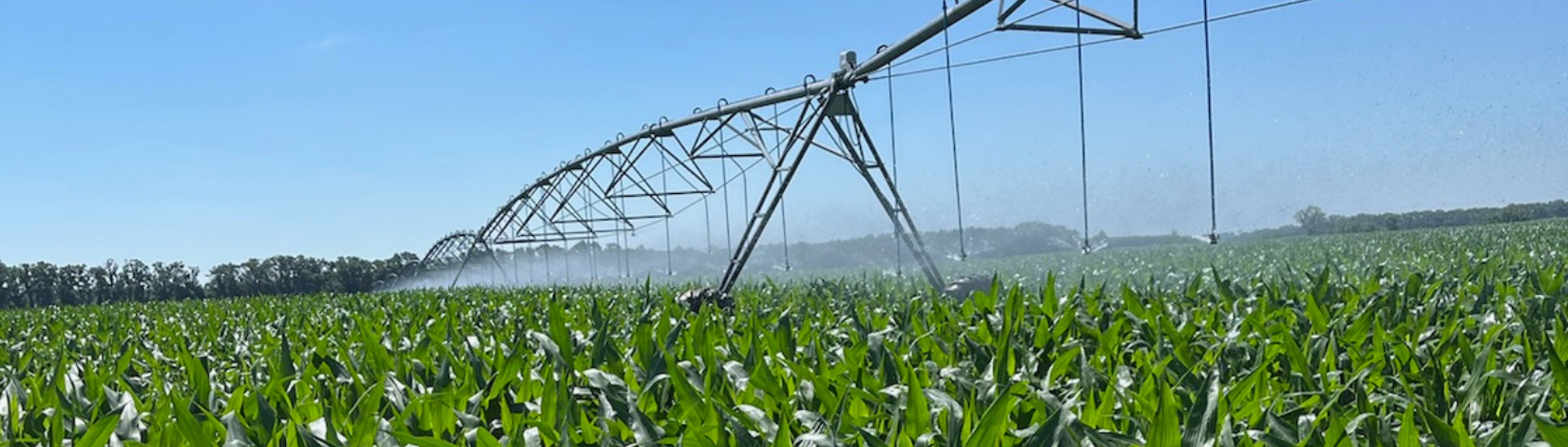
- Low-pressure center pivot or lateral move systems: Must achieve a DU of 75% to 85%
- Standard center pivot systems with end guns: Must achieve a DU of 65% to 75%
- In-place overhead sprinklers: Must achieve a DU of 70% to 75%
To verify compliance, growers will be required to submit formal evaluations of their systems. Regional agricultural extension agents and Mobile Irrigation Labs (MILs)—which typically conduct free evaluations for growers—will play a vital role in helping producers assess their systems. Furthermore, discussions are underway to establish an additional Mobile Irrigation Lab specifically in the Suwannee Valley to meet the anticipated surge in testing demand.
Transitioning Away from Seepage Irrigation
For operations utilizing less efficient irrigation methods, such as traditional seepage irrigation, the rule introduces an aggressive modernization mandate. Permittees relying on seepage systems must submit a comprehensive, formal plan outlining their transition to more efficient irrigation methods before their permit expires. This transition plan must establish clear milestones for infrastructure improvement, guaranteeing that water waste is systematically eliminated over the permit lifecycle.
Tiered Water Conservation and Advanced Technologies
The proposed rule implements a tiered framework for agricultural water conservation practices. Permittees must demonstrate that they are actively deploying high-level conservation measures or propose alternative management practices that achieve equivalent water savings.
Key strategies prioritized under the rule include:
- Advanced Irrigation Scheduling: Deployment of soil moisture sensors, weather stations, and automated shut-off systems to apply water only when crop demand dictates.
- Cultural and Structural Practices: Implementation of conservation tillage to retain soil moisture and reduce runoff, alongside tailwater recovery systems designed to capture, store, and reuse irrigation runoff.
- Alternative Water Supply (AWS) Integration: Prioritizing projects that utilize reclaimed water, captured surface water, or brackish sources to reduce pressure on the Floridan Aquifer.
Official Statements and Public Engagement
The formulation of the Lower Santa Fe and Ichetucknee Rivers MFL rule represents a delicate balancing act between ecological preservation and economic viability. State environmental officials have repeatedly emphasized that stakeholder input is vital to shaping a rule that is both scientifically sound and operationally feasible for regional industries.
While the formal public comment period closed on October 31, 2024, agency representatives have stressed that dialogue remains open as the rule moves through administrative review toward the 2026 legislative session. Stakeholders wishing to review the full administrative text, examine technical support documents, or track ongoing developments can access official resources directly through the Florida Department of Environmental Protection’s Lower Santa Fe and Ichetucknee Rivers MFL Portal.
Written inquiries and official agency correspondence regarding the rulemaking process can be directed to FDEP via email at [email protected].
Future Outlook: Preparing for 2026 and Beyond
As North Florida heads toward the formal implementation of the updated MFL rules during the 2026 legislative session, the regional water management landscape is entering a new era of accountability. For agricultural producers, local governments, and industrial water users across the 15-county partnership area, the writing is on the wall: water security and environmental recovery are inextricably linked.
Proactive farm management over the coming months and years will determine whether regional stakeholders can smoothly adapt to these stricter regulatory thresholds. Producers are strongly encouraged to consult with UF/IFAS Extension agents, schedule Mobile Irrigation Lab evaluations, and review their existing consumptive use permits to identify potential flow deficits before mandatory renewal deadlines arrive. By embracing modern water-saving technologies and participating constructively in the regulatory process, North Florida’s agricultural community can safeguard both its economic future and the health of the region’s irreplaceable spring-fed rivers.

0 Comments