

Executive Overview
As the scorching summer gives way to the milder breezes of autumn across North Florida, a common misconception settles over many agricultural landscapes: the belief that the growing season has ended and the land must simply be left to sleep. However, agricultural experts emphasize that while cash crops may be harvested, productive soil should never be left dormant.
Implementing cover crops during the fall and winter months is one of the most effective, cost-efficient, and scientifically proven strategies for safeguarding agricultural investments. Whether managing expansive pastureland in Columbia County or tending to localized backyard vegetable plots, regional growers face unique environmental challenges, including nutrient leaching in sandy soils, winter weed pressures, and soil compaction.
By strategically introducing cover crops, producers can protect their fields from destructive erosion, naturally boost soil fertility without relying heavily on synthetic inputs, and dramatically improve overall soil structure ahead of the 2026 planting season. This comprehensive guide examines five exceptional cover crop varieties tailored to the North Florida climate, outlines their specific biological advantages, and provides actionable management strategies endorsed by regional agricultural extension services.
Detailed Chronology and Seasonal Management of North Florida Soils
Understanding the temporal rhythm of North Florida agriculture is vital for successful cover crop implementation. The transition from late summer to deep autumn marks a critical inflection point in farm management.
The Late-Summer Transition (September – Early October)
As cash crops are harvested, the biological activity in the soil begins to shift. Without living roots in the ground, native microbial populations decline, and vulnerable topsoil is left exposed to unpredictable weather events. This is the optimal window for agricultural producers to conduct thorough soil sampling. By analyzing current nutrient profiles—especially when planning complex legume or brassica mixes—growers can establish a baseline for soil health and determine exact amendment requirements.
Early Fall Planting (Mid-October – November)
The primary planting window for cool-season cover crops in North Florida runs through the autumn months. During this period, daytime temperatures remain moderate while nighttime lows drop sufficiently to support cool-season germination. Selecting the correct variety during this phase is critical. Rapidly establishing species like oats or winter rye can be seeded early to provide immediate ground cover, while legumes such as crimson clover and Austrian winter peas are established to build a long-term nitrogen reserve that will peak by early spring.
Winter Maintenance and Biological Activity (December – February)
Throughout the winter months, cover crops function as biological shields and dynamic nutrient pumps. Deep-rooting species fracture subsurface hardpans, while vegetative canopies suppress stubborn winter weeds and shield the soil surface from pelting winter rains. Below ground, root exudates feed beneficial mycorrhizal fungi and bacteria, establishing a thriving underground ecosystem that will directly benefit the following spring cash crop.
Early Spring Termination (Late February – March)
As spring approaches, cover crops reach their biological peak—often producing significant biomass and vibrant blooms. Proper timing for termination (typically through mowing or rolling at early bloom before seed set) is essential. Terminating the cover crop at the correct developmental stage ensures that locked-up nutrients—particularly atmospheric nitrogen fixed by legumes—are mineralized and made readily available for the upcoming spring planting season, creating a seamless transition from winter conservation to active crop production.
Supporting Context & Metrics: The Top Five Cover Crops for Columbia County
To maximize the benefits of fall planting, growers must select species specifically adapted to North Florida’s sandy soils and climatic conditions. University of Florida Institute of Food and Agricultural Sciences (UF/IFAS) trials highlight five standout cover crops, each offering distinct agronomic advantages.
1. Crimson Clover (Trifolium incarnatum)
- Primary Benefits: Nitrogen fixation, pollinator support, and spring biomass production.
- Agronomic Profile: Crimson clover stands out as one of the most reliable and visually striking cool-season legumes suited for North Florida. Operating in a symbiotic relationship with soil rhizobia bacteria, it fixes atmospheric nitrogen, significantly reducing the need for costly synthetic nitrogen fertilizers for subsequent spring crops. Furthermore, its brilliant red blossoms emerge in early spring, serving as an invaluable, high-protein nectar source for honeybees and native pollinators emerging from winter.
- Management & Termination: To maximize nitrogen contribution without allowing the plant to become woody or set persistent seed banks, growers should mow or roll crimson clover at the early bloom stage.
2. Rye (Secale cereale)
- Primary Benefits: Exceptional erosion control and robust weed suppression.
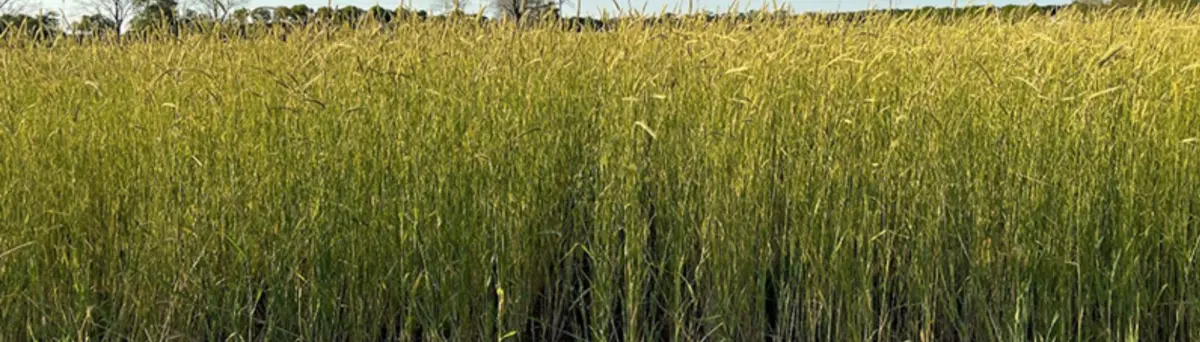
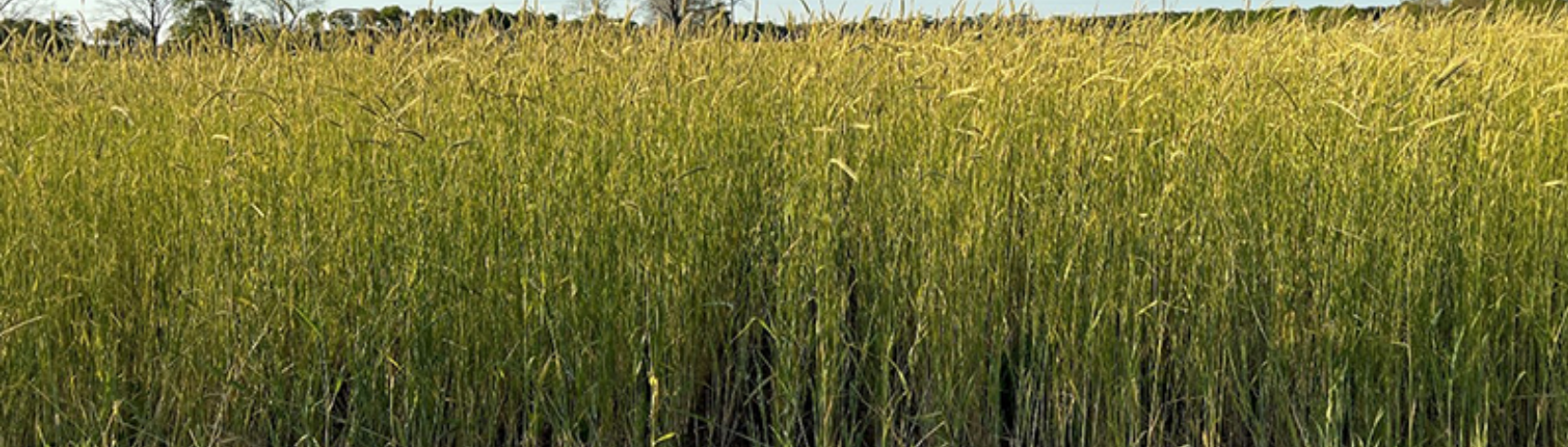
- Agronomic Profile: Rye is an exceptionally hardy, resilient grass capable of thriving in nutrient-deficient sandy soils and enduring unexpected cold snaps. It produces aggressive, dense vegetative growth that forms an impenetrable shield against wind and water erosion while physically shading out aggressive winter weeds. Rye is also exceptionally versatile, making it an ideal companion species to mix with nitrogen-fixing legumes like clover or vetch.
- Management & Termination: Because of its vigorous growth habit, timely termination in the spring is critical to prevent it from competing with subsequent cash crops for moisture and nutrients.
3. Oats (Avena sativa)
- Primary Benefits: Rapid grazing forage and abundant organic matter production.
- Agronomic Profile: Oats are prized for their rapid germination and vigorous fall growth. They provide immediate temporary forage for livestock and quick, comprehensive ground coverage when time is of the essence. However, oats possess a lower frost tolerance compared to rye, making them best suited for earlier fall plantings in North Florida before hard freezes occur.
- Management & Termination: As oats mature and experience winter termination events, their decaying biomass rapidly incorporates organic matter back into the soil structure, enhancing water retention capacity.
4. Austrian Winter Pea (Pisum sativum subsp. arvense)
- Primary Benefits: High-volume nitrogen fixation and early-spring biomass.
- Agronomic Profile: Austrian winter peas produce abundant, lush viney growth that blankets the soil surface. They pair exceptionally well with small grains (such as rye or oats), which provide physical structural support for the climbing pea vines. When properly managed and incorporated into the soil in spring, Austrian winter peas can generate up to an impressive 100 pounds of biological nitrogen per acre, offering a natural fertilizer substitute.
- Management & Termination: Incorporated prior to full pod set, these peas break down rapidly, releasing a potent pulse of available nitrogen into the upper soil profile.
5. Tillage Radish / Daikon Radish (Raphanus sativus var. longipinnatus)
- Primary Benefits: Remediation of soil compaction and deep nutrient scavenging.
- Agronomic Profile: Frequently referred to as "tillage radish," this specialized brassica sends thick, aggressive taproots deep into the earth, capable of piercing through restrictive subsurface hardpans. As these taproots expand, they improve soil aeration and water infiltration. As the plant naturally decomposes at the end of its life cycle, it leaves behind vast biopores—underground channels that allow air, water, and the roots of the subsequent season’s crops to penetrate deep into the profile. Additionally, radishes scavenge residual soil nutrients that might otherwise leach away during winter rains.
- Management & Termination: Radishes break down quickly during winter thaws, leaving behind a mellowed seedbed primed for early spring planting.
Official Statements and Expert Perspectives
According to Dr. Derrick R. Conover of the UF/IFAS Extension in Columbia County, cover cropping is not merely an optional agricultural practice, but a fundamental pillar of modern farm management.
"Cover crops aren’t just for large-scale commercial operations; they represent one of the most accessible and cost-effective tools available for improving soil health on any scale," Dr. Conover notes. "Planting this fall directly sets the biological stage for enhanced fertility, suppressed weed pressure, and vastly more resilient crop performance in the coming seasons."
Agricultural specialists consistently stress that the economic returns of cover cropping extend far beyond immediate soil protection. By minimizing fertilizer expenditures, reducing herbicide reliance through natural weed suppression, and mitigating irrigation costs via improved water retention, producers realize tangible financial benefits. Experts strongly advise conducting comprehensive soil testing prior to seed selection. Soil testing illuminates existing nutrient deficiencies and helps growers formulate precise multi-species mixes—such as combining a nitrogen-fixing legume with a compaction-busting brassica—to address specific field limitations.
Future Outlook: Preparing for 2026 and Beyond
As agricultural landscapes face increasing climatic unpredictability and rising input costs, building long-term soil resilience has never been more critical. The decisions made by North Florida growers during the fall planting window will directly dictate agricultural productivity through 2026 and into the next decade.
Integrating cover crops transforms farm management from a reactive posture—constantly fighting erosion, nutrient depletion, and weed encroachment—to a proactive, regenerative system that harnesses natural biological processes. Whether cultivating a commercial acreage or managing a multi-acre homestead plot, adopting these practices ensures that North Florida’s agricultural heritage remains productive, sustainable, and economically viable for generations to come.
Further Resources and Contact Information
For growers seeking tailored advice on cover crop species selection, seed sourcing, specialized management techniques, or professional soil sampling, local agricultural extension services are readily available to assist.
- Online Resources: Explore in-depth guides and university research via the UF/IFAS Agriculture Cover Crops Portal.
- Direct Consultation: Contact the UF/IFAS Extension Columbia County Office directly at (386) 752-5384 to speak with extension agents and schedule soil testing consultations.
Primary Author:
Dr. Derrick R. Conover
UF/IFAS Extension, Columbia County

0 Comments