

Executive Overview
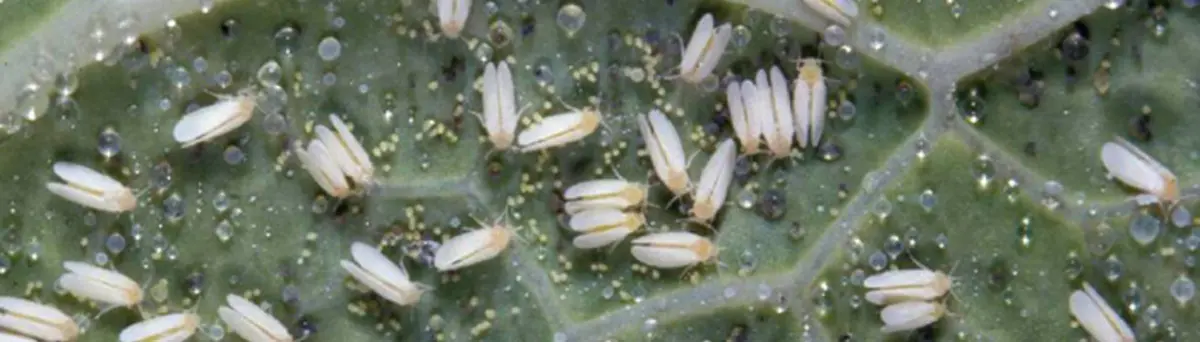
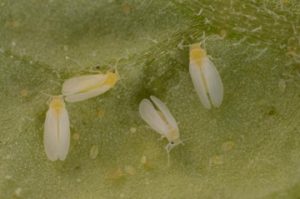
For farmers across the Suwannee Valley and greater North Florida, the late summer and fall seasons bring more than just cooler breezes and harvest preparations; they herald the arrival of one of agriculture’s most persistent and destructive adversaries: the whitefly. While tiny in stature, species such as Bemisia tabaci wield an outsized impact on regional agriculture, casting a long shadow over vegetable production. When farmworkers or agricultural inspectors brush past late-season crops like tomatoes, peppers, and cucurbits, dense clouds of these minuscule, moth-like insects routinely erupt into the humid air.
Beyond being a mere nuisance during field labor, these pests present a multi-pronged threat to commercial viability. Whiteflies inflict direct feeding damage by piercing plant tissues and draining vital sap, which systematically weakens the crop and stunts development. More alarmingly, they act as efficient biological vectors for devastating plant pathogens, most notably the Tomato Yellow Leaf Curl Virus (TYLCV) and various destructive cucurbit viruses. When these vectors strike, plants can suffer catastrophic declines in marketable yield—often right on the precipice of harvest.
To combat this seasonal crisis, agricultural experts—including Dr. Derrick R. Conover of UF/IFAS Extension in Columbia County and Dr. Xavier Martini, Assistant Professor of Entomology at the University of Florida—have banded together to outline comprehensive, research-backed defense strategies. Through an integrated pest management (IPM) approach that harmonizes cultural modifications, targeted organic repellents, biological controls, and judicious chemical rotations, North Florida’s small and medium-scale growers are being equipped to safeguard their yields and secure regional food systems against this formidable agricultural threat.
Detailed Chronology: The Seasonal Lifecycle and Migration of Bemisia tabaci
Understanding the seasonal surge of whiteflies requires examining the biological and environmental catalysts that drive their populations to critical thresholds in North Florida.
The Summer-to-Fall Transition
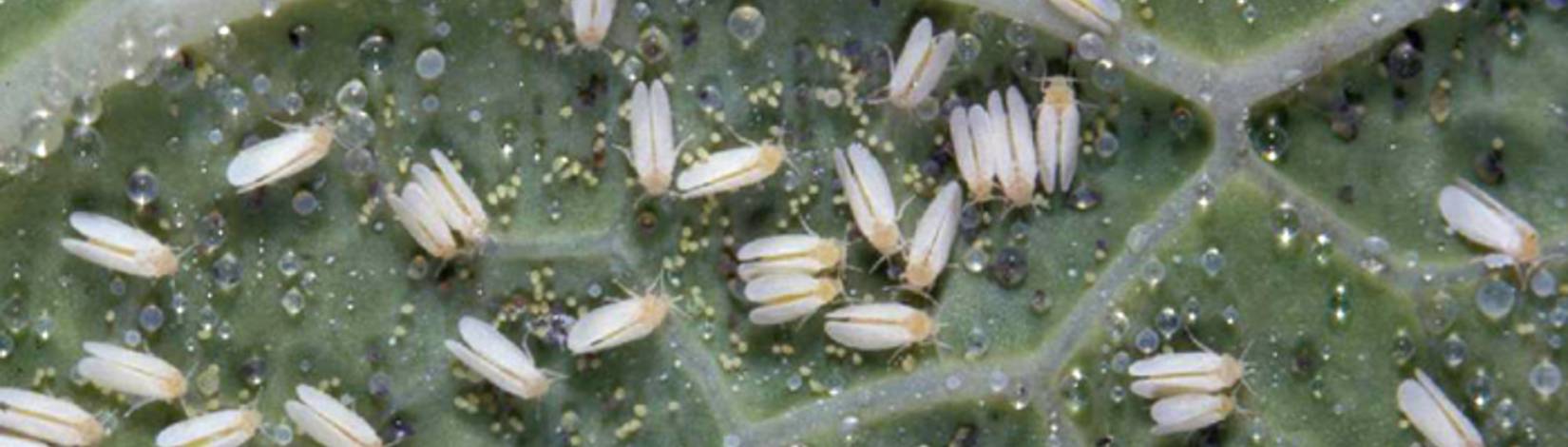
As summer transitions into fall, North Florida maintains a climate uniquely favorable to the rapid proliferation of Bemisia tabaci. Unlike other agricultural pests whose populations are heavily suppressed by heavy rainfall or storms, whiteflies are predominantly driven by temperature. The prolonged, warm autumn days characteristic of the region accelerate the insect’s physiological development, drastically shortening generation times. A single female can lay hundreds of eggs on the undersides of leaves, where nymphs hatch and immediately begin feeding. Consequently, populations skyrocket exponentially between August and November.
The Dynamics of Inter-Crop Migration
Compounding the biological advantage of warm temperatures is the complex agricultural landscape of North Florida, where large commercial farms sit in close proximity to smaller, diversified plots. During the peak of summer, vast acreages of crops such as cotton serve as primary reservoirs and breeding grounds for massive whitefly populations.
As these large-scale commercial fields are harvested, managed, or plowed under, millions of displaced adult whiteflies are forced to seek out new host plants. This triggers a massive, area-wide migration wave. Swept along by regional wind currents or driven by sheer survival instincts, these migratory swarms descend upon smaller, surrounding farms that may still have lush, vulnerable fall vegetables standing in their fields. For small-scale producers, this sudden influx can overwhelm local farm defenses almost overnight, turning a manageable pest presence into a severe, farm-wide crisis.
Supporting Context & Metrics: Assessing the Agricultural Toll
The severity of a whitefly infestation cannot be measured by physical numbers alone; its true impact is felt economically through yield reduction, quality degradation, and elevated input costs.
Direct vs. Indirect Damage Mechanisms
Agronomists categorize whitefly damage into two distinct operational categories: direct physiological impact and indirect pathogen transmission.
- Direct Feeding Damage: Both adult whiteflies and their immobile, scale-like nymphs possess piercing-sucking mouthparts. By inserting these stylets into the phloem of host plants, they extract large volumes of plant sap. This continuous depletion deprives the plant of essential photo-assimilates, resulting in stunted growth, leaf yellowing, premature defoliation, and overall plant decline. Furthermore, whiteflies excrete a sugary, sticky substance known as "honeydew." This residue coats the leaves and fruit, encouraging the growth of black sooty mold. Not only does this mold obstruct photosynthesis, but it also ruins the aesthetic and market value of the produce, often rendering it unsalable.
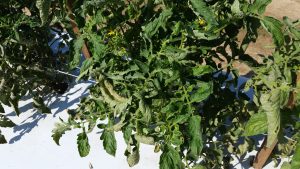
- Pathogen Transmission (The Real Catastrophe): While sap-sucking can weaken a plant, the transmission of viral diseases represents the most severe financial threat to growers. Bemisia tabaci is a hyper-efficient vector for geminiviruses like Tomato Yellow Leaf Curl Virus (TYLCV). Once a whitefly feeds on an infected weed or crop, it retains the virus and can inoculate healthy plants within minutes of feeding. Symptoms of TYLCV include severe leaf curling, puckering, yellowing of leaf margins, and profound stunting, frequently resulting in zero marketable fruit production. In fall plantings, when both vector populations and ambient virus reservoirs peak simultaneously, incidence rates can approach 100% in unprotected fields.
Research-Backed Protection Strategies for Fall Crops
To provide growers with actionable intelligence, UF/IFAS researchers have compiled and evaluated various management tactics tailored specifically for North Florida’s unique pedoclimatic conditions.
| Strategy | Effectiveness in Fall | Notes/Best Practices |
|---|---|---|
| Reflective mulch / Row covers | High | Effectively repels incoming adults in the early stages; significantly reduces early-season virus incidence. |
| Limonene-scented kaolin sprays | High (dry years) | Performs best during periods of low rainfall; acts as a physical barrier and deterrent, reducing virus transmission and increasing yield. |
| Biological control (predators, fungi) | Moderate-High | Works best as an integral component of an IPM program; preserves beneficial insect populations for long-term suppression. |
| Synthetic insecticides | High (short-term) | Requires strict product rotation and careful application to prevent rapid development of chemical resistance. |
| Area-wide / Landscape management | High | Requires community-level coordination among neighboring farms to reduce regional reinfestation pressure. |
Official Statements and Expert Guidance
To navigate the complexities of modern pest management, growers are increasingly turning to extension specialists and entomologists for science-based guidance.
Dr. Derrick R. Conover of UF/IFAS Extension in Columbia County emphasizes the necessity of shifting away from reactive measures toward proactive, whole-farm strategies. "Whiteflies are an undeniable fact of life for North Florida growers, but they do not have to spell absolute disaster for your fall crops," Dr. Conover notes. He stresses that small farmers cannot rely on a single silver bullet. Instead, safeguarding a harvest requires a synchronized defense: "By combining cultural practices, the conservation of natural beneficial predators, and the careful, calculated use of insecticides, small farmers can successfully keep whitefly populations below economic injury levels."
Adding to this perspective, Dr. Xavier Martini, Assistant Professor of Entomology at the University of Florida, highlights the importance of behavioral deterrents and environmental variables. Dr. Martini’s research into alternative treatments—such as limonene-scented kaolin clay applications—demonstrates how innovative approaches can disrupt insect behavior. Kaolin clay coats the plant leaves in a powdery, mineral-based film that confuses whiteflies, making the crop appear unpalatable or invisible as a host. When infused with limonene, a citrus-derived extract, the spray acts as both a visual and olfactory deterrent, proving exceptionally effective during dry fall weather windows when heavy rains do not wash the residue away.
Both experts converge on a singular foundational philosophy: Integrated Pest Management (IPM). Rather than depending exclusively on chemical knockdown agents—which often fail due to the whitefly’s notorious capacity for developing rapid insecticide resistance—growers must implement a multi-layered defense matrix.
Future Outlook: The Horizon of Sustainable Pest Defense
Looking ahead, managing whiteflies in the Suwannee Valley and wider North Florida agricultural corridors will require adaptability, technological integration, and unprecedented community cooperation. As climate patterns shift and winters become progressively milder, overwintering populations of whiteflies are expected to increase, potentially leading to even earlier and more aggressive infestations in future growing seasons.
The Rise of Area-Wide Management Networks
One of the most promising developments for the future is the evolution of landscape-scale, cooperative pest management. Because whiteflies are highly mobile and readily cross farm boundaries, individual actions taken on a single small farm can be quickly undermined by adjacent neglected fields or large commercial operations. Future agricultural resilience will depend heavily on organized grower networks. By coordinating planting dates, synchronized destruction of post-harvest crop residues (such as disking under old tomato or cotton fields simultaneously), and unified weed management across entire watersheds, agricultural communities can drastically suppress regional whitefly carrying capacities.
Advancements in Biopesticides and Resistant Cultivars
Concurrently, ongoing horticultural research at the University of Florida and collaborating institutions is paving the way for advanced biopesticides and naturally resistant crop varieties. Entomologists are refining entomopathogenic fungi—such as Beauveria bassiana—which infect and kill whiteflies naturally without harming beneficial pollinators or leaving toxic chemical residues on marketable produce. Furthermore, plant breeders are continuously working to introduce robust genetic resistance to TYLCV into popular regional tomato and pepper cultivars, offering an inner line of defense that shields the plant even if whitefly feeding occurs.
Ultimately, while the whitefly will remain a persistent adversary for North Florida agriculturalists, the fusion of traditional agronomic wisdom with cutting-edge entomological research offers a clear path forward. By deploying proactive cultural controls, investing in reflective barriers and biopesticides, and fostering collaborative regional management, the Suwannee Valley’s farming community can protect its rich agricultural heritage and secure a bountiful fall harvest for years to come.

0 Comments